
How to Create Your Own Merchandise: The Beginner’s Step-by-Step Guide to Launching, Designing, and Selling [2026]
Creating your own merchandise has never been more accessible. Whether you’re a content creator building a brand, a small business seeking customer connection, or an entrepreneur exploring new revenue streams, merchandise offers a tangible way to extend your presence into customers’ daily lives.
The global merchandise market continues expanding as consumers increasingly value authentic connections with brands they support. According to industry analysis, the promotional products market alone exceeds $25 billion annually, with personalized and small-batch merchandise representing the fastest-growing segments.
This comprehensive guide walks you through creating merchandise that resonates with your audience, generates meaningful revenue, and strengthens your brand—regardless of your starting budget or experience level.
Step 1: Define What You Want Your Merchandise to Actually Achieve
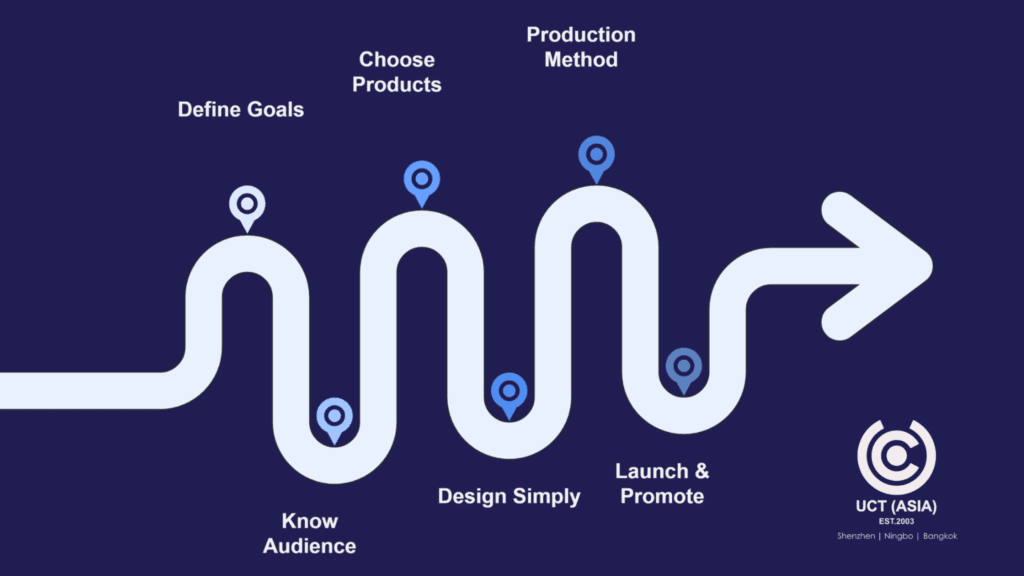
Before selecting products or designing graphics, establish what success looks like for your merchandise program.
The Four Reasons Most Beginners Create Merchandise and How to Pick Yours
Brand Awareness:
- Transform customers into walking advertisements
- Extend brand presence beyond digital channels
- Create conversation starters and social proof
- Build community identity among supporters
Success Metrics: Social media mentions, user-generated content, brand recall surveys
Revenue Generation:
- Create new profit centers
- Diversify income streams
- Increase customer lifetime value
- Fund creative projects or business expansion
Success Metrics: Sales volume, profit margins, repeat purchase rates
Customer Loyalty:
- Reward and retain existing customers
- Create emotional brand connections
- Build exclusive community feeling
- Differentiate from competitors
Success Metrics: Retention rates, Net Promoter Score, engagement levels
Lead Generation:
- Capture contact information
- Build email lists for marketing
- Create event attendance incentives
- Drive traffic to primary offerings
Success Metrics: Email signups, conversion rates, cost per acquisition
Why Vague Merchandise Goals Produce Vague Results
Vague goals produce vague results. Instead of “increase brand awareness,” specify:
- “Generate 500 pieces of user-generated content in six months”
- “Achieve $10,000 monthly merchandise revenue by Q4”
- “Build 5,000-person email list through merchandise giveaways”
- “Create 1,000 daily brand impressions through wearable products”
Clear objectives inform every subsequent decision—from product selection to pricing to promotion.
Step 2: Know Exactly Who You’re Creating Merchandise For
Effective merchandise resonates with specific people. Generic products appealing to everyone typically connect with no one.
Audience Research Methods
Existing Customer Data:
- Purchase history and preferences
- Demographic information (age, location, income)
- Engagement patterns (what content they interact with)
- Feedback and support inquiries
Social Media Listening:
- What content generates most engagement?
- Which products do followers already use?
- What language and references resonate?
- Who are your most passionate advocates?
Direct Engagement:
- Surveys asking about merchandise preferences
- Polls on product categories and designs
- Focus groups with loyal customers
- Beta testing with community members
Building Audience Personas That Shape Your Merchandise Decisions
Develop 2-3 detailed personas representing your core customers:
Example: Fitness Influencer Audience
- Primary: Sarah, 28, yoga enthusiast, values sustainability, disposable income $40K
- Secondary: Mike, 35, CrossFit athlete, performance-focused, brand loyal
- Tertiary: Emma, 22, college student, budget-conscious, trend-driven
Each persona informs different product lines, messaging, and pricing strategies.
Understanding Purchase Motivations
Functional Needs:
- Solving specific problems
- Replacing worn-out items
- Trying new products or categories
Emotional Drivers:
- Supporting creators they admire
- Expressing identity and values
- Belonging to communities
- Nostalgia and memory
Social Considerations:
- What will peers think?
- Is this “shareable” on social media?
- Does it signal desired identity?
Step 3: Select the Right Products
Product Category Analysis
| Category | Pros | Cons | Best For |
|---|---|---|---|
| Apparel (T-shirts, hoodies) | High visibility, strong margins | Sizing complexity, returns | Communities, creators, events |
| Drinkware (mugs, bottles) | Daily use, broad appeal | Fragility, shipping costs | Corporate, wellness, lifestyle |
| Tote Bags | Long lifespan, eco-friendly | Commodity feel | Sustainability focus, retail |
| Tech Accessories | Premium pricing, utility | Rapid obsolescence | Tech brands, professional |
| Stationery | Low cost, broad appeal | Lower visibility | Education, professional |
| Stickers/Pins | Entry price point, collectibility | Low individual value | Youth, community building |
Starting Product Recommendations
For Most Beginners:
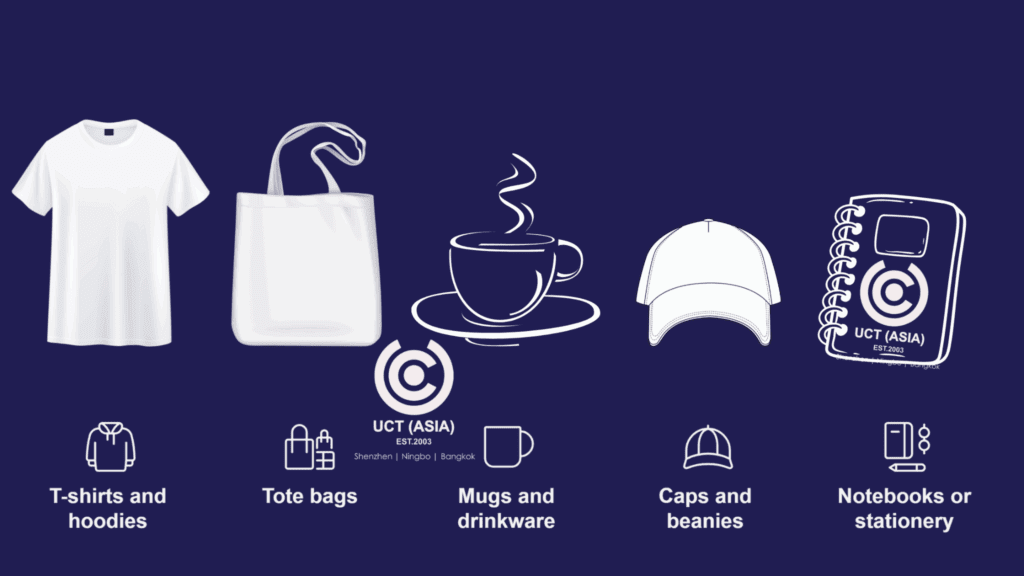
1. T-shirts – Universal appeal, established demand
2. Tote bags – Practical, eco-friendly, good margins
3. Mugs – Daily use, gift-appropriate, simple sizing
For Content Creators:
1. Apparel – Walking billboards for your brand
2. Stickers – Low entry price, viral potential
3. Accessories – Phone cases, hats for brand visibility
For B2B Companies:
1. Drinkware – Desk presence, professional settings
2. Notebooks – Practical, meeting-appropriate
3. Tech accessories – Premium positioning, daily use
Product-Market Fit Validation
Before committing to inventory:
Test Interest:
- Social media polls on product preferences
- Pre-order campaigns validating demand
- Sample giveaways measuring enthusiasm
- Survey existing customers
Analyze Competitors:
Where are the gaps you could fill?
What merchandise do similar brands offer?
What products sell out quickly?
What do customer reviews reveal about quality?
Step 4: Develop Compelling Designs
Design Principles
Simplicity Sells:
- Clean, readable layouts
- Maximum 2-3 design elements
- Clear focal point
- Appropriate white space
Brand Alignment:
- Consistent color palette
- Typography matching brand voice
- Logo integration (subtle or prominent based on goal)
- Message authenticity
Versatility:
- Designs working across multiple products
- Appeal lasting beyond current trends
- Gender and age neutrality (when appropriate)
- Cultural sensitivity and inclusivity
Design Creation Options
DIY Design Tools:
- Canva: Templates, easy customization, beginner-friendly
- Adobe Express: Professional features, brand kit integration
- Placeit: Mockup generation, realistic previews
Freelance Designers:
- Fiverr: Budget options ($50-200)
- 99designs: Multiple concepts, contest format ($300-800)
- Dribbble/Behance: Premium talent, direct hire ($500-2,000+)
Design Agencies:
- Comprehensive brand alignment
- Multiple product line development
- Packaging and presentation design
- Premium pricing ($2,000-10,000+)
Design Testing
Before final production:
Internal Review:
- Team feedback on multiple concepts
- Brand guideline compliance check
- Quality and readability verification
Community Input:
- Share concepts with loyal customers
- Social media voting on favorites
- Beta group feedback
- Willingness-to-pay assessment
Sample Production:
- Order samples of final designs
- Photograph for marketing materials
- Test durability and quality
- Refine based on physical review
Step 5: Choose Your Production Model
Print-on-Demand (POD)
How It Works:
- Upload designs to platform
- Products manufactured only when ordered
- Platform handles printing, packing, shipping
- You earn margin between retail and production cost
Best Platforms:
- Printful: Wide product range, quality consistency
- Printify: Multiple supplier options, competitive pricing
- SPOD: Fast shipping, European fulfillment
- Redbubble: Marketplace exposure, passive income
Pros:
- Zero inventory investment
- No minimum order quantities
- Unlimited design variations
- Global fulfillment networks
- Easy experimentation
Cons:
- Lower profit margins (15-30% vs. 40-60% for bulk)
- Less control over quality and packaging
- Longer shipping times
- Limited customization options
Best For: Testing designs, small audiences, creators starting out
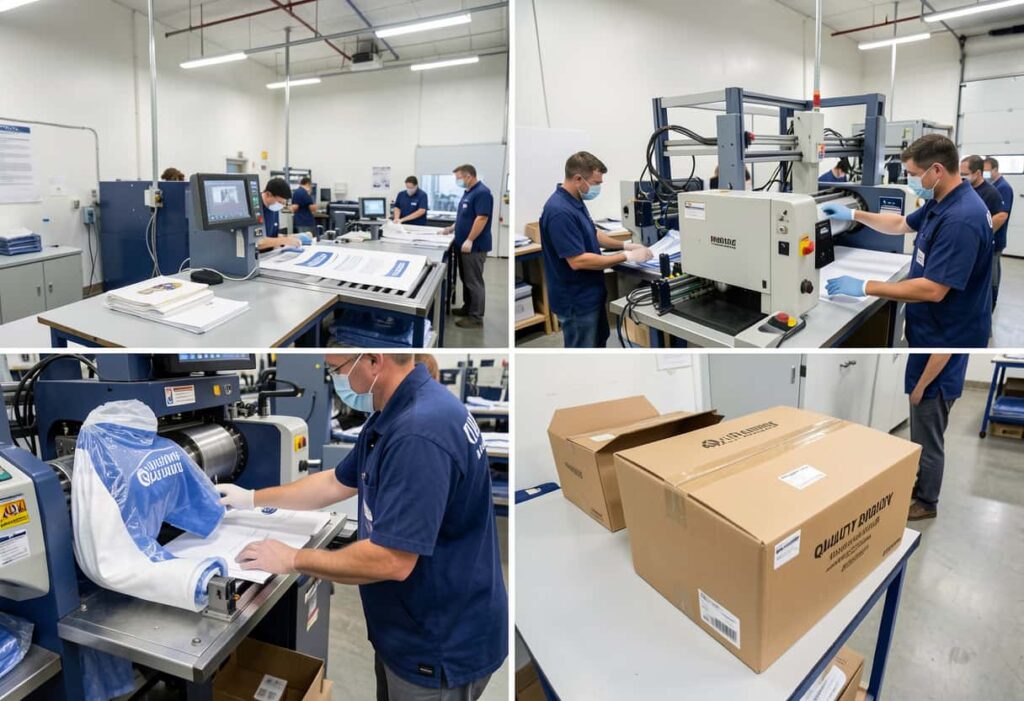
Bulk Manufacturing
How It Works:
- Design and order inventory in advance
- Products manufactured in quantity (typically 50-500+ units)
- You manage storage, fulfillment, and shipping
- Higher margins but inventory risk
Sourcing Options:
- Alibaba: Wide supplier base, negotiation required
- ThomasNet: North American manufacturers
- UCT (Asia): Managed sourcing, quality control
- Local printers: Supporting domestic business
Pros:
- 40-60% profit margins
- Complete quality control
- Custom packaging and presentation
- Faster order fulfillment
- Bulk discounts improving with scale
Cons:
- Upfront inventory investment ($500-5,000+)
- Storage requirements
- Obsolescence risk
- Cash tied up in stock
- Complexity managing logistics
Best For: Proven designs, established demand, larger operations
Hybrid Approach
Strategy:
- Use POD for testing new designs
- Transition proven sellers to bulk manufacturing
- Maintain POD for long-tail, infrequent orders
- Optimize based on data
Benefits:
- Minimize risk while maximizing margin
- Test extensively before committing capital
- Serve multiple customer segments
- Maintain flexibility as business evolves
Step 6: Set Up Operations
E-Commerce Platform Selection
Shopify:
- Comprehensive solution
- POD integrations (Printful, Printify)
- Professional themes
- $29-299/month
Etsy:
- Built-in marketplace traffic
- Creative brand positioning
- Lower setup complexity
- $0.20 listing + 6.5% transaction fee
Squarespace:
- Beautiful templates
- Integrated marketing tools
- Good for content creators
- $27-49/month
WooCommerce (WordPress):
- Maximum customization
- Lower ongoing costs
- Technical setup required
- Hosting + plugin costs
Pricing Strategy
Cost-Plus Pricing:
1. Calculate total cost (product + printing + shipping + packaging)
2. Add desired profit margin (typically 40-60% for bulk, 20-40% for POD)
3. Set retail price
Value-Based Pricing:
- What will target audience pay?
- Premium positioning commands premium prices
- Test different price points
- Monitor conversion rates
Competitive Analysis:
- What do similar brands charge?
- Are you positioning as budget or premium?
- Consider perceived value, not just cost
Fulfillment Setup
Self-Fulfillment:
- You store, pack, and ship orders
- Control over packaging and presentation
- Time-intensive but cost-effective at small scale
- Suitable for starting out
Third-Party Logistics (3PL):
- Warehouse stores and ships inventory
- Professional handling and faster shipping
- Costs: Storage ($5-15/unit/month) + pick/pack fees
- Worth considering at 50+ orders/month
Platform Fulfillment:
- Amazon FBA, Shopify Fulfillment Network
- Integrated with sales channels
- Prime-like shipping speeds
- Higher fees but less management
Step 7: Launch and Promote
Pre-Launch Buildup
Teaser Campaign:
- Share design process on social media
- Behind-the-scenes manufacturing content
- Countdown to launch date
- Email list building with early access offers
Beta Testing:
- Send samples to loyal customers
- Gather testimonials and photos
- Refine based on feedback
- Create user-generated content library
Influencer Seeding:
- Send free products to relevant influencers
- No strings attached (authenticity matters)
- Provide shareable content/assets
- Build relationships for ongoing promotion
Launch Strategy
Multi-Channel Approach:
- Email announcement to existing list
- Social media posts across platforms
- Website banner and homepage feature
- Paid advertising (if budget allows)
Launch Incentives:
- Early bird discounts (24-48 hours)
- Limited edition “founding supporter” items
- Bundle deals (buy 2, get 1 free)
- Free shipping thresholds
Urgency Creation:
- Limited quantities (if true)
- Countdown timers
- “Selling fast” social proof
- Pre-order windows
Ongoing Promotion
Content Marketing:
- Product photography and styling
- Customer features and testimonials
- Behind-the-scenes brand content
- Educational content (care guides, styling tips)
Community Building:
- User-generated content campaigns
- Hashtag creation and promotion
- Customer photo features
- Ambassador programs
Email Marketing:
- New product announcements
- Seasonal promotions
- Abandoned cart recovery
- Customer retention campaigns
Paid Advertising:
- Facebook/Instagram (visual products)
- Google Shopping (search intent)
- Retargeting (website visitors)
- Influencer partnerships (sponsored content)
Step 8: Analyze and Optimize
Key Performance Indicators
Sales Metrics:
- Revenue and profit
- Units sold
- Average order value
- Conversion rate
Customer Metrics:
- Customer acquisition cost
- Repeat purchase rate
- Customer lifetime value
- Return rate
Product Metrics:
- Best and worst sellers
- Inventory turnover
- Margin by product
- Return reasons
Marketing Metrics:
- Traffic sources
- Social media engagement
- Email open and click rates
- Cost per acquisition
Continuous Improvement
Monthly Reviews:
- What sold well? Why?
- What underperformed? What changes needed?
- Are margins healthy?
- What do customers say in reviews?
Quarterly Strategy Adjustments:
- Product line expansion or contraction
- Pricing optimization
- Design refresh for seasonal relevance
- Operational efficiency improvements
Annual Planning:
- Year-over-year growth analysis
- Product roadmap for coming year
- Budget allocation for inventory and marketing
- Platform and tool evaluation
Common Beginner Mistakes to Avoid
Design Errors
❌ Too Many Products: Starting with 20+ SKUs spreads focus thin
✅ Start Narrow: 3-5 core products, expand based on data
❌ Generic Designs: Looking like every other brand
✅ Authentic Voice: Designs reflecting your unique personality/brand
❌ Ignoring Quality: Choosing cheapest options
✅ Quality First: Products customers will treasure and use
Operational Mistakes
❌ No Margin Calculation: Pricing based on gut feeling
✅ Data-Driven Pricing: All costs accounted for + healthy margin
❌ Ignoring Shipping: Not factoring fulfillment into pricing
✅ Transparent Costs: Free shipping thresholds or clear shipping costs
❌ Inventory Overcommitment: Ordering 500 units of unproven design
✅ Test Then Scale: Start with POD or small batches
Marketing Mistakes
❌ Build It and They Will Come: Expecting organic discovery
✅ Active Promotion: Consistent marketing across channels
❌ Ignoring Existing Audience: Not leveraging current followers
✅ Community First: Loyal customers are best initial customers
❌ Inconsistent Branding: Different look/feel across touchpoints
✅ Cohesive Experience: Unified visual identity everywhere
Scaling Your Merchandise Business
Growth Strategies
Product Line Expansion:
- Add complementary products (sold together)
- Seasonal collections
- Limited edition collaborations
- Customer-requested items
Market Expansion:
- International shipping
- Wholesale to retailers
- Pop-up shops and markets
- Event and conference sales
Operational Scaling:
- Transition from POD to bulk manufacturing
- Implement 3PL for fulfillment
- Hire support for customer service
- Automate repetitive tasks
Brand Elevation:
- Premium product tier
- Designer collaborations
- Sustainable/ethical positioning
- Community and membership elements
Frequently Asked Questions
How much does it cost to start a merchandise line?
Print-on-demand requires minimal investment ($50-200 for design/samples). Bulk manufacturing requires more ($500-2,000 for initial inventory). Many successful creators start with POD and transition to bulk as demand proves itself.
What is the best merchandise for beginners?
T-shirts, tote bags, and mugs offer the best combination of broad appeal, manageable complexity, and reasonable margins. These products work across diverse audiences and have established demand.
How do I price my merchandise?
Calculate total costs (product, printing, shipping, packaging, platform fees), then add 40-60% margin for bulk or 20-40% for POD. Research competitor pricing and test different price points to optimize.
Should I use print-on-demand or bulk manufacturing?
Start with print-on-demand to test designs and validate demand with minimal risk. Transition proven sellers to bulk manufacturing for higher margins once you have consistent sales (typically 20+ units/month per design).
How do I promote my merchandise?
Leverage existing audiences first (email list, social media followers). Create compelling visual content showcasing products in use. Run targeted ads to lookalike audiences. Collaborate with influencers and complementary brands.
What design software should I use?
Canva offers beginner-friendly templates and tools. Adobe Illustrator provides professional-grade design capabilities. For complex designs, hiring freelance designers on Fiverr or 99designs often delivers better results than DIY attempts.
How long does it take to launch merchandise?
Print-on-demand: 1-2 weeks (design + platform setup). Bulk manufacturing: 4-8 weeks (design + sampling + production + shipping). Planning 6-8 weeks allows comfortable timeline for quality execution.
Do I need a business license to sell merchandise?
Requirements vary by location, but most jurisdictions require business registration for commercial activity. Consult local regulations regarding sales tax collection, business licenses, and any necessary permits.
How do I handle shipping and fulfillment?
For starting out, POD platforms handle fulfillment automatically. For bulk inventory, self-fulfillment works until 20-30 orders/month, then consider 3PL services. Factor shipping costs into pricing or offer free shipping thresholds.
What if my merchandise doesn’t sell?
Analyze why (pricing, design, promotion, audience mismatch?). Adjust based on feedback. Consider discounting to clear inventory and reinvest in better-performing designs. Don’t be discouraged—iteration is part of the process.
Can I create merchandise for a small audience?
Absolutely. Niche audiences often generate higher engagement and loyalty than mass markets. Focus on deep resonance with your specific community rather than broad appeal. Micro-audiences can support successful merchandise businesses.
How do I protect my designs from copying?
Trademark your brand name and logo. Copyright original artwork. While perfect protection is impossible, establishing clear brand identity and building community loyalty provide better defense than legal measures alone.
Create Your Merchandise with UCT (Asia)
Creating your own merchandise requires strategic planning — from audience research and product selection to branding consistency and supplier evaluation. Success lies in aligning creative ideas with production feasibility and market demand.
UCT (Asia) simplifies this journey through structured consumer goods procurement expertise and professional production oversight. By guiding brands through each stage of development, we help transform ideas into high-quality merchandise programs that are scalable, strategic, and commercially viable.