

“The aim of marketing is to know and understand the customer so well that the product or service fits him and sells itself.” — Peter Drucker
To succeed in today’s competitive retail and e-commerce environment, brands must go beyond basic tactics. Successful merchandise selling combines deep customer understanding, optimized pricing, strategic promotions, compelling product presentation, and retention-focused customer experiences. The following strategies are designed to help you elevate your merchandise sales with proven techniques and measurable results.
1. Know Your Audience — Precision Over Assumption
Understanding your customer is the foundation of effective selling. Instead of guessing who buys your products, use data analytics and audience insights to build granular customer segments.
- Tools like Google Analytics and social media platforms help uncover demographics, interests, and purchase behavior. For example, advanced personalization based on browsing history or previous purchases can significantly drive engagement and repeat sales.
- Historically, deep customer understanding not only improves targeting but also boosts conversion and retention outcomes.
Actionable Tip: Segment customers into groups (e.g., first-time buyers, repeat purchasers, high-spenders) and tailor your messaging and offerings to each group.
2. Optimize Product Quality, Design, and Presentation
No amount of marketing can make up for a poor product experience.
- Quality matters: High-quality merchandise builds trust and long-term loyalty.
- Design plays a vital role: Unique, functional, and aesthetically compelling products differentiate your brand.
- Presentation influences sales: Strong visuals, videos, detailed descriptions, and user-generated photos increase buyer confidence. High-quality visuals can reduce returns and increase conversions.
Actionable Tip: Use videos showing product use and customer photos to enhance online product pages.
3. Build a Strong Online Presence — Be Where Shoppers Are
E-commerce continues to represent an accelerating share of global retail spending — expanded further after 2023 growth trends. A user-friendly, fast, and mobile-optimized website is now critical to converting interest into sales.
- Prioritize mobile optimization — nearly half of global consumers shop on mobile devices.
- Enhance product discovery with search optimization and internal site search — customers who use search are far more likely to convert.
Actionable Tip: Test how your site performs on mobile and fix navigation or checkout barriers that cause drop-offs.
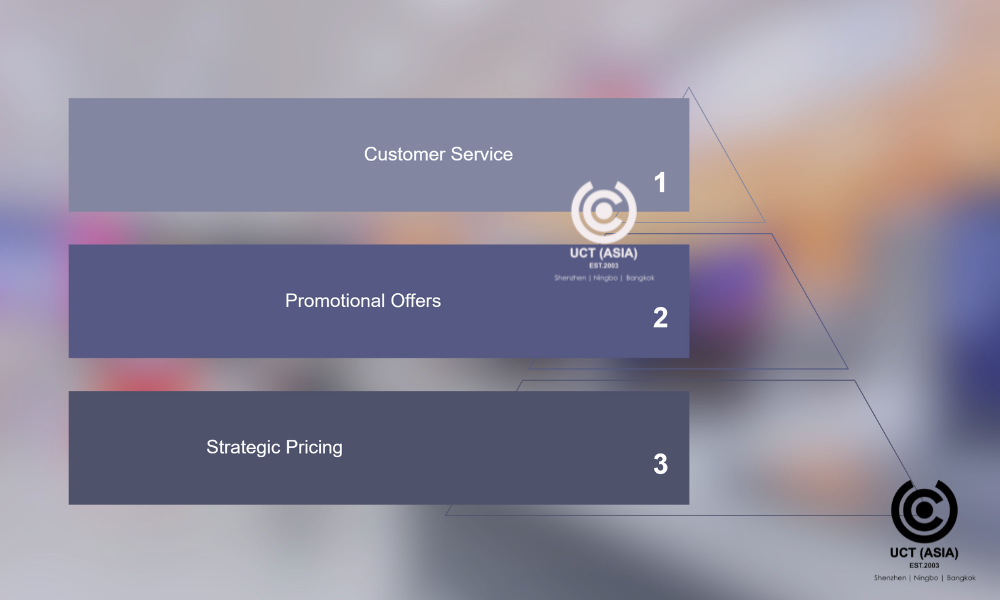
4. Price and Promote Strategically — Leverage Psychology and Incentives
Pricing is more than a number — it communicates value and triggers purchasing behavior.
Smart Pricing Strategies
- Psychological pricing (e.g., prices ending in .99) can boost conversions — sometimes by up to ~24%.
- Dynamic pricing during peak demand can increase average order value by about 13%.
- Tiered pricing (good-better-best) appeals to different budget segments and expands your market.
Promotion Tactics That Work
Studies show a wide range of promotion ideas that significantly impact customer acquisition and retention:
- Flash Sales & Limited-Time Offers: Create urgency and can generate up to ~20% of monthly sales in short bursts.
- Discounts & Bundling: Encourage larger purchases and improve average order value (AOV). ☑️ Bundling increases total transactions and helps move inventory.
- Loyalty Programs: Repurchase incentives and rewards can increase repeat business, with loyalty members often showing higher purchase frequency.
- Abandoned Cart Incentives: Target customers who leave without buying using discounts or free shipping to complete sales.
- Influencer & Affiliate Collaboration: These partnerships amplify your reach and drive targeted traffic.
Actionable Tip: Use email campaigns to communicate limited-time deals and abandoned cart reminders — research shows strong ROI from email marketing.
5. Deliver Excellent Customer Service — More Than Support
Customer service isn’t just problem resolution — it’s brand differentiation.
- Fast, empathetic responses and clear return policies build trust.
- Personalization — addressing customers by name or suggesting products based on past behavior — makes customers feel valued and encourages loyalty.
- Positive experiences lead to positive reviews, which significantly influence future buyers.
Actionable Tip: Implement live chat support and comprehensive FAQ resources to assist customers instantly and reduce friction.
6. Monitor, Analyze, and Iterate — Data Drives Growth
Continuous improvement separates successful e-commerce operations from stagnant ones. Monetizing data insights helps businesses optimize strategies for:
- Inventory placement and search relevance
- Customer segmentation performance
- Promotion effectiveness and pricing adjustments
For example, using A/B testing allows you to refine pricing, page layout, and promotional messages based on real customer behavior.
Actionable Tip: Regularly review website analytics and A/B test key changes for measurable improvements.
Conclusion — Selling Merchandise Is Strategic Craftsmanship
Selling isn’t just listing products — it’s delivering value at every interaction:
- Understand your audience deeply
- Present well-designed, compelling products
- Price and promote intelligently
- Serve customers with consistency
- Measure and adapt continually
These principles position your brand to thrive in both retail and e-commerce markets.
Selling merchandise successfully demands more than tactics. It requires clarity about who you serve, discipline in how products are designed and priced, and consistency in how customers experience your brand at every touchpoint. When audience insight, quality control, strategic promotion, and customer service work together, merchandise stops being transactional and starts reinforcing brand value. This is the difference between short-term sales spikes and sustainable growth in competitive retail and e-commerce environments.
At UCT (Asia), we help brands turn these principles into execution. As a branded merchandise agency, we support businesses across sourcing, design, digital storefronts, and go-to-market strategy, ensuring every product aligns with brand intent and customer expectations. From concept to delivery, our approach blends creativity with operational precision, helping brands sell merchandise that resonates, converts, and builds long-term loyalty.