
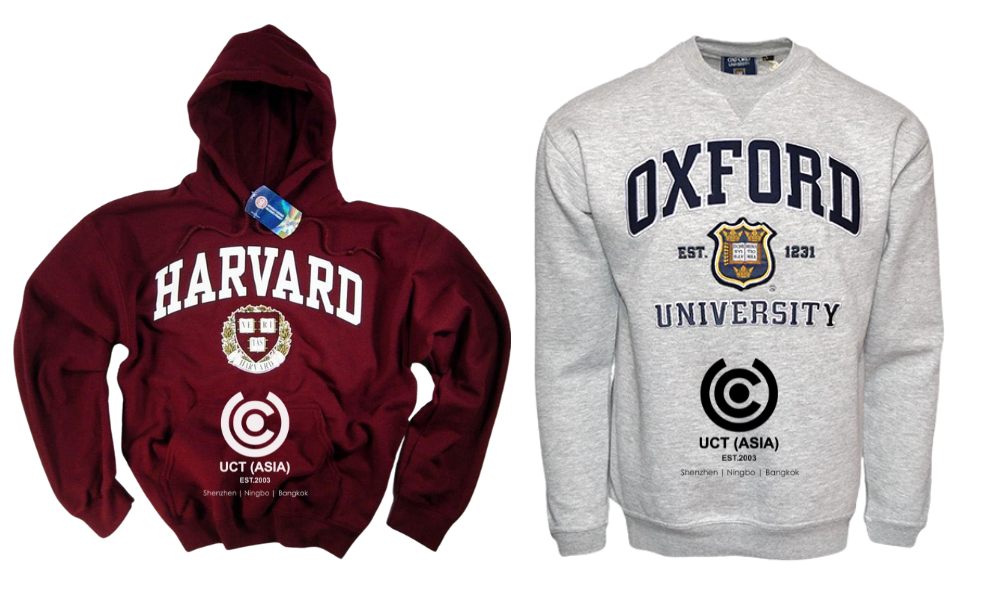
University merchandise operates in a completely different economic and cultural context than it did a decade ago. It no longer functions as a secondary revenue stream tied to campus bookstores. It behaves as a hybrid asset positioned between fashion, identity signaling, and lifestyle branding. Statista reports that licensed merchandise surpasses $300 billion globally, while ThredUp’s 2024 data shows resale apparel growing three times faster than traditional retail channels. Those two forces intersect directly within collegiate apparel, reshaping how value is created, perceived, and scaled.
A Harvard hoodie or UCLA crewneck no longer signals simple affiliation. It communicates aspiration, aesthetic alignment, and cultural awareness. The garment becomes a message system rather than a product.
From Campus Gear to Coveted Fashion: The Evolution of University Apparel
The From Utility to Cultural Infrastructure
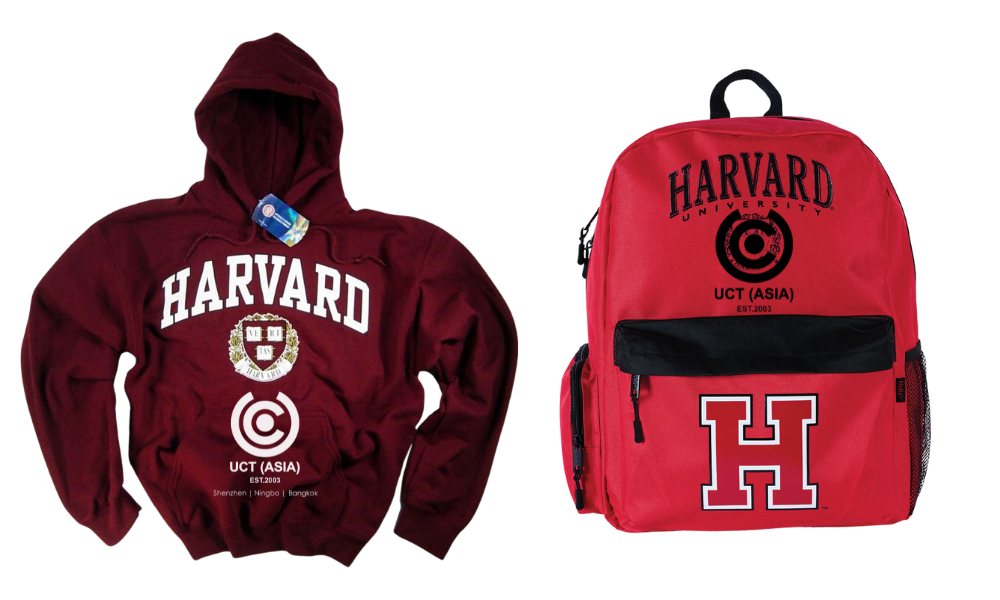
University merchandise began as a functional layer of student life. Hoodies provided warmth, backpacks carried books, and mugs filled dorm rooms. The purchase decision revolved around necessity and belonging.
That functional model transitioned into recognition-driven branding, where logos began to matter. The current phase moves further. University merchandise now behaves as cultural infrastructure, meaning it carries identity, narrative, and symbolic value across contexts.
Streetwear accelerated this transition. Its core logic centers on three mechanisms:
- Logo visibility
- Scarcity through limited drops
- Narrative-driven branding
Universities entered this system with a structural advantage. Their histories, reputations, and global recognition already function as embedded narratives. A collegiate logo does not need to be invented. It already carries decades or centuries of meaning.
Scarcity Economics and the Creation of Demand
Scarcity drives modern fashion consumption. McKinsey identifies drop culture as a primary engagement driver among Gen Z, where limited availability increases urgency and perceived value.
University merchandise adopts identical mechanics:
- Limited-edition releases restrict supply
- Capsule collections create time-sensitive demand
- Collaborations elevate perceived exclusivity
This creates a feedback loop:
Scarcity reduces availability → perceived exclusivity increases → demand intensifies → visibility expands → cultural relevance strengthens
A basic sweatshirt transitions into a collectible asset. The value no longer depends on material quality alone. It depends on availability, timing, and narrative.
Social Media as a Distribution Engine for Meaning
Platforms such as TikTok and Instagram function as accelerators of aesthetic systems. Trends no longer diffuse slowly through retail cycles. They spread instantly through visual repetition.
The “dark academia” aesthetic illustrates this shift. It combines intellectual romanticism with visual cues such as wool textures, vintage books, and collegiate typography. University merchandise fits seamlessly into this system because it reinforces the narrative visually and symbolically.
Influencer Marketing Hub reports that over 60% of Gen Z consumers discover fashion through social media. This transforms platforms into primary distribution channels for both visibility and demand.
Celebrity adoption reinforces legitimacy. When public figures wear collegiate apparel, the meaning shifts from academic affiliation to cultural participation. The product becomes detached from its original context and reattached to lifestyle signaling.
The Resale Market as a Value Validator
The resale economy plays a critical role in establishing authenticity. ThredUp projects the resale market to reach $350 billion by 2028, with vintage apparel driving a significant portion of that growth.
Vintage university merchandise performs strongly because it satisfies three value conditions:
- Authenticity created through wear and aging
- Scarcity due to limited historical production
- Narrative embedded in each item
Consumers purchase these items not for utility, but for temporal identity. The garment represents a connection to a past moment that feels more culturally meaningful than new production.
Universities respond by producing vintage-inspired collections. These replicate visual aging while maintaining scalability. The strategy merges authenticity aesthetics with modern manufacturing efficiency.
Identity Signaling and Cultural Capital
University merchandise operates as a symbolic communication system. It allows individuals to project identity without explicit statements.
A Harvard hoodie signals intellectual aspiration. An MIT shirt suggests technical competence. A UCLA sweatshirt conveys a relaxed, lifestyle-oriented identity.
This aligns with the concept of cultural capital, where visible symbols communicate social positioning.
Four psychological mechanisms drive this behavior:
- Aspirational identity projection
- Emotional connection through memory
- Status signaling via scarcity
- Cultural fluency through brand recognition
In regions such as East Asia, collegiate apparel often functions independently of academic affiliation. The meaning shifts entirely toward global cultural signaling, where the brand represents ideals rather than experiences.
Sustainability as a Structural Expectation
Consumer behavior increasingly reflects environmental awareness. Nielsen reports that more than 70% of Gen Z consumers prefer brands aligned with sustainability values. Deloitte further shows that these consumers demonstrate higher retention and lifetime value.
University merchandise programs integrate sustainability through:
- Organic and recycled materials
- Transparent supply chains
- Ethical labor practices
- Circular production systems
Sustainability shifts from differentiation to baseline requirement. Institutions that fail to meet these expectations risk losing relevance among younger audiences.
Expansion Into Lifestyle Ecosystems
University merchandise extends into multiple product categories, transforming campus stores into lifestyle environments.
Key categories include:
- Tech accessories integrating branding into digital routines
- Drinkware aligning with sustainability and daily use
- Home decor extending identity into personal spaces
- Athleisure blending performance and lifestyle
- Gaming products targeting digital-native consumers
Each category increases brand exposure across different moments of daily life. This creates continuous interaction rather than isolated purchase events.
Future Direction: Interactive and Personalized Merchandising
University merchandise moves toward integration with digital ecosystems.
Emerging developments include:
- QR and NFC-enabled products linking to digital content
- Augmented reality experiences layered onto physical items
- Mass customization allowing personalized design
- Event-based drops tied to cultural or institutional moments
- Cross-institution collaborations expanding audience reach
Strategic Execution for Institutions
Universities that succeed in this space treat merchandise as a strategic brand system.
Key execution principles include:
- Investing in design expertise to ensure cultural relevance
- Prioritizing quality to maintain long-term value perception
- Using data to guide product and inventory decisions
- Building partnerships that enhance credibility and reach
- Embedding sustainability into production processes
Campus stores evolve into curated environments where product selection, experience design, and storytelling converge.
Final Perspective
That’s why many institutions now rely on a branded merchandise agency for universities to translate identity into products that scale without losing meaning. From design development to ethical manufacturing and delivery, the right framework ensures merchandise feels intentional, relevant, and aligned with modern values.
At UCT (Asia), we support universities through that shift, helping brands move from concept to circulation with clarity and control. The focus isn’t on producing more items, but on creating merchandise that reflects purpose, performs in real-world use, and naturally extends campus identity into everyday life.