
You’ve decided to launch your e-commerce business and know what merchandise you want to sell — great start. But sourcing quality products online isn’t always straightforward. This guide walks you through proven steps for finding and evaluating merchandise suppliers, ensuring you reduce risk and build a strong brand reputation.
1. Clarify What Merchandise You Actually Need
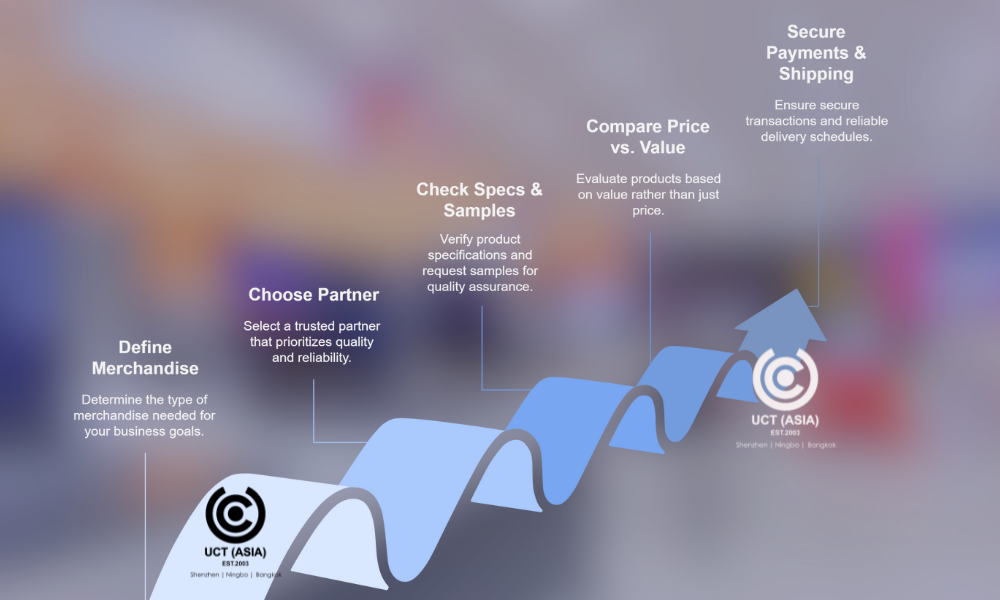
Defining the type of merchandise you want to sell is not optional — it’s foundational.
Ask yourself:
- Is the product seasonal or evergreen?
- Is it a premium item, a branded giveaway, or a daily-use product?
- Do your customers want customized, branded, or generic goods?
The clearer your product goals, the easier it is to communicate requirements and evaluate suppliers. Without this clarity, you risk costly mistakes later in your sourcing process.
2. Research and Choose Trusted Merchandise Partners
A reliable partner is essential, especially when ordering bulk or custom merchandise online.
Where to Find Suppliers
E-commerce sellers commonly source products from:
- Online sourcing platforms such as Alibaba, AliExpress, Faire, and Spocket — each serves different needs (wholesale, dropshipping, fast shipping, boutique products).
- Manufacturers directly, especially for custom or white-label merchandise.
- Trade shows and industry networks, which help you evaluate products and meet suppliers in person.
How to Vet Suppliers
Before ordering:
- Verify the supplier’s ratings, verification badges, and reviews.
- Check how long they’ve been in business and whether they hold industry-relevant certifications.
- Ask for references or testimonials from other clients.
Partnering with a strong sourcing organization that focuses on quality, compliance, and delivery reliability can streamline your entire process.
3. Insist on Product Specifications and Physical Samples
Checking a product photo online isn’t enough.
Best practice:
- Request detailed product specs — materials, dimensions, tolerances, standards, and compliance certifications.
- Secure physical samples before any large orders. Samples let you verify quality, materials, function, and packaging before you commit.
Industry experts compare sampling to a “test drive” — skipping this increases your risk of customer returns and negative brand impact.
4. Evaluate Price Against Overall Value — Not Just Unit Cost
It’s tempting to chase the lowest quote. But low price often equals low value:
- Products with ultra-low prices may have inferior materials or poor durability.
- Cheap suppliers may cut corners on shipping, packaging, or quality checks.
Instead, assess total value by weighing quality, durability, supplier reliability, and customer satisfaction. High-value products boost your brand’s reputation and reduce returns — which is more profitable in the long term.
5. Prioritize Secure Payments and Reliable Shipping
Online transactions and international shipping bring risk. To protect your business:
Secure Payment Practices
- Use services that offer buyer protection (escrow or platform guarantees).
- Avoid unsecured wire transfers when possible.
Reliable Logistics
- Confirm shipping methods, timelines, tracking, and customs processes before ordering.
- Understand costs such as duties, taxes, and freight — these affect your total landed cost.
Products that arrive late or damaged can directly hurt customer experience and your brand’s credibility.
6. Build Supplier Relationships and Quality Control Processes
Strong relationships with suppliers pay dividends:
- Better pricing as your order volumes increase.
- Priority production scheduling during peak seasons.
- Shared commitment to quality over time.
Pro tip: Have a quality control checklist and, for large orders, consider third-party inspection services prior to shipment. This cuts down defects and customer complaints.
7. Mitigate Risk With Multiple Supplier Options
Relying on one source is risky. Supply chain disruptions, production delays, or quality issues can quickly cripple fulfillment.
Instead:
- Maintain backup suppliers for your top SKUs.
- Mix sourcing strategies (wholesale, dropshipping, private label) to keep inventory flowing.
Diversification improves resilience and gives you leverage when negotiating pricing.
8. Monitor, Review, and Optimize Your Sourcing Over Time
Product sourcing isn’t a one-time task — it’s ongoing.
Track key performance indicators such as:
- On-time delivery rates.
- Defect rates.
- Customer feedback and return reasons.
Learn from each cycle and adjust your sourcing strategy accordingly to reduce risks and improve margins.
Ready to Buy Smarter Merchandise?
Sourcing quality merchandise online doesn’t have to be stressful or risky. With the right procedures and partners, you can access products that build your brand and satisfy customers.
Focus on clear requirements, strong supplier vetting, quality checks, secure payment, and long-term partnerships — these are the pillars of successful e-commerce sourcing.
As you move from planning to purchasing, the difference between average merchandise and high-performing merchandise comes down to who you source from and how well the process is managed. UCT (Asia) supports brands at every stage, from product selection and compliance checks to production oversight and global delivery. As a branded merchandise agency with deep regional expertise, we focus on consistency, quality control, and long-term value rather than short-term wins, so every item you order reinforces your brand rather than putting it at risk.
Buying merchandise online doesn’t need guesswork or unnecessary risk. With UCT (Asia), you gain a partner that understands international sourcing standards, supplier accountability, and the commercial realities of scaling an e-commerce or corporate merchandise program. Whether you’re launching a new product line or expanding an existing one, our team helps you source smarter, move faster, and deliver merchandise that customers actually want to keep, use, and remember.