
ription * * * * * a * NUL-padded string * * * A * SPACE-padded string * * h * Hex string, low nibble first * * H * Hex string, high nibble first * csigned char * * C * unsigned char * * s * signed short (always 16 bit, machine byte order) * * * S * unsigned short (always 16 bit, machine byte order) * * * n * unsigned short (always 16 bit, big endian byte order) * * * v * unsigned short (always 16 bit, little endian byte order) * * * i * signed integer (machine dependent size and byte order) * * * I * unsigned integer (machine dependent size and byte order) * * * l * signed long (always 32 bit, machine byte order) * * * L * unsigned long (always 32 bit, machine byte order) * * * N * unsigned long (always 32 bit, big endian byte order) * * * V * unsigned long (always 32 bit, little endian byte order) * * * q * signed long long (always 64 bit, machine byte order) * * * Q * unsigned long long (always 64 bit, machine byte order) * * * J * unsigned long long (always 64 bit, big endian byte order) * * * P * unsigned long long (always 64 bit, little endian byte order) * * * f * float (machine dependent size and representation) * * * g * float (machine dependent size, little endian byte order) * * * G * float (machine dependent size, big endian byte order) * * * d * double (machine dependent size and representation) * * * e * double (machine dependent size, little endian byte order) * * * E * double (machine dependent size, big endian byte order) * * * x * NUL byte * * * X * Back up one byte * * * Z * NUL-padded string (new in PHP 5.5) * * * @ * NUL-fill to absolute position * * * * * @param mixed $params * @return string Returns a binary string containing data. * @throws MiscException * */ function pack(string $format, ...$params): string { error_clear_last(); if ($params !== []) { $result = \pack($format, ...$params); } else { $result = \pack($format); } if ($result === false) { throw MiscException::createFromPhpError(); } return $result; } /** * Convert string from one codepage to another. * * @param int|string $in_codepage The codepage of the subject string. * Either the codepage name or identifier. * @param int|string $out_codepage The codepage to convert the subject string to. * Either the codepage name or identifier. * @param string $subject The string to convert. * @return string The subject string converted to * out_codepage. * @throws MiscException * */ function sapi_windows_cp_conv($in_codepage, $out_codepage, string $subject): string { error_clear_last(); $result = \sapi_windows_cp_conv($in_codepage, $out_codepage, $subject); if ($result === null) { throw MiscException::createFromPhpError(); } return $result; } /** * Set the codepage of the current process. * * @param int $cp A codepage identifier. * @throws MiscException * */ function sapi_windows_cp_set(int $cp): void { error_clear_last(); $result = \sapi_windows_cp_set($cp); if ($result === false) { throw MiscException::createFromPhpError(); } } /** * Sends a CTRL event to another process in the same process group. * * @param int $event The CTRL even to send; * either PHP_WINDOWS_EVENT_CTRL_C * or PHP_WINDOWS_EVENT_CTRL_BREAK. * @param int $pid The ID of the process to which to send the event to. If 0 * is given, the event is sent to all processes of the process group. * @throws MiscException * */ function sapi_windows_generate_ctrl_event(int $event, int $pid = 0): void { error_clear_last(); $result = \sapi_windows_generate_ctrl_event($event, $pid); if ($result === false) { throw MiscException::createFromPhpError(); } } /** * If enable is omitted, the function returns TRUE if the stream stream has VT100 control codes enabled, FALSE otherwise. * * If enable is specified, the function will try to enable or disable the VT100 features of the stream stream. * If the feature has been successfully enabled (or disabled). * * At startup, PHP tries to enable the VT100 feature of the STDOUT/STDERR streams. By the way, if those streams are redirected to a file, the VT100 features may not be enabled. * * If VT100 support is enabled, it is possible to use control sequences as they are known from the VT100 terminal. * They allow the modification of the terminal's output. On Windows these sequences are called Console Virtual Terminal Sequences. * * @param resource $stream The stream on which the function will operate. * @param bool|null $enable If specified, the VT100 feature will be enabled (if TRUE) or disabled (if FALSE). * * @throws MiscException * */ function sapi_windows_vt100_support($stream, ?bool $enable = null): void { error_clear_last(); if ($enable !== null) { $result = \sapi_windows_vt100_support($stream, $enable); } else { $result = \sapi_windows_vt100_support($stream); } if ($result === false) { throw MiscException::createFromPhpError(); } } /** * * * @param int $seconds Halt time in seconds. * @return int Returns zero on success. * * If the call was interrupted by a signal, sleep returns * a non-zero value. On Windows, this value will always be * 192 (the value of the * WAIT_IO_COMPLETION constant within the Windows API). * On other platforms, the return value will be the number of seconds left to * sleep. * @throws MiscException * */ function sleep(int $seconds): int { error_clear_last(); $result = \sleep($seconds); if ($result === false) { throw MiscException::createFromPhpError(); } return $result; } /** * Delays program execution for the given number of * seconds and nanoseconds. * * @param int $seconds Must be a non-negative integer. * @param int $nanoseconds Must be a non-negative integer less than 1 billion. * @return array{0:int,1:int}|bool Returns TRUE on success. * * If the delay was interrupted by a signal, an associative array will be * returned with the components: * * * * seconds - number of seconds remaining in * the delay * * * * * nanoseconds - number of nanoseconds * remaining in the delay * * * * @throws MiscException * */ function time_nanosleep(int $seconds, int $nanoseconds) { error_clear_last(); $result = \time_nanosleep($seconds, $nanoseconds); if ($result === false) { throw MiscException::createFromPhpError(); } return $result; } /** * Makes the script sleep until the specified * timestamp. * * @param float $timestamp The timestamp when the script should wake. * @throws MiscException * */ function time_sleep_until(float $timestamp): void { error_clear_last(); $result = \time_sleep_until($timestamp); if ($result === false) { throw MiscException::createFromPhpError(); } } /** * Unpacks from a binary string into an array according to the given * format. * * The unpacked data is stored in an associative array. To * accomplish this you have to name the different format codes and * separate them by a slash /. If a repeater argument is present, * then each of the array keys will have a sequence number behind * the given name. * * @param string $format See pack for an explanation of the format codes. * @param string $data The packed data. * @param int $offset The offset to begin unpacking from. * @return array Returns an associative array containing unpacked elements of binary * string. * @throws MiscException * */ function unpack(string $format, string $data, int $offset = 0): array { error_clear_last(); $result = \unpack($format, $data, $offset); if ($result === false) { throw MiscException::createFromPhpError(); } return $result; } Promotional Strategies in Agriculture: Custom Merchandise for Farmers - UCT (Asia)

Promotional Strategies in Agriculture: Custom Merchandise for Farmers

Table of Contents

    At a farmers’ market, in a supply store, or out in the field before sunrise, brand visibility does not come from ads on a screen. It comes from what farmers actually use. Gloves pulled on every morning, mugs filled before the first task of the day, caps worn across seasons. In agriculture, trust builds through repetition and practicality, not fleeting impressions. This is where custom branded merchandise moves from being a giveaway to becoming a working part of daily operations.

    Branded merchandise performs differently in agricultural settings because the products live where the work happens. A durable, well-designed item earns repeated exposure, reinforces familiarity within tight-knit farming communities, and signals reliability without needing constant promotion. Industry research supports this behavior. Promotional Products Association International reports that promotional products generate an average return of $6.41 for every dollar spent, driven largely by frequent use and long product lifespans. When those products align with real farm routines, they stop functioning as advertising and start operating as long-term brand assets.

    Why Branded Merchandise Breeds Success On the Farm

    Branded merchandise works in agriculture because it relies on repetition rather than attention. A digital ad disappears after a few seconds, while a physical item stays in use. When a farmer reaches for the same branded mug each morning or puts on branded safety gear before heading into the field, the brand becomes part of a routine. Each use reinforces recognition without requiring additional marketing effort.

    Frequency and environment amplify that effect. Agricultural work follows consistent patterns, which means apparel, tools, and drinkware are used repeatedly in the same settings and among the same professional circles. Over time, those repeated impressions strengthen recall in a way one-time promotions cannot. The brand becomes familiar through presence rather than persuasion.

    Durability and visibility complete the system. Farmers value products that hold up under real working conditions, and when branded items last, they signal reliability by association. Worn at markets, supply stores, or cooperative meetings, these items extend exposure within close-knit communities where reputation influences purchasing decisions. This is how branded merchandise shifts from a giveaway to a long-term brand asset.

    Merchandise That Works Where Farmers Work
    In the field and during daily operations

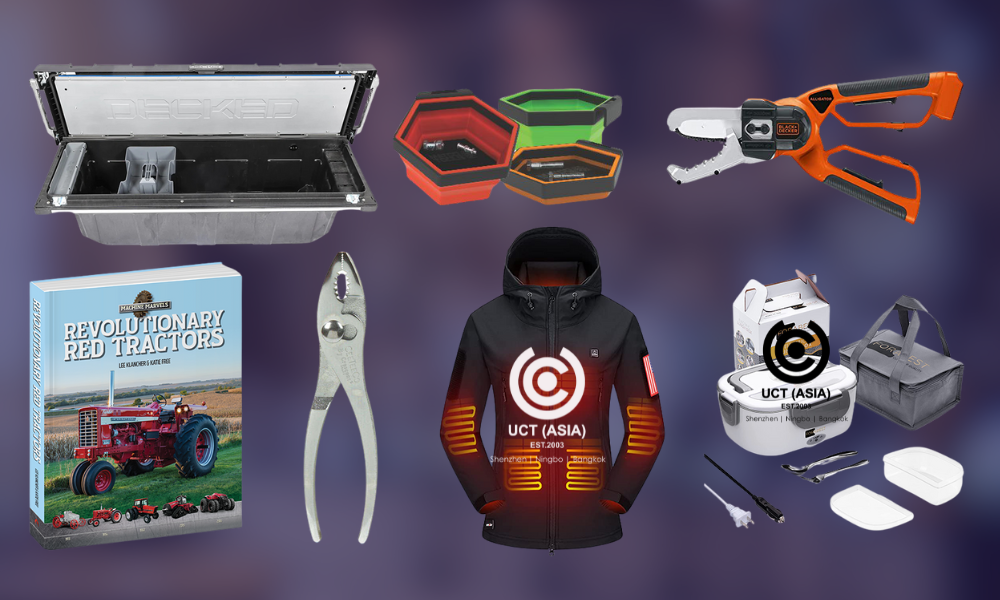
    Workwear and functional gear create the highest frequency of brand exposure. Caps, durable gloves, safety glasses, and branded outerwear are worn repeatedly and in demanding conditions. When these items perform well, the brand attached to them benefits from constant, trusted visibility throughout planting, harvest, and routine maintenance.

    At markets, events, and supply stops

    Visibility expands when branded items move beyond the farm. Tote bags, insulated drinkware, and weather-resistant apparel travel to farmers’ markets, cooperative meetings, and supplier visits. These products extend brand recognition into shared spaces where peer interaction influences buying decisions, multiplying impressions beyond the original user.

    In offices, homes, and planning spaces

    Lower-intensity items support long-term recall. Calendars, notebooks, pens, and seed packets stay visible during planning, ordering, and administrative work. While used less intensively, they anchor the brand in quieter moments where decisions are made rather than executed.

    Structured this way, each product category serves a clear role in reinforcing brand presence across the full agricultural cycle, not just as a useful item, but as a deliberate branding tool.

    Conclusion

    In agriculture, brand strength develops through consistency and repeated presence, not one-time exposure. Custom branded merchandise supports that process by living inside daily routines and shared professional spaces where trust forms naturally. When the same branded items appear across seasons, markets, and working environments, the brand shifts from simple recognition to familiarity and preference within close-knit agricultural communities.

    That effect depends on execution as much as strategy. Product durability, material quality, and consistent branding determine whether merchandise becomes a short-lived giveaway or a lasting brand asset. Working with an experienced branded merchandise agency ensures these products are designed and produced for real agricultural conditions, extending brand value well beyond the first impression.

    Posted in

    admin