
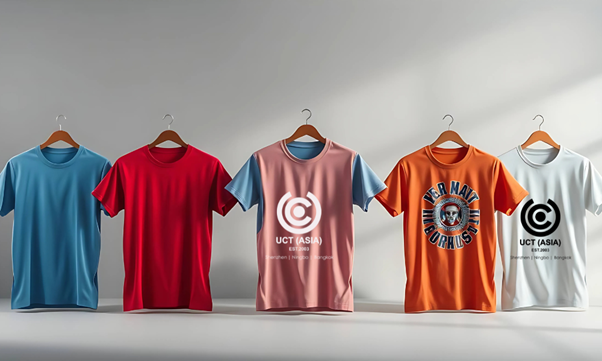
The Humble Beginnings You Never Knew About
Here’s something that might surprise you: that t-shirt in your drawer started life as underwear. No, really.
Back in the late 1800s, t-shirts were nothing more than simple undergarments for workers, sailors, and soldiers. They were designed purely for function—breathable, easy to wear, and practical for labor-intensive jobs. The idea that these humble undershirts would one day become walking billboards for brands would have seemed absurd.
But that is exactly what happened.
Over the past 150 years, the t-shirt has undergone one of the most dramatic transformations in fashion history. It has gone from hidden undergarment to political statement canvas to corporate branding powerhouse. And understanding this evolution matters—especially if you are looking to leverage t-shirts for your own brand in 2026.
How T-Shirts Escaped the Underwear Drawer
The transition from underwear to outerwear did not happen overnight. It took decades, and Hollywood played a starring role.
In the mid-20th century, actors like Marlon Brando and James Dean began wearing t-shirts as standalone pieces in films. Suddenly, what was once hidden beneath dress shirts became a symbol of rebellion, coolness, and effortless style. Audiences noticed. Sales jumped. And the t-shirt officially stepped into the spotlight.
But the real revolution was just beginning.
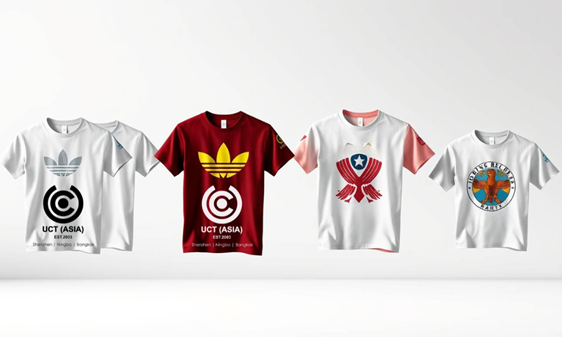
The Printing Revolution Changed Everything
Around the same time Hollywood was making t-shirts fashionable, the printing industry was experiencing its own transformation. Screen printing technology advanced rapidly, making it affordable and practical to print designs, logos, and slogans directly onto fabric.
This changed the game completely.
For the first time, t-shirts became more than clothing—they became communication tools. People started wearing shirts with political messages, band logos, and social statements. A simple piece of cotton suddenly carried meaning, identity, and belonging.
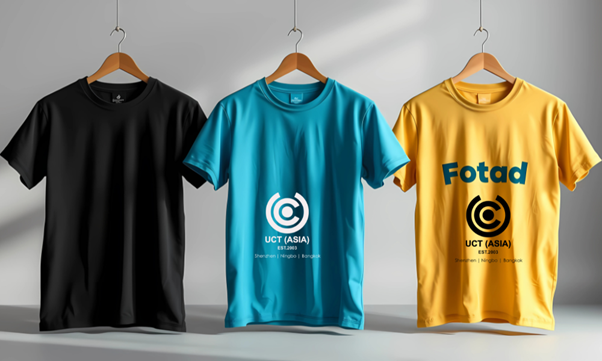
When Corporations Realized T-Shirts Were Billboards
By the 1970s and 80s, businesses caught on to what individuals had already discovered: t-shirts were incredibly effective at spreading messages.
Companies began using branded t-shirts as promotional merchandise. They handed them out at events, sold them at concerts, and distributed them as corporate giveaways. The logic was simple—people actually *wore* these shirts, turning themselves into walking advertisements.
The numbers backed up the strategy. Studies on promotional merchandise consistently show that wearable items generate thousands of impressions over their lifetime. A single branded t-shirt can generate anywhere from 3,000 to 5,000 impressions as it gets worn in public, at gyms, while running errands, and at social gatherings.
Compare that to a flyer that gets glanced at once and tossed in the trash. The advantage is obvious.
The Digital Age: Anyone Can Be a Brand
Fast forward to the 2000s, and two developments fundamentally democratized t-shirt merchandising:
1. Digital Printing Technology
Direct-to-garment (DTG) printing and advanced screen printing made small-batch production economically viable. You no longer needed to order thousands of shirts to get a reasonable price per unit. Small businesses, artists, and entrepreneurs could design and sell t-shirts without massive upfront investment.
2. E-Commerce Platforms
The rise of platforms like Shopify, Etsy, and print-on-demand services meant anyone could set up an online store and sell t-shirts globally within hours. The barriers to entry essentially disappeared.
The result? T-shirt merchandising exploded. Independent designers, YouTubers, podcasters, and influencers all launched their own merchandise lines. A creator with 10,000 engaged followers could design a shirt, upload it to a platform, and have sales rolling in by the end of the week.
Social Media: The Ultimate T-Shirt Amplifier
If digital printing and e-commerce opened the door, social media kicked it wide open.
Platforms like Instagram, TikTok, and Twitter became the perfect showcase for t-shirt designs. Viral slogans, trending memes, and pop culture references could be turned into shirts and marketed to exactly the right audience within hours.
Consider this scenario: A meme goes viral on Tuesday. By Wednesday, someone has designed a shirt featuring that meme. By Friday, it is trending on TikTok. By Sunday, thousands of orders have been placed.
This speed was impossible in the old model. Traditional retail takes months to move from concept to shelf. Social media commerce moves in days, or even hours.
Celebrities and influencers capitalized on this immediately. Instead of relying on traditional merchandising deals, they launched their own lines directly to fans. Limited edition drops created urgency. Exclusive designs built community. And the direct-to-consumer model meant they kept significantly more of the revenue.
Sustainability: The New Must-Have Feature
Here is where the industry is heading in 2026—and if you are not paying attention to this, you are already behind.
Consumers are increasingly conscious of the environmental impact of their clothing choices. The fast fashion model of cheap, disposable t-shirts is losing favor. People want to know:
- What materials were used?
- Where was it manufactured?
- What printing methods were used?
- How long will this shirt actually last?
According to 2024 industry research, sustainable and ethically produced apparel now represents one of the fastest-growing segments of the clothing market. Brands that can demonstrate eco-friendly practices—from organic cotton to water-based inks to ethical manufacturing—are gaining significant competitive advantage.
This is not just a trend. It is a fundamental shift in consumer expectations.
What This Means for Your Brand in 2026
So, what is the takeaway from this 150-year evolution?
The t-shirt is not just a piece of clothing. It is:
- A branding tool that generates thousands of impressions
- A community builder that creates belonging among customers
- A revenue stream that can be highly profitable with the right design
- A sustainability statement that reflects your brand values
- A cultural artifact that connects your brand to moments and movements
Here is what you should consider for your t-shirt merchandise strategy:
Design for Wearability
The best branded t-shirts are ones people actually want to wear—not just ones they accept for free. Invest in quality materials, comfortable fits, and designs that look good beyond just displaying your logo.
Leverage Limited Drops
Scarcity drives demand. Consider releasing limited edition designs tied to events, seasons, or milestones. This creates urgency and encourages immediate action.
Think Beyond the Logo
The most effective branded shirts do not just slap a logo on the chest. They incorporate designs, slogans, or artwork that resonates with your audience while subtly incorporating your brand.
Prioritize Sustainability
If you are not already offering sustainable options, start planning for them. This is where the market is heading, and early adopters will have an advantage.
The Bottom Line
The t-shirt has come a long way from its origins as a worker’s undergarment. It has survived world wars, cultural revolutions, technological disruption, and shifting fashion trends. And through it all, it has proven to be one of the most versatile and effective branding tools available.
Whether you are a Fortune 500 company or a small business just starting out, t-shirt merchandise deserves a place in your marketing strategy. The question is not whether t-shirts work for branding—they clearly do. The question is whether you are using them as effectively as you could be.
FAQ: T-Shirt Merchandise in 2026
How long does a quality branded t-shirt typically last?
A well-made t-shirt using quality cotton and proper printing techniques can last 50-100 washes while maintaining its shape and design. Cheaper alternatives might show wear after 20-30 washes. Investing in quality upfront usually pays off in longevity.
What is the typical ROI on t-shirt merchandise?
While results vary by industry and design, promotional merchandise—including t-shirts—generates an average of 3,000-5,000 impressions over its lifetime. When you factor in the cost per impression compared to digital advertising, t-shirts often deliver significantly better ROI, especially for building brand recognition.
Should I focus on design or branding for my merchandise shirts?
The sweet spot is both. A shirt that looks good as a standalone piece while incorporating your brand subtly will get worn far more often than one that screams corporate advertisement. Think of brands like Supreme or Patagonia—their shirts are desirable first, branded second.
How important is sustainable manufacturing for t-shirt merchandise?
Increasingly important. According to recent consumer behavior studies, sustainability is becoming a primary purchasing factor for younger demographics (Millennials and Gen Z). Brands that ignore this shift risk being perceived as out of touch.
Can small businesses compete with large brands in t-shirt merchandise?
Absolutely. Digital printing and e-commerce have leveled the playing field. Small businesses can often move faster, be more niche-specific, and create more authentic connections with their audience. The key is understanding your specific audience and designing for them, not trying to appeal to everyone.
Ready to Create Your Own T-Shirt Merchandise?
T-shirt merchandise has evolved from simple branded apparel into a powerful storytelling platform. Today, well-designed shirts represent identity, culture, and community — making them one of the most versatile branding tools available. When brands invest in quality materials, creative design, and meaningful messaging, T-shirts become wearable ambassadors that amplify visibility organically.
As a leading branding merchandise company, UCT (Asia) helps businesses transform apparel into strategic marketing assets. Through thoughtful design, sourcing expertise, and production excellence, we create T-shirt programs that strengthen brand identity while delivering long-term exposure and authentic audience engagement.