
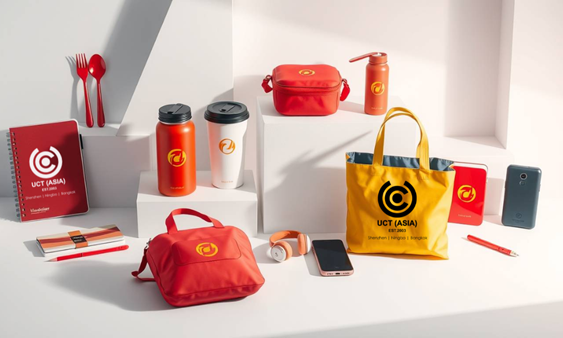
Cheap branded merchandise works because it converts a one-time cost into repeated exposure. A simple item like a tote bag or pen can generate hundreds or even thousands of impressions over its lifespan. Data from the Promotional Products Association International shows that 83% of consumers engage more with brands after receiving a promotional product, while Statista reports that practical items remain in use for over a year. That combination of utility and repetition drives recall, familiarity, and eventually preference. The real leverage appears when creativity shapes how and where these items enter people’s lives. For brands looking to scale this effectively, working with a branded merchandise agency ensures those items are not only creative, but strategically distributed and aligned with long-term brand goals.
1. Turn Everyday Items into Daily Exposure Engines
Choose items people already use repeatedly such as reusable bags, water bottles, or phone accessories. Each use becomes a passive advertisement. A commuter carrying a branded tote exposes your logo to dozens of people daily. Over a year, that single item can generate thousands of impressions without additional spend.
Mechanism: Utility → repeated use → sustained visibility
Example: A branded coffee tumbler used twice daily creates consistent exposure in offices, cafes, and transit spaces
2. Design “Conversation Starters,” Not Just Logos
Instead of placing a logo alone, add humor, bold statements, or visually striking designs. People share interesting items, not generic ones. A witty phrase or clever graphic increases the likelihood that someone asks, “Where did you get that?”
Mechanism: Curiosity → social interaction → organic brand spread
Upgrade idea: Add QR codes subtly within the design to convert curiosity into measurable traffic
3. Use Event-Based Distribution for High-Density Exposure
Distribute merchandise at trade shows, pop-ups, or local events where foot traffic is concentrated. A single event can amplify reach quickly because multiple people receive and use items simultaneously in the same environment.
Mechanism: Concentrated distribution → rapid impression scaling
Tactical twist: Match the item to the event context, for example sunscreen packets at outdoor festivals or portable chargers at tech events
4. Create Limited-Edition Drops to Trigger Scarcity
Scarcity changes perception. Even cheap items feel valuable when they are limited. Release small batches with unique designs tied to seasons, campaigns, or collaborations.
Mechanism: Scarcity → perceived value → increased retention
Behavioral angle: People are less likely to discard something they believe is exclusive
5. Bundle Merchandise with Purchases to Increase Perceived Value
Attach low-cost items to purchases as a surprise bonus. Customers interpret this as added value, even if the item cost is minimal.
Mechanism: Reciprocity → positive brand association → repeat purchase likelihood
Example: Include a branded keychain or sticker pack with every order
6. Turn Merchandise into Social Media Triggers
Encourage users to post photos with your merchandise by creating campaigns or challenges. Offer small rewards or features for participation.
Mechanism: User-generated content → digital amplification → extended reach
Execution idea: “Post your setup with our merch and tag us to win a monthly giveaway”
7. Partner with Complementary Brands for Cross-Exposure
Collaborate with another brand targeting a similar audience but offering different products. Co-branded merchandise doubles exposure without doubling cost.
Mechanism: Shared audience → expanded reach → cost efficiency
Example: A fitness brand partnering with a health food company to distribute co-branded shaker bottles
8. Use Merchandise as Access Passes
Transform items into functional access tools such as badges, wristbands, or members-only identifiers. This adds utility beyond aesthetics.
Mechanism: Functional value → increased usage frequency → repeated exposure
Insight: Items tied to access or identity are rarely discarded
9. Distribute Through Micro-Influencers Instead of Ads
Send branded merchandise to niche influencers who align with your audience. Unlike traditional ads, these items integrate naturally into their daily content.
Mechanism: Authentic usage → trust transfer → higher engagement
Why it works: Audiences respond more to lived experiences than direct promotions
10. Align Merchandise with Sustainability Trends
Eco-friendly products such as reusable utensils, bamboo items, or recycled materials increase perceived brand responsibility. Nielsen reports that consumers show stronger loyalty toward environmentally conscious brands.
Mechanism: Ethical alignment → stronger emotional connection → long-term loyalty
Bonus effect: Sustainable items often have longer lifespans, increasing impressions
Visual Strategy Breakdown
| Strategy Type | Primary Outcome | Key Mechanism |
|---|---|---|
| Everyday utility | Long-term exposure | Repetition through use |
| Creative design | Word-of-mouth | Curiosity and conversation |
| Event distribution | Rapid visibility | High-density reach |
| Limited editions | Higher retention | Scarcity effect |
| Bundled giveaways | Customer loyalty | Reciprocity principle |
| Social campaigns | Digital amplification | User-generated content |
| Partnerships | Audience expansion | Shared exposure |
| Functional items | Frequent usage | Embedded utility |
| Influencer seeding | Trust and engagement | Authentic integration |
| Sustainable products | Brand perception | Ethical alignment |
Advanced Insight: Why Cheap Merchandise Outperforms Many Ads
Traditional ads disappear after a single interaction. Branded merchandise persists. A $1 item used daily for a year can outperform a digital ad that costs more but lasts seconds. The cost-per-impression drops dramatically when exposure repeats without additional investment.
Psychology reinforces this effect. Repeated exposure increases familiarity, and familiarity builds trust. Add reciprocity from receiving a free item, and the brand gains both emotional and cognitive advantages.