
The vegan market is growing rapidly. According to Bloomberg Intelligence, the plant-based food market could reach $162 billion by 2030, showing how strongly consumers are moving toward plant-based products and ethical consumption.
For brands in this space, including food and beverage companies, beauty brands, fashion labels, and wellness businesses, promotional merchandise creates both an opportunity and a risk. Promotional items must support the brand’s environmental values while also meeting vegan expectations around animal welfare, material transparency, and cruelty-free production.
The difference between “eco-friendly” and “truly vegan” matters. A product may be sustainable but still contain hidden animal derivatives such as collagen-based glue, insect-based dyes, silk, wool, leather, or shellac-based coatings. According to The Vegan Society, 89% of consumers look for vegan certification logos on packaging or promotional materials when buying food and drink products for the first time.
For eco-friendly and vegan brands, promotional products need to be carefully sourced, verified, and aligned with the values customers already expect.
Why Should Vegan Brands Invest In Animal-Free Promotional Products?
Promotional items must match the brand’s ethical promise
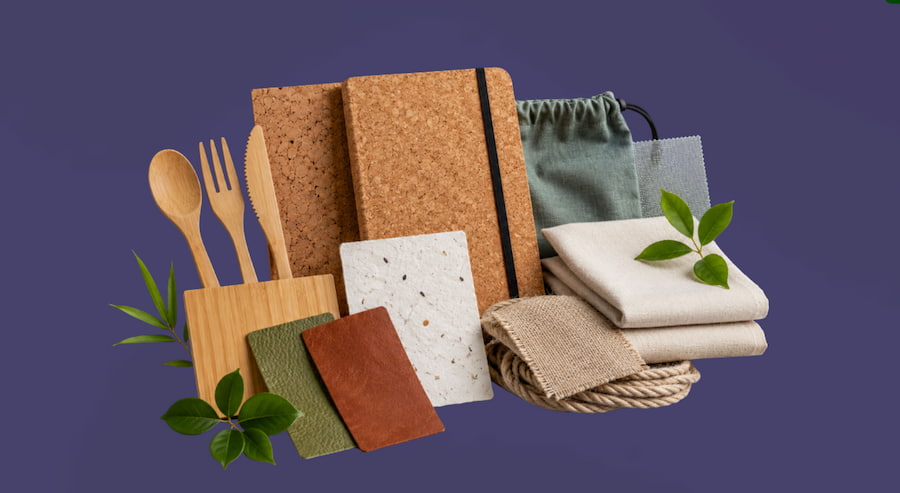
Vegan consumers are often careful researchers. They look closely at ingredients, materials, production methods, and supplier claims before deciding whether a brand is trustworthy. If a vegan beauty brand, food company, or wellness business gives away promotional items that contain hidden animal products, the issue can quickly damage trust.
The promotional products industry has traditionally used materials that may conflict with vegan values. These include leather, wool, silk, down, animal-derived glues, and certain dyes. For vegan brands, avoiding these materials requires more than choosing something that “looks sustainable.” It requires clear supplier verification and documented material transparency.
What Hidden Animal Products Appear in Promotional Items?
Some animal-derived ingredients are not immediately obvious
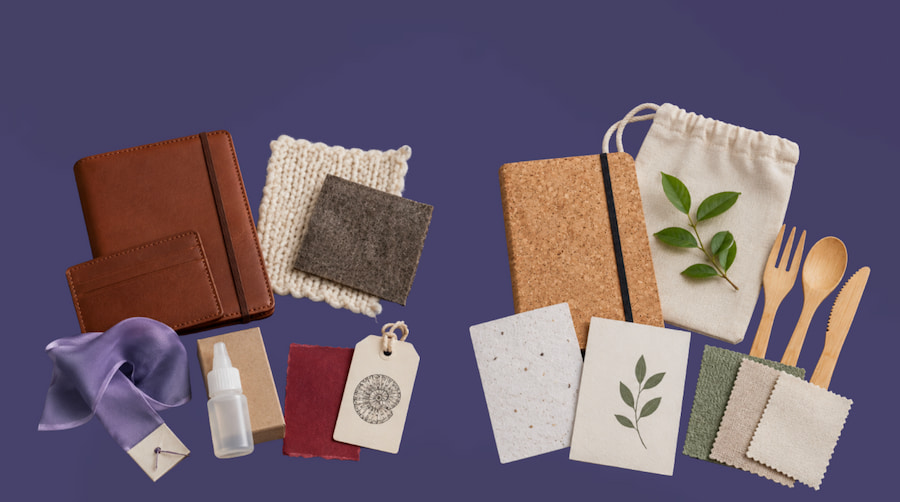
Many promotional products may contain animal-based components even when they are not visible to the buyer.
| Product Type | Hidden Animal Ingredient | Vegan Alternative |
| Leather-style goods | Genuine leather, suede | Cork leather, Piñatex, mushroom leather |
| Adhesives and glues | Casein, collagen | Plant-based adhesives, synthetic glues |
| Fabric dyes | Cochineal, keratin | Mineral dyes, plant-based pigments |
| Printing inks | Shellac | Soy-based inks, vegetable-derived inks |
| Wool blankets and apparel | Sheep wool, cashmere, angora | Organic cotton, hemp, bamboo fiber |
| Silk accessories | Silkworm silk | Bamboo silk, Tencel |
| Down-filled items | Duck or goose feathers | Recycled synthetic fill, kapok fiber |
How Can Brands Verify Vegan Claims?
Verification should go beyond supplier promises
Brands should request documentation that confirms the material composition of each item. This may include material safety data sheets, supplier declarations, product specifications, and recognised vegan certifications.
When possible, choose products with simple material compositions. A single-material cotton tote bag, cork notebook cover, or bamboo utensil set is usually easier to verify than a multi-component product with adhesives, coatings, trims, and mixed fabrics.
For brands building a wider sustainable merchandise strategy, UCT Asia’s article on eco-friendly merchandise and sustainable consumer choices may also support further planning.
Understanding Vegan Certifications for Promotional Items
Certifications help build customer confidence
Certifications give vegan consumers a clearer reason to trust a product. They also help brands avoid vague claims and reduce the risk of greenwashing or misleading marketing.
PETA-Approved Vegan
PETA-Approved Vegan is one of the most recognised vegan labelling programs. It indicates that products do not contain animal materials and are not tested on animals.
Common requirements include:
- No leather, fur, wool, silk, or down
- No animal-derived glues or dyes
- No animal testing at any production stage
- Supplier verification and documentation
The Vegan Society Trademark
The Vegan Society Trademark is one of the longest-running vegan certification schemes. The Vegan Society states that it has certified products and ingredients since 1990 and now covers more than 70,000 certified products worldwide.
Common requirements include:
- No animal ingredients or derivatives
- No animal testing by manufacturers or suppliers
- Cross-contamination controls
- Ongoing verification and renewals
Leaping Bunny Program
Leaping Bunny focuses mainly on cruelty-free standards. It is especially relevant for beauty, cosmetics, wellness, and personal care promotional products.
Common requirements include:
- No animal testing on finished products
- No animal testing on ingredients
- No third-party animal testing
- Supplier compliance verification
- Regular recommitment
B Corporation Certification
B Corp certification is not a vegan certification, but it indicates wider social and environmental responsibility. Many vegan brands may prefer working with B Corp suppliers because it reflects broader commitments to governance, workers, community, and environmental impact.
Top 10 Plant-Based Materials for Promotional Products
Plant-based materials give brands more ethical merchandise options
Innovation in sustainable materials has created more choices for vegan promotional products. These materials can help brands move beyond basic giveaways and create items that feel useful, premium, and aligned with their values.
1. Cork Fabric
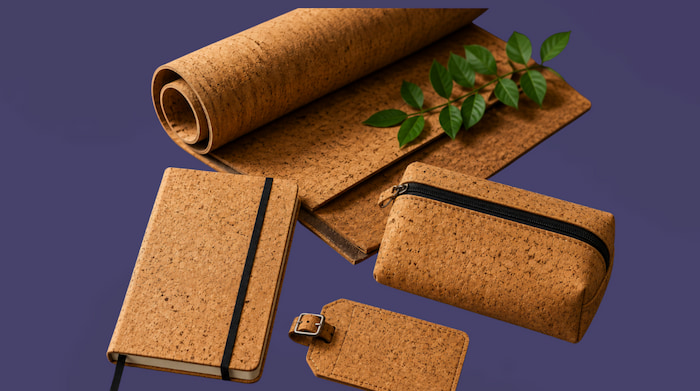
Cork fabric is harvested from cork oak trees without cutting them down. It offers a leather-like appearance while supporting forest health and biodiversity in Mediterranean regions.
| Properties | Best Applications |
| Water-resistant, lightweight, flexible, naturally antimicrobial, biodegradable | Wallets, card holders, laptop sleeves, coasters, notebook covers |
2. Piñatex

Piñatex is made from pineapple leaf fibers, an agricultural byproduct. It turns waste into a leather alternative while supporting farming communities.
| Properties | Best Applications |
| Leather-like look, flexible, breathable, partly renewable, supports circular economy principles | Premium bags, wallets, fashion accessories, upscale promotional items |
3. Mushroom Leather
Mushroom leather uses mycelium, the root-like structure of mushrooms, to create a leather alternative. It can offer a premium look without relying on animal hides.
| Properties | Best Applications |
| Rapid renewable production, leather-like finish, customizable texture and thickness | Premium bags, tech accessories, luxury vegan merchandise |
4. Organic Cotton
Organic cotton is grown without synthetic pesticides or fertilizers. According to Textile Exchange, organic cotton has been associated with significantly lower irrigation water use than conventional cotton in lifecycle assessments.
| Environmental Benefits | Best Applications |
| Lower synthetic chemical use, healthier soil practices, safer farming conditions | Tote bags, apparel, pouches, promotional textiles |
For brands exploring textile-based giveaways, UCT Asia’s guide to sustainable clothing merchandise offers related ideas on eco-friendly fashion and branded apparel.
5. Hemp
Hemp is durable, fast-growing, and requires relatively low inputs compared with many conventional fibers. It also creates strong products that can last for years.
| Properties | Best Applications |
| Durable, naturally antimicrobial, UV resistant, biodegradable, softens over time | Heavy-duty bags, backpacks, apparel, rope products |
6. Bamboo
Bamboo is fast-growing and widely used in sustainable promotional products. It can be processed into soft textiles or used as a sturdy material for lifestyle and kitchen items.
| Sustainability Profile | Best Applications |
| Fast-growing, renewable, naturally pest-resistant, biodegradable | Apparel, towels, phone accessories, cutting boards, utensils |
7. Recycled PET
Recycled PET, or rPET, gives existing plastic waste a second life. While it is not plant-based, it can still support eco-friendly and vegan merchandise by reducing reliance on virgin plastic.
| Environmental Benefits | Best Applications |
| Diverts plastic waste, reduces demand for virgin petroleum-based materials, supports circularity | Tote bags, laptop sleeves, lanyards, outdoor gear |
8. Apple Leather
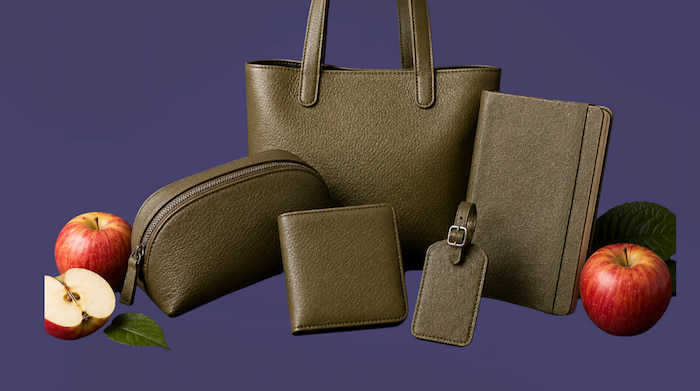
Apple leather is made using apple waste from juice production, including cores, peels, and pomace. It turns food waste into a flexible material suitable for smaller accessories.
| Properties | Best Applications |
| Uses agricultural byproducts, flexible, durable, distinctive texture | Wallets, card holders, small accessories, tags |
9. Cactus Leather
Cactus leather is made from cactus plants that require minimal water. The harvesting process can leave the core plant intact, allowing continued growth.
| Properties | Best Applications |
| Low-water cultivation, leather-like performance, partially biodegradable | Premium accessories, bags, wallets, fashion items |
10. Seaweed-Based Materials
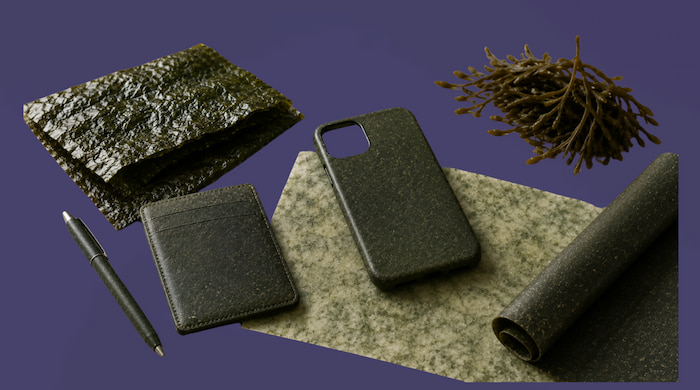
Seaweed-based materials are an emerging area in sustainable packaging and textiles. Seaweed cultivation does not require freshwater or fertilizer and can absorb carbon and nitrogen from ocean water.
| Properties | Best Applications |
| Emerging technology, biodegradable, naturally antimicrobial potential | Packaging, textiles, innovative promotional concepts |
Vegan Promotional Products by Industry
Different vegan industries need different merchandise choices
Promotional items should reflect the customer’s lifestyle, expectations, and relationship with the brand.
Beauty and Cosmetics Brands
Vegan beauty brands face close scrutiny around ingredients, testing, packaging, and ethical standards. Their promotional products should reflect the same level of care.
| Recommended Products | Key Considerations |
| Cork or Piñatex makeup bags, bamboo brush sets with vegan bristles, organic cotton headbands, seed paper cards, recycled glass sample containers | Avoid animal testing, prioritise natural materials, use recyclable packaging, include transparency messaging |
Food and Beverage Companies
Vegan food brands connect with customers through health, environment, animal welfare, and plant-based living.
| Recommended Products | Key Considerations |
| Organic cotton produce bags, bamboo utensil sets, cork coasters, hemp aprons, seed paper recipe cards | Use food-safe materials, choose easy-to-clean items, focus on practical use, reinforce plant-based messaging |
Fashion and Apparel Brands
Vegan fashion includes clothing, accessories, shoes, and lifestyle products. Promotional items should feel stylish while remaining animal-free.
| Recommended Products | Key Considerations |
| Piñatex wallets, cork card holders, hemp tote bags, mushroom leather keychains, recycled PET backpacks | Match the brand aesthetic, choose durable items, explain the vegan material story |
Wellness and Supplement Brands
Vegan wellness brands often attract health-conscious consumers who value purity, function, and transparency.
| Recommended Products | Key Considerations |
| Organic cotton yoga mat bags, hemp shaker sleeves, cork yoga blocks, bamboo water bottles, seed paper wellness journals | Use non-toxic materials, support wellness habits, keep designs calm and practical |
Animal-Free Printing and Production
Vegan merchandise also depends on inks, glues, and production methods
A promotional item can use vegan materials but still fail vegan standards if the ink, adhesive, coating, or production process includes animal-derived components.
Vegan Printing Inks
Traditional printing inks may contain animal-derived components. Brands should specify vegan-friendly ink options early in the sourcing process.
| Ink Type | Possible Animal Ingredients | Vegan Alternative |
| Conventional offset | Shellac, bone char | Soy-based inks |
| UV-cured inks | Animal-derived photoinitiators | Vegetable-based UV inks |
| Metallic inks | Fish scale derivatives | Mineral-based metallics |
| Dye-based inks | Cochineal, keratin | Plant-based pigments |
Best practices:
- Specify soy-based, vegetable-derived, or water-based inks
- Request ink composition documentation
- Work with printers familiar with vegan requirements
- Confirm ink suitability for fabric, packaging, and product surfaces
Adhesives and Binding
Bookbinding, packaging, and product assembly may use animal-derived glues. Vegan alternatives include synthetic PVA glues, starch-based adhesives, plant protein glues, and synthetic hot melt adhesives.
Brands should request glue composition documentation from manufacturers, especially for notebooks, packaging, boxes, labels, and multi-part accessories.
Manufacturing Facility Standards
Cross-contamination can be an issue if vegan products are made in facilities that also handle animal-derived materials.
Risk-reduction steps include:
- Dedicated vegan production lines where possible
- Cleaning protocols between production runs
- Third-party audits
- Supplier certification requirements
- Clear documentation for materials, inks, adhesives, and packaging
Conclusion
For vegan brands, promotional products are an extension of their ethical commitments. Every item distributed can either strengthen or weaken the brand’s credibility with its core audience. By choosing verified vegan materials, animal-free production methods, and responsible suppliers, brands can create promotional merchandise that builds trust instead of raising doubts.
The growing availability of cork, hemp, Piñatex, mushroom leather, apple leather, cactus leather, rPET, and seaweed-based materials makes vegan promotional products more sophisticated than ever. These options help brands create items that are practical, attractive, and aligned with modern sustainability expectations.
At UCT Asia, we understand that eco-friendly and vegan merchandise needs to do more than look good. As one of Asia’s experienced promotional products suppliers, we help brands source, design, and produce promotional items that support their values, meet customer expectations, and strengthen long-term brand trust. For related campaign ideas, you may also explore our guide on zero-waste festival merchandise and circular promotional strategies.
FAQ
What makes a promotional product vegan?
A promotional product is vegan when it contains no animal-derived materials, ingredients, coatings, glues, dyes, or production inputs. It should also avoid animal testing where relevant, especially for beauty, wellness, and personal care items.
Are eco-friendly promotional products always vegan?
No. A product can be eco-friendly but not vegan. For example, wool, silk, leather, down, and some natural dyes may be marketed as sustainable but still come from animals or insects.
What are the best vegan materials for promotional products?
Common vegan-friendly materials include cork, hemp, organic cotton, bamboo, recycled PET, Piñatex, cactus leather, apple leather, and mushroom leather. The best choice depends on the product type, budget, and brand positioning.
How can brands confirm that promotional items are truly vegan?
Brands should request supplier documentation, material specifications, certification details, and information about inks, adhesives, coatings, and packaging. Third-party vegan certifications can also help build customer confidence.
Why do vegan brands need to be careful with promotional merchandise?
Vegan customers expect consistency. If a brand sells vegan products but gives away merchandise containing hidden animal materials, it can damage trust and create reputational risk.