
Introduction: Why School Branding Matters
In a competitive education market, schools and universities need to stand out, attract prospective students, and build loyalty among current students, parents, staff, and alumni.
Custom promotional products help schools create:
- Stronger school spirit
- Better campus identity
- More memorable admissions experiences
- Stronger parent and alumni connections
- Long-term brand visibility
According to the ASI Global Ad Impressions Study 2023, 85% of people remember the advertiser who gave them a promotional product. For schools, this visibility can come from students wearing branded apparel, parents displaying car decals, and alumni using school-branded items in daily life.
Understanding the Educational Market
Promotional products support each audience differently
| Audience | What They Care About | Suitable Promotional Products |
| Prospective students | Belonging, excitement, identity | Acceptance kits, visit giveaways, welcome apparel |
| Current students | Pride, community, daily use | T-shirts, hoodies, notebooks, bottles |
| Parents | Trust, involvement, pride | Family packs, mugs, decals, event gifts |
| Alumni | Nostalgia, status, connection | Premium apparel, reunion gifts, keepsakes |
| Staff and faculty | Appreciation, unity, professionalism | Professional gear, awards, practical office items |
How promotional products fit the decision journey
| Stage | Product Opportunity |
| Initial awareness | Open house giveaways, digital campaign gifts |
| Campus visit | Tote bags, water bottles, phone wallets |
| Acceptance | Welcome kits, apparel, stickers, folders |
| Enrollment | Orientation merchandise, student essentials |
| Ongoing engagement | Event merchandise, alumni gifts, staff appreciation items |
Strategic Product Categories for Schools
Admissions and recruitment products create a stronger first impression
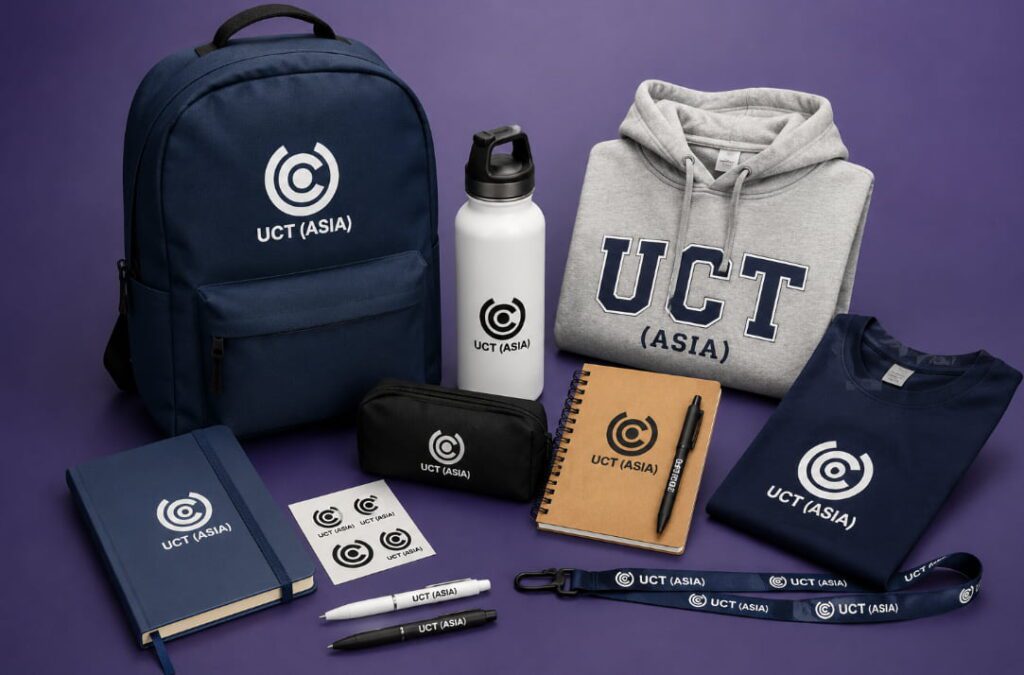
The acceptance moment is emotional. A well-designed acceptance package can make students feel welcomed before they arrive on campus.
| Product | Purpose |
| Branded acceptance folder | Keeps documents organized and professional |
| Welcome t-shirt or hoodie | Builds instant belonging |
| Sticker or decal sheet | Encourages personal expression |
| Lanyard with ID holder | Useful during orientation and school events |
| Welcome guide | Gives key information in a branded format |
| Branded pen set | Supports paperwork and onboarding |
For campus visits, schools can use:
- Branded water bottles
- Tote bags
- Phone wallets
- Sunglasses
- Campus maps in branded folders
For students unable to visit, virtual engagement packages can include:
- Branded care packages
- Local treats and school merchandise
- Personalized welcome notes
- Digital content supported by physical gifts
For more ideas on experience-led packaging, our article on how custom promotional products elevate the subscription box experience is a highly informative read.
Student life products build campus pride
Student merchandise should be useful, wearable, and connected to school identity.
| Category | Product Ideas |
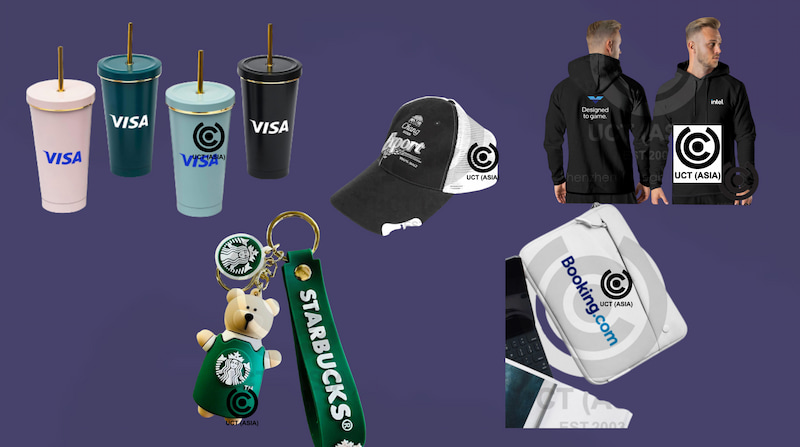
| Apparel | T-shirts, hoodies, sweatshirts, sportswear, hats |
| Study items | Notebooks, pens, laptop sleeves, desk organizers |
| Dorm items | Blankets, mugs, posters, wall art |
| Daily accessories | Keychains, lanyards, decals, tumblers |
| Event merchandise | Homecoming shirts, graduation items, sports gear |
Good design strategies include:
- Classic logo pieces for long-term appeal
- Trend-forward designs for current students
- Event-specific merchandise
- Academic program-specific products
- Sports team gear for school spirit
Parent and family products strengthen community involvement
Parents are often key decision-makers and advocates. Promotional products can help them feel connected to the school community.
| Use Case | Product Ideas |
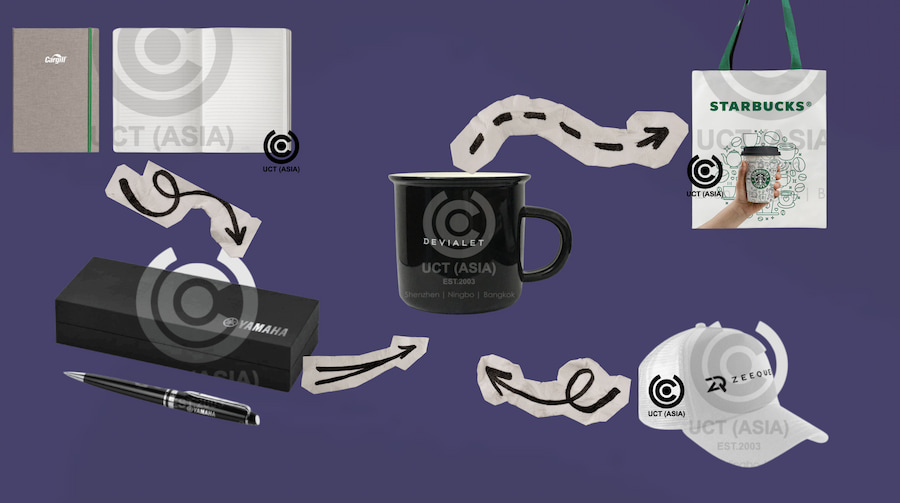
| Parent welcome kits | Mugs, decals, notepads, pens, event calendars |
| Parent weekends | Branded tote bags, apparel, event souvenirs |
| Sports events | Fan gear, caps, banners |
| Fundraising | Donor gifts, recognition items |
| Volunteer appreciation | Thank-you gifts, premium stationery |
Alumni products maintain lifelong relationships
Alumni products should feel more premium and meaningful. Quality matters more than quantity.
| Alumni Goal | Suitable Products |
| Nostalgia | Reunion merchandise, class-year gifts |
| Professional identity | Polo shirts, jackets, portfolios |
| Lifestyle use | Glassware, home décor, travel accessories |
| Fundraising | Donation-tier gifts, exclusive merchandise |
| Recognition | Achievement gifts, legacy society items |
Staff and faculty gifts support internal culture
Teachers and staff are important school ambassadors. Appreciation products can help improve morale and unity.
Useful options include:
- Conference bags
- Professional notebooks
- Classroom tech accessories
- Recognition plaques
- Spirit-day apparel
- Staff lounge mugs
- Wellness items
Product Selection by School Type
K-12 schools need age-appropriate items
| School Level | Product Considerations | Recommended Products |
| Elementary | Safe, colorful, simple, parent-approved | Stickers, crayons, water bottles, lunch bags, t-shirts |
| Middle school | Trend-aware, peer-influenced, identity-focused | Hoodies, phone accessories, athletic wear, locker items |
| High school | More brand-conscious and future-focused | Premium apparel, tech accessories, car decals, senior merchandise |
Higher education products should support campus lifestyle
| Audience | Product Direction |
| Undergraduate students | Apparel, dorm items, sports gear, major-specific products |
| Graduate students | Professional portfolios, premium apparel, executive accessories |
| Alumni | High-quality keepsakes, reunion items, donor gifts |
International schools should consider mobility and culture
International school merchandise should be inclusive and practical for families who may relocate.
Recommended approaches:
- Avoid overly culture-specific imagery where inappropriate
- Use high-quality, durable products
- Consider multi-language options
- Offer travel-friendly items
- Use passport, luggage, or global themes where suitable
Design Strategies for Maximum Impact
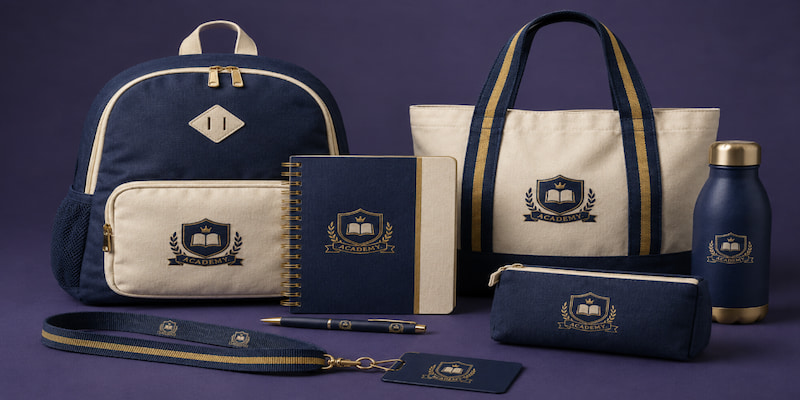
School colors should be used consistently
| Design Area | Best Practice |
| Primary colors | Reinforce school identity |
| Accent colors | Use for events, seasons, or campaigns |
| Contrast | Keep designs readable and accessible |
| Materials | Check how colors print on fabric, plastic, metal, and paper |
Logo and mascot placement should feel intentional
| Product Type | Common Placement |
| Apparel | Left chest, sleeve, back print |
| Bags | Front center or side panel |
| Stationery | Top center or corner |
| Drinkware | Front-facing logo |
| Stickers | Full-color logo, mascot, or slogan |
Creative options include:
- Tonal branding
- Vintage treatments
- Mascot illustrations
- All-over patterns
- Limited-edition designs
- Collectible series
Messaging should match the audience
| Audience | Messaging Style |
| Students | Energetic, inclusive, future-looking |
| Parents | Trust-building, value-focused, community-oriented |
| Alumni | Nostalgic, prestigious, legacy-driven |
| Staff | Appreciative, professional, supportive |
Distribution and Timing Strategies
Schools should plan around the academic calendar
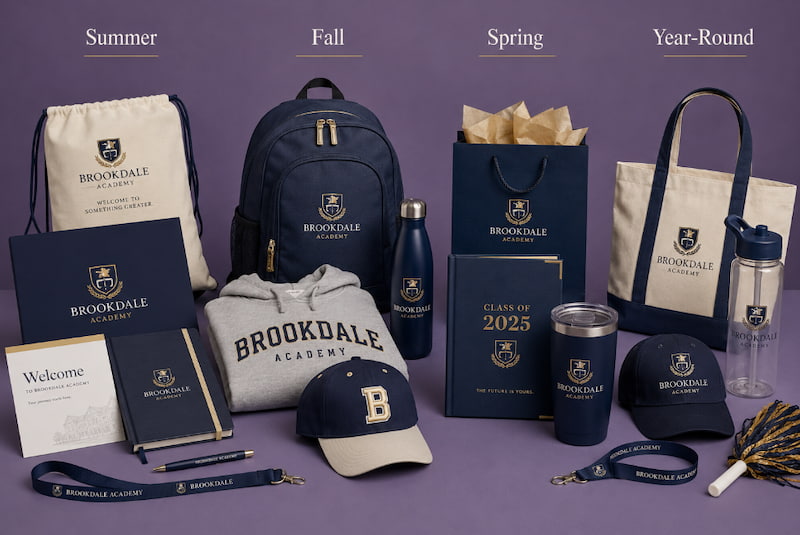
| Timing | Best Products |
| Summer | Acceptance kits, orientation items, welcome packs |
| Fall | Back-to-school merchandise, homecoming gear, parent weekend gifts |
| Spring | Graduation items, senior merchandise, spring event products |
| Year-round | Visitor giveaways, alumni gifts, sports merchandise |
Event-based distribution makes products more relevant
| Event | Promotional Product Ideas |
| Open house | Tote bags, folders, pens, water bottles |
| Orientation | T-shirts, lanyards, notebooks |
| Homecoming | Apparel, caps, banners |
| Parent weekend | Family merchandise, mugs, tote bags |
| Graduation | Keepsakes, class-year gifts, premium items |
| Reunion weekends | Alumni apparel, commemorative merchandise |
Retail and e-commerce can extend school merchandise sales
Schools can distribute products through:
- Campus bookstores
- Pop-up shops
- Athletic venue stores
- Visitor centers
- Online stores
- Alumni portals
Inventory can be organized into:
| Inventory Type | Purpose |
| Core items | Always available |
| Seasonal items | Limited-time campaigns |
| Event items | Pre-order or event-only |
| Clearance items | End-of-season stock management |
Measuring Impact and ROI
Schools should track practical performance indicators
| Measurement Area | Metrics to Track |
| Enrollment | Applications, yield rate, visit conversion |
| Engagement | Product usage, event attendance, social mentions |
| Brand awareness | Recall, visibility, peer recommendations |
| Alumni relations | Giving rates, reunion attendance, survey feedback |
| Community strength | Student, parent, and staff satisfaction |
Promotional product impact is usually long-term
Promotional products may not be the only reason a student chooses a school, but they can support the emotional connection that influences decisions.
Best practices include:
- Track campaigns over time
- Compare results before and after major product launches
- Survey students and parents
- Monitor social media photos and mentions
- Gather admissions team feedback
Budget Planning
Schools should budget based on audience and purpose
| Audience | Suggested Budget |
| K-12 students | $10–30 per student annually |
| Higher education students | $25–75 per student annually |
| Alumni contacts | $5–15 per contact annually |
Cost-saving strategies should focus on useful products
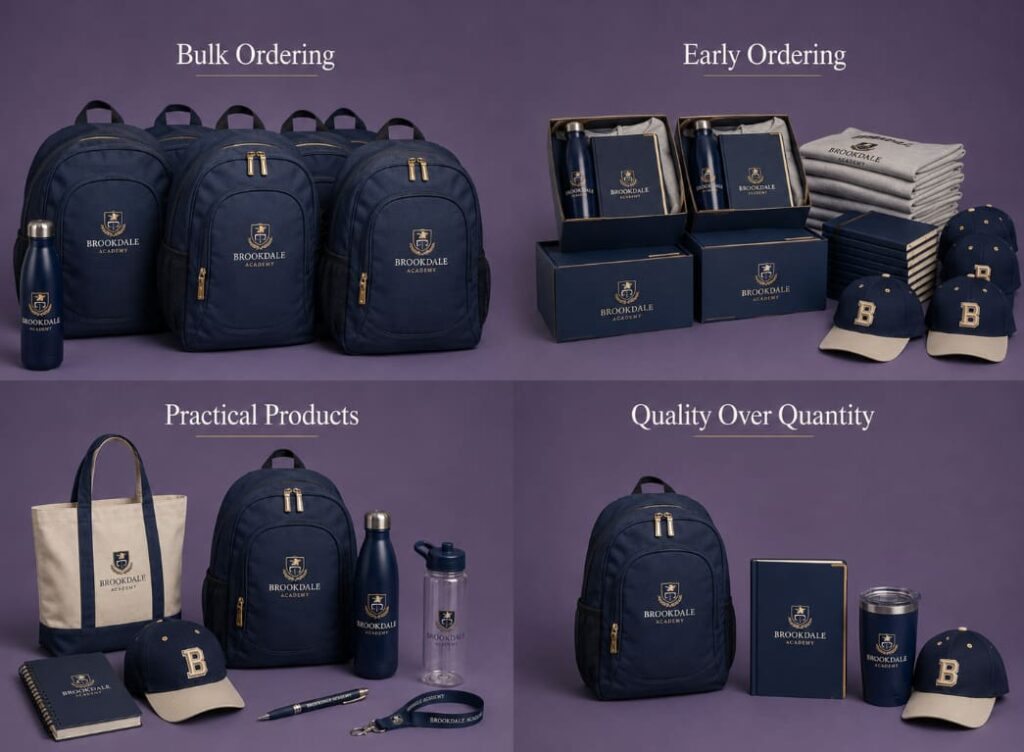
| Strategy | Benefit |
| Bulk ordering | Reduces unit cost |
| Multi-year contracts | Improves planning and pricing |
| Early ordering | Avoids rush fees |
| Off-season production | Can reduce production pressure |
| Practical product selection | Reduces waste and improves usage |
Schools should prioritize:
- Items students actually use
- Better quality over higher quantity
- Products with long-term visibility
- Designs that do not feel outdated quickly
Merchandise can also generate revenue
Revenue opportunities include:
- Bookstore merchandise
- Online store sales
- Event merchandise
- Licensing agreements
- Sponsored items
- Donor-funded special editions
Working with Promotional Product Suppliers
The right supplier should understand school needs
| Supplier Criteria | Why It Matters |
| Product range | Supports different school audiences |
| Customization options | Helps match school identity |
| Design support | Improves final product quality |
| Production capacity | Handles institutional order sizes |
| Delivery reliability | Matches academic calendar deadlines |
| Youth product experience | Supports safety and suitability |
| Quality control | Reduces product defects and waste |
UCT Asia can support school merchandise programs
For schools seeking comprehensive promotional product programs, UCT Asia offers:
- Educational market understanding
- Southeast Asia production capabilities
- Custom design support
- Product sourcing
- Quality assurance
- Competitive pricing for institutional orders
UCT Asia’s experience across branded merchandise categories can help schools create products that feel useful, attractive, and aligned with their identity. For broader supplier selection ideas, explore our industry and manufacturing promotional merchandise blog.
Conclusion: Building Community Through Products
Custom promotional products are more than school marketing items. They help build identity, pride, and long-term relationships between students, parents, alumni, staff, and the institution.
The strongest school merchandise programs combine usefulness with emotional value. A welcome hoodie, alumni keepsake, parent decal, or staff appreciation gift can all become part of a wider school community experience.
At UCT Asia, we help schools, universities, and organizations create branded merchandise that supports real marketing and engagement goals. As one of the experienced promotional products suppliers in Asia, we work with clients to design, source, produce, and deliver custom products that strengthen visibility, connection, and brand value.
Frequently Asked Questions
What products generate the most school spirit?
Apparel usually creates the strongest sense of pride and visibility. T-shirts, hoodies, caps, and sportswear work well because students can wear them often.
How do schools balance tradition with trends?
Use classic logo items for long-term appeal, then add seasonal or limited-edition designs for current students.
What is the best promotional product for admissions?
Acceptance packages are often the most effective because they reach students at an emotional decision point. A mix of apparel, stickers, folders, pens, and welcome notes works well.
How can schools engage alumni with promotional products?
Focus on premium items, class-year merchandise, reunion gifts, and exclusive donor merchandise. Alumni usually value quality and meaning over quantity.
Should schools sell merchandise or give it away?
Both can work. Give away key items for community building, then sell premium apparel, event merchandise, and limited-edition products for revenue.
How can schools measure promotional product impact?
Track application rates, yield rates, event attendance, product usage, social media mentions, alumni giving, and survey feedback.
What is a suitable budget for school promotional products?
A basic guide is $10–30 per K-12 student annually, $25–75 per higher education student annually, and $5–15 per alumni contact.
How do schools choose the right supplier?
Look for school experience, product quality, design support, reliable delivery, customization options, and competitive pricing.
Can promotional products influence enrollment?
They are not usually the main decision factor, but they can improve the emotional connection and overall impression during admissions.
How can schools reduce waste?
Choose useful, long-lasting products, avoid low-value novelty items, offer product choices where possible, and survey students before large orders.