
Maximizing Impact: The Essential Guide to Campaign Merchandise for Political Candidates [2026]
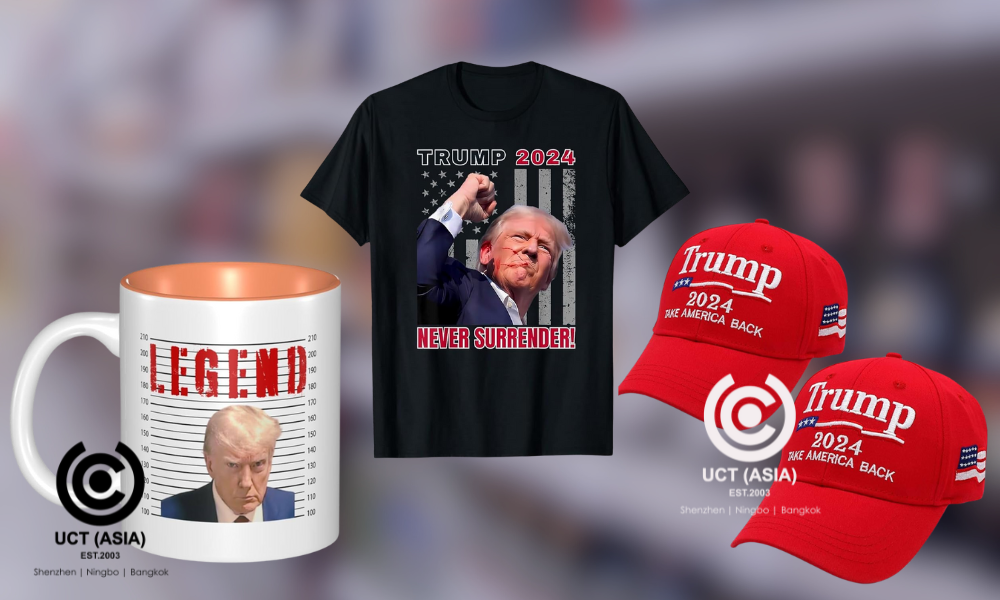
Political campaigns operate as sophisticated marketing operations where every impression counts and every dollar must deliver measurable returns. Campaign merchandise—once considered simple giveaways—has evolved into strategic tools that build identity, drive fundraising, and create lasting voter connections.
The most successful campaigns treat merchandise as integral campaign infrastructure rather than afterthoughts. From the color psychology of rally signs to the revenue potential of online stores, effective campaign merchandise strategy can mean the difference between victory and defeat.
Why Campaign Merchandise Matters in Modern Elections
Visibility Beyond Advertising
Traditional political advertising faces growing challenges: ad fatigue, media fragmentation, and declining trust in paid messaging. Campaign merchandise offers an alternative—organic visibility that voters choose to display.
According to political marketing research, merchandise creates what strategists call “walking billboards.” A supporter wearing campaign apparel generates 200-400 impressions daily as they move through their communities—impressions that carry implicit endorsement value that paid advertising cannot replicate.
Identity and Community Building
Campaigns succeed by making voters feel part of something larger than themselves. Merchandise serves as tangible proof of belonging:
- Rally Atmosphere: Coordinated apparel creates visual unity at events
- Social Proof: Seeing others display support encourages undecided voters
- Conversation Starters: Branded items spark dialogue about candidates
- Memorability: Physical items create stronger recall than digital ads
Fundraising Multiplier Effect
Unlike traditional expenses, well-designed merchandise generates revenue while promoting the campaign. Premium items sold through online stores can:
- Offset campaign costs through direct sales
- Identify highly engaged supporters (those willing to purchase)
- Create recurring revenue through limited-edition releases
- Build email lists for ongoing engagement
According to campaign finance data, successful merchandise programs can contribute $50,000-500,000+ to campaign budgets depending on race size and supporter enthusiasm.
Types of Effective Campaign Merchandise
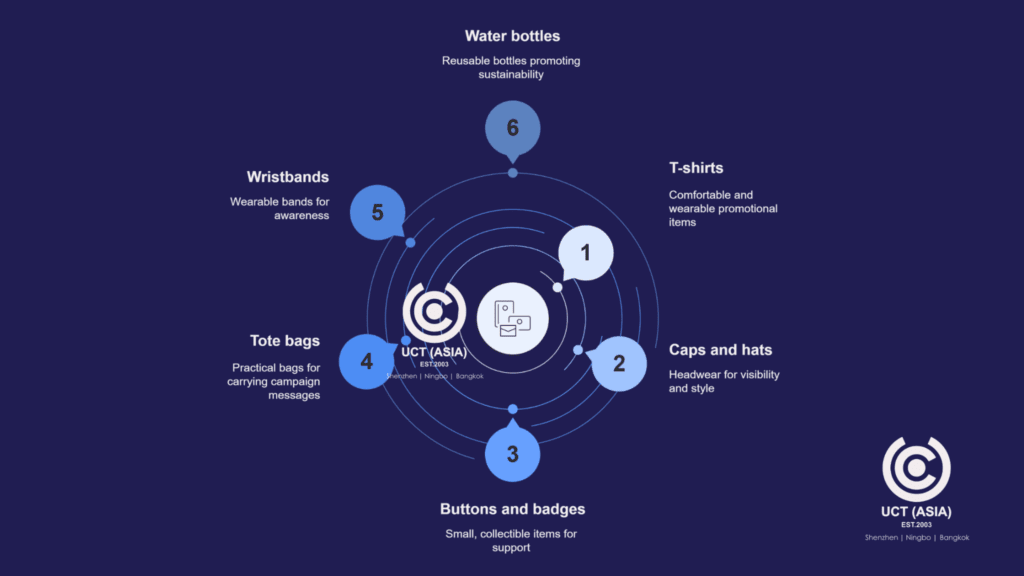
The campaigns are more successful when people are engaged. That’s made possible with the correct merchandise. These items should be practical, easy to carry, and eye-catching. Some popular choices include:
- T-shirts: T-shirts are classic merchandise; they turn supporters into walking billboards. They are excellent for social media posts, rallies, and events.
- Caps and hats: These items are simple, visible, and popular across all age groups.
- Stickers: Stickers are affordable and versatile. They are perfect for laptops, notebooks, and water bottles.
- Buttons and badges: Buttons and badges are simple yet powerful. They’re simply to wear on clothes or bags, especially while attending events in person.
- Tote bags: These items are practical and offer a large printing space for slogans and designs.
- Wristbands: Wristbands are ideal, cost-effective merchandise options for younger audiences.
- Water Bottles: These are practical items that people use regularly that ensure the campaign stays visible long after the events are over.
In the end, your choice of merchandise depends on your audience, budget, and the message you want to pass.
Design Principles for Maximum Impact
Color Psychology
Political color choices carry subconscious messaging:
| Color | Associations | Best Used For |
|---|---|---|
| Red | Energy, urgency, passion | Conservative outreach, mobilization |
| Blue | Trust, stability, calm | Moderate positioning, establishment |
| White | Purity, simplicity, unity | Reform messaging, outsider status |
| Black | Strength, authority, sophistication | Premium items, urban appeal |
| Green | Growth, environment, freshness | Progressive causes, climate focus |
| Yellow/Gold | Optimism, energy, attention | Youth outreach, positivity |
Successful campaigns typically use 2-3 colors maximum for visual consistency and brand recognition.
Typography and Readability
Campaign materials must communicate instantly:
- Candidate Name: Largest element; readable from distance
- Slogan: Memorable, punchy, under 6 words ideally
- Office Sought: Clear but secondary to name
- Party Affiliation: Context-dependent; sometimes omitted for crossover appeal
According to design research, sans-serif fonts (Helvetica, Arial, Gotham) perform better for political signage than serifs due to distance readability.
Logo and Visual Identity
Strong campaign logos balance:
- Simplicity (reproduces well at any size)
- Memorability (distinctive without being complex)
- Versatility (works on dark and light backgrounds)
- Timelessness (avoids dated design trends)
Budgeting and ROI
Cost Per Impression Comparison
| Method | Cost per 1,000 Impressions (CPM) | Notes |
|---|---|---|
| TV Advertising | $20–50 | Declining viewership |
| Digital Ads | $5–25 | Ad blocking, fatigue |
| Direct Mail | $100–300 | Targeted but expensive |
| Yard Signs | $2–5 | Local visibility |
| Apparel (worn) | $0.50–2.00 | Organic endorsement value |
| Stickers | $0.10–0.50 | Viral potential |
Campaign merchandise often delivers the lowest cost-per-impression while generating organic reach that paid advertising cannot match.
Budget Allocation Guidelines
For a competitive local race ($100,000 budget):
- Signs: $8,000-12,000 (8-12%)
- Apparel: $5,000-8,000 (5-8%)
- Stickers/Buttons: $2,000-3,000 (2-3%)
- Premium/Fundraising: $3,000-5,000 (3-5%)
For larger races, scale proportionally while maintaining similar percentages.
Distribution Strategies
Event-Based Distribution
Rallies and Speeches:
- Apparel creates visual unity and energy
- Signs for crowd shots and TV coverage
- Entry/exit distribution maximizes reach
Canvassing Operations:
- Identifies volunteers to residents
- Buttons for conversation starters
- Literature + sticker combination
Parades and Public Events:
- Mass visibility opportunities
- T-shirts for group coordination
- Hand-waves and throws to crowds
Online Store Optimization
Platform Options:
- Campaign website integration (best for branding)
- Shopify/BigCommerce (ease of use)
- Dedicated political platforms (compliance features)
Product Strategy:
- 8-12 core items (avoid decision paralysis)
- Clear size charts and fit guides
- Multiple price points ($5-50 range)
- Bundled packages for increased average order
Fulfillment:
- In-house (control, faster for local)
- Third-party (scalability, national races)
- Hybrid approach (premium items in-house, basics outsourced)
Volunteer and Donor Rewards
Strategic merchandise distribution:
- $25 donors: Sticker pack + button
- $50 donors: T-shirt + sticker
- $100 donors: Premium item (hoodie/tumbler)
- $250+ donors: Limited edition + recognition
This approach turns fundraising into merchandise acquisition, improving both metrics.
Manufacturing and Sourcing
Asian Manufacturing Advantages
For campaigns requiring large quantities (10,000+ units), Asian manufacturing delivers:
Cost Savings:
- 40-60% lower production costs
- Economies of scale for bulk orders
- Competitive material sourcing
Quality Standards:
- Modern facilities meeting international standards
- Established quality control processes
- Experience with political campaign timelines
Speed Considerations:
- 3-4 week production for standard items
- Rush options available at premium
- Air freight for urgent orders
Quality Control
Political merchandise requires particular attention to:
- Color Matching: Exact Pantone matching for brand consistency
- Print Durability: Signs must withstand weather; apparel must survive washing
- Sizing Accuracy: Consistent fit across production runs
- Packaging: Protection during shipping; presentation for retail
Sustainability Considerations
Increasingly important for progressive campaigns:
- Organic/recycled materials
- Union-made production (where relevant to base)
- Carbon-neutral shipping options
- Reusable rather than disposable items
Compliance and Legal Considerations
Campaign Finance Regulations
Disclaimer Requirements:
- Paid for by [Campaign Name]
- Authorized by [Candidate Name]
- Must appear on all paid communications including merchandise
Contribution Limits:
- Merchandise sold above fair market value may count as contributions
- Discounts below market value may be in-kind contributions
- Consult counsel for specific jurisdictional requirements
Reporting:
- Merchandise sales may require disclosure
- Production costs reported as expenditures
- Inventory tracking for accurate reporting
Intellectual Property
- Trademark: Campaign logos should be trademarked
- Licensing: Avoid copyrighted images without permission
- Parody: Understand fair use limitations
Case Studies: Merchandise Strategy in Action
Successful Local Campaign: School Board Victory
Challenge: Limited budget ($15,000), crowded field (7 candidates)
Strategy: Merchandise-centric visibility
Execution:
- 500 yard signs ($2,500) for neighborhood saturation
- 200 volunteer t-shirts ($1,600) for canvassers
- 2,000 sticker rolls ($800) for youth outreach
- Branded masks ($1,200) for COVID-era relevance
Result: Highest name recognition in field; won with 28% in crowded race
Fundraising Success: Congressional Primary
Challenge: Underfunded against establishment candidate
Strategy: Premium merchandise fundraising
Execution:
- Online store with 12 curated items
- Limited edition “Founding Donor” hoodie series (500 units, sold out in 48 hours)
- Viral sticker design shared 50,000+ times on social media
Result: $180,000 raised through merchandise; 40% of total campaign budget
Viral Moment: Senate Campaign
Challenge: Breaking through media noise
Strategy: Culturally resonant merchandise
Execution:
- Design tapping into existing cultural moment
- Limited drop creating urgency
- Influencer partnerships for amplification
Result: 10M+ organic social media impressions; national media coverage
Frequently Asked Questions
What is the most effective campaign merchandise?
Yard signs and t-shirts consistently deliver the highest ROI. Signs provide sustained neighborhood visibility; apparel generates hundreds of daily impressions per wearer while creating social proof.
How much should campaigns spend on merchandise?
Typically 15-25% of total campaign budget for local races, scaling down to 10-15% for larger campaigns with bigger media budgets. Allocate more for grassroots races relying on visibility over paid advertising.
When should campaigns order merchandise?
Order 8-12 weeks before major push periods. Rush production costs 30-50% premiums. Reorder popular items early—production delays increase as elections approach.
What size runs should campaigns order?
Start conservatively: 200-500 apparel items, 1,000-2,000 signs. Reorder based on demand. Unsold inventory after elections has minimal residual value.
Can campaigns make money selling merchandise?
Yes—successful online stores generate significant revenue. Pricing at 2.5-3.5x production cost typically funds additional campaign activities while providing value to supporters.
What are the legal requirements for campaign merchandise?
Disclaimer requirements vary by jurisdiction but typically require “Paid for by [Committee]” and “Authorized by [Candidate].” Consult campaign finance counsel for specific compliance requirements.
How do you design effective campaign logos?
Effective logos balance simplicity, memorability, and versatility. Prioritize candidate name readability, limit to 2-3 colors, ensure reproduction at any size, and test visibility from distance.
What merchandise works best for different demographics?
Young voters (18-29): stickers, hoodies, tech accessories; Middle-aged (30-54): t-shirts, tote bags, drinkware; Seniors (55+): caps, yard signs, practical items; Affluent donors: premium apparel, limited editions.
How important is sustainability in campaign merchandise?
Increasingly important, particularly for progressive campaigns targeting environmentally conscious voters. Options include organic materials, union production, and reusable rather than disposable items.
Should campaigns offer multiple design options?
Yes—3-5 designs across categories prevents supporter fatigue and encourages multiple purchases. Limited-edition releases create urgency and collector interest.
How can small campaigns compete on merchandise?
Focus on a few high-impact items (signs, t-shirts) rather than trying to match large campaign variety. Leverage volunteer labor for distribution. Use online print-on-demand for fundraising items without inventory risk.
What makes campaign merchandise go viral?
Culturally resonant design, humor, or emotional connection. Timing matters—merchandise tapping into current moments spreads organically. Influencer and supporter sharing amplifies reach exponentially.
Partner with UCT (Asia) for Campaign Merchandise Excellence
Successful campaigns require merchandise that delivers impact without draining budgets. UCT (Asia) provides the manufacturing capabilities and strategic sourcing to maximize every dollar:
- Cost-Effective Production: Asian manufacturing delivering 40-60% cost savings
- Quality Standards: Materials and construction meeting campaign durability needs
- Speed to Market: Production timelines aligned with campaign cycles
- Design Support: Translating campaign identity into effective merchandise
- Flexible Quantities: Solutions for local races to national campaigns
- Compliance Guidance: Understanding political merchandise regulations
Contact UCT (Asia) today to discuss your campaign merchandise strategy and discover how we can help you create the visibility, fundraising, and voter connection tools that win elections.