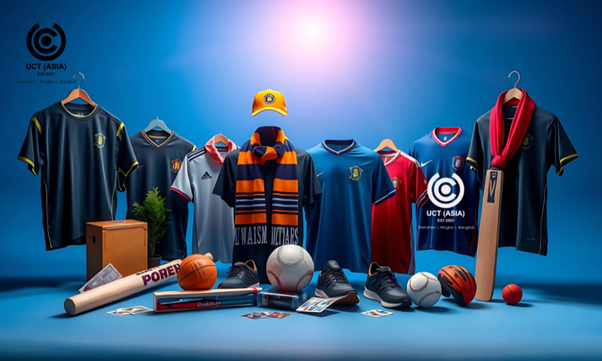
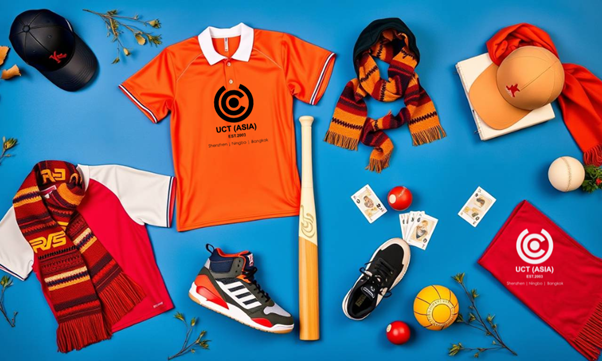
The Evolution of Sports Merchandise: From Fan Apparel to Collectible Memorabilia

Sports merchandise has remarkably evolved over the last few decades. This evolution has been influenced by factors such as the growth of sports leagues worldwide, advancements in online retail, and increased demand for personalization.
This blog post will closely examine how sports merchandising has transformed from simple team-branded fan apparel to a highly lucrative industry that includes premium collectibles and digital assets.
The Early Days: Simple Beginnings (1869 to Post-WWI)
The story of sports merchandise begins in 1869 with the Cincinnati Red Stockings, America’s first professional baseball team. These pioneers did not just change how sports were played. They also created the first piece of sports memorabilia that fans could collect: the baseball card.
Early tobacco companies inserted these cards into cigarette packs as promotional items. Fans collected them not as investments, but as simple souvenirs. The cards featured player portraits on stiff cardboard, often with advertisements on the back. This humble beginning sparked a collecting tradition that continues today.
During this era, fan apparel was equally simple. Supporters wore handmade scarves, flat caps with team colors, and basic wool jerseys to show loyalty. There were no official licensed products. Fans either made their own gear or bought simple items from street vendors near stadiums.
The Post-WWII Boom Era
Everything changed after World War II. Returning soldiers brought home a passion for sports, and the American economy entered a period of prosperity. Professional sports leagues expanded rapidly, and with them came the first wave of commercial sports merchandise.
Key developments during this period included:
- Mass production techniques made team jerseys affordable for average fansRadio and early television broadcasts created national fanbases for teams
- Licensed manufacturing agreements allowed companies to produce official team gear
- The 1950s through 1980s became known as the golden age of sports memorabilia
By the 1980s, wearing your favorite team’s jersey was no longer limited to game day. Sports apparel had become everyday fashion.
The Modern Transformation: Lifestyle Branding and Global Reach
Today’s sports merchandise industry looks nothing like its early predecessors. According to Grand View Research, the global sports merchandise market reached $36.36 billion in 2024 and is projected to grow to $49 billion by 2030, representing a compound annual growth rate (CAGR) of 5.2%.
| Region | Market Share (2024) | Growth Driver |
|---|---|---|
| North America | 51.7% | Established leagues (NFL, NBA, MLB, NHL) |
| Europe | 24.3% | Football club merchandise dominance |
| Asia-Pacific | 16.8% | Rapid growth in China, Japan, and India |
| Rest of World | 7.2% | Emerging markets adoption |
Source: Grand View Research, Sports Apparel Market Report 2024-2030
How Major Brands Changed the Game
Two companies fundamentally transformed how fans interact with sports merchandise: Nike and Adidas.
In 1984, Nike signed a rookie basketball player named Michael Jordan to create the Air Jordan line. This partnership did more than sell shoes. It proved that athlete-endorsed products could transcend sports and become cultural phenomena. The Air Jordan line has generated over $5 billion annually in recent years, according to Nike financial reports.
Adidas followed a similar path, partnering with football clubs like Real Madrid and Manchester United to create lifestyle streetwear that fans wear daily, not just to matches. These collaborations blurred the line between sports gear and fashion.
The result? Sports merchandise became identity expression. Wearing a team jersey no longer simply showed which team you supported. It signaled your personal style, your cultural affiliations, and even your social status.
The Digital Revolution: E-Commerce and Personalization
The internet changed everything about how fans buy sports merchandise. Before e-commerce, fans had limited options: visit the stadium store (only available on game days or special trips), order from a catalog (slow, limited selection), or buy from local sporting goods stores (limited inventory).
Today, offline distribution still accounts for 66.9% of sales, but online channels are growing rapidly at over 8% annually. E-commerce has democratized access, allowing fans in Bangkok to buy official Liverpool FC merchandise as easily as fans in Liverpool.
Personalization has become a major differentiator. Fans can now order jerseys with their own names, custom numbers, or unique designs. This trend addresses a key consumer desire: standing out while still showing team loyalty. According to Mordor Intelligence, personalized sports merchandise represents one of the fastest-growing segments, particularly among millennial and Gen Z consumers.
The Collectible Market: From Physical Cards to Digital Assets
While apparel represents the largest revenue segment, the collectibles market has exploded in value and sophistication. Understanding this evolution requires looking at three distinct eras.
Era 1: Physical Memorabilia (1869 to 2019)
Traditional sports memorabilia includes autographed items, game-worn equipment, vintage trading cards, and limited edition prints. The value of these items depends on several factors:
• Authenticity: Verified signatures and provenance documentation
• Condition: Mint condition items command premium prices
• Rarity: Limited production runs increase desirability
• Historical significance: Items from milestone games or record-breaking performances
Professional grading services like PSA (Professional Sports Authenticator) and Beckett have created standardized valuation systems. A Babe Ruth baseball card graded PSA 9 (mint condition) sold for over $6 million in 2021, demonstrating the investment potential of high-quality memorabilia.
Era 2: The NFT Revolution (2020 to Present)
In 2020, a new category emerged that changed how collectors think about sports memorabilia: NFTs (Non-Fungible Tokens).
NFTs are digital certificates of ownership stored on blockchain technology. For sports memorabilia, this means fans can now own verifiable digital assets like:
• Player highlight videos (moments from actual games)
• Digital trading cards with animated graphics
• Virtual memorabilia from iconic matches
• Exclusive player-created content
NBA Top Shot, launched in 2020 by Dapper Labs in partnership with the NBA, became the breakout success story. The platform allows fans to buy, sell, and trade officially licensed video highlights called “Moments.” By early 2021, NBA Top Shot had generated over $500 million in sales, with a single LeBron James highlight selling for $208,000.
Other major leagues quickly followed. The NFL, MLB, and major European football clubs like Liverpool FC and Manchester City launched their own NFT collections. Even individual athletes began creating personal NFT drops.
However, the NFT market has experienced significant volatility. After the initial 2021 boom, prices dropped substantially in 2022-2023. Despite this correction, blockchain technology continues to offer promising applications for authentication and provenance tracking in the physical memorabilia market.
Era 3: The Hybrid Future
The future of sports collectibles likely combines physical and digital elements. Several trends point in this direction:
• Digital twins: Physical items with corresponding NFT certificates
• AR-enabled merchandise: Jerseys that unlock digital content when scanned
• Fan tokens: Blockchain-based voting rights for club decisions
• Gamification: Collectibles integrated into fantasy sports and video games
The Asia-Pacific Opportunity
While North America dominates the current market with 51.7% share, the Asia-Pacific region represents the biggest growth opportunity. Several factors drive this expansion:
• Rising middle class: Countries like China, India, and Vietnam have rapidly growing disposable incomes
• League expansion: The NBA, Premier League, and Formula 1 have made concerted efforts to build Asian fanbases
• Digital natives: Younger Asian consumers are more comfortable with e-commerce and digital collectibles
• Localization: Brands increasingly create Asia-specific merchandise lines
For companies in the promotional products industry, Asia presents unique opportunities. Sports-themed corporate gifts, event merchandise, and licensed promotional items are in high demand as businesses seek to connect with sports-passionate consumers.
Corporate Applications: Sports Merchandise as Promotional Products
Beyond fan retail, sports merchandise plays a significant role in corporate marketing and promotional campaigns. Companies leverage sports licensing in several ways:
| Application | Example | Target Audience |
|---|---|---|
| Employee recognition | Custom-branded team jerseys for sales contests | Internal teams |
| Event merchandise | Tournament-branded caps and bags | Event attendees |
| Customer loyalty | Limited edition collectibles with purchase | High-value customers |
| Sponsorship activation | Co-branded merchandise for sporting events | Event participants |
The toys and games segment alone accounts for 30.4% of total sports merchandise revenue, demonstrating the broad appeal of sports-themed products beyond traditional apparel.
Sustainability: The Next Frontier
An emerging trend reshaping the industry is sustainability. Modern consumers, particularly younger demographics, increasingly demand environmentally responsible products. Sports brands are responding through:
• Recycled materials: Nike’s “Move to Zero” initiative uses recycled polyester in jerseys
• Carbon-neutral production: Adidas has pledged to use only recycled polyester by 2024
• Circular economy models: Programs that allow fans to return worn items for recycling
• Reduced packaging: Minimal, recyclable packaging for online orders
For promotional product buyers, sustainable sports merchandise offers a way to align corporate values with consumer expectations.
Expansion into Lifestyle Branding
With the global expansion of sports leagues, sports merchandise transitioned from simple stadium wear to comfortable and stylish pieces that fit into everyday fashion lifestyles. Sports brands like Adidas and Nike took advantage of this shift and collaborated with athletes to create signature shoes, jerseys, and high-end streetwear that combined sports and fashion.
The Emergence of E-Commerce and the Rise of Personalization

The emergence of e-commerce has now made it easier for sports fans worldwide to access their preferred sports merchandise. Fans can purchase sports merchandise and accessories without visiting a stadium or physical store.
This shift has given rise to customization and personalization, as fans can now order products that help them proudly support their team while showcasing their styles with their names, unique designs, and favorite numbers.
The Rise of Collectible Memorabilia: From Autographs to NFTs
The growth of the sports culture has led to a demand for exclusive memorabilia. Fans and collectors seek items that capture the game’s unforgettable and iconic moments.
Autographed jerseys, game-worn shoes, bats, gloves, balls, and limited-edition trading cards have become valuable assets for fans and collectors.
In addition, fans can also own digital collectibles like NFTs (Non-Fungible Tokens). These digital assets include players’ cards, virtual content, videos, and memorabilia. Sports leagues have jumped on board with this technology, providing unique digital collectibles for sports fans.
Frequently Asked Questions
What is the most valuable piece of sports memorabilia ever sold?
The most expensive sports memorabilia item sold to date is a 1952 Topps Mickey Mantle baseball card, which fetched $12.6 million in August 2022. In the digital space, the most valuable NFT sports moment remains the LeBron James “Cosmic” dunk from NBA Top Shot, which sold for $208,000 in 2021.
How can I tell if sports memorabilia is authentic?
Always look for authentication from recognized organizations like PSA (Professional Sports Authenticator), Beckett, or JSA (James Spence Authentication). For high-value items, request a certificate of authenticity and check the seller’s reputation. For modern memorabilia, many items now include holographic stickers or NFC chips that can be verified online.
Are sports NFTs a good investment?
The NFT market has proven highly volatile. While early NBA Top Shot investors saw significant returns in 2021, prices dropped substantially in 2022-2023. Most experts recommend buying NFTs primarily for enjoyment rather than investment. If you do invest, never spend more than you can afford to lose, and focus on historically significant moments from established leagues.
What sports merchandise sells best globally?
Football (soccer) merchandise dominates globally due to the sport’s worldwide popularity. The toys and games segment represents 30.4% of revenue share. Regionally, preferences vary: American football and basketball lead in North America, while football clubs dominate in Europe and increasingly in Asia.
How has e-commerce changed sports merchandise?
E-commerce has democratized access, allowing fans anywhere to purchase official team gear. It has enabled personalization options that were previously impossible at scale. While offline retail still accounts for 66.9% of sales, online channels are growing faster and allow brands to offer direct-to-consumer limited editions that drive collector interest.
What trends should collectors watch in 2025?
Key trends include the integration of physical and digital collectibles (phydigital), AI-generated personalized content, sustainability-focused merchandise, and the expansion of women’s sports memorabilia. The Asia-Pacific market also presents significant growth opportunities as leagues invest in building regional fanbases.
Conclusion
Sports merchandise has expanded from simple fan apparel into collectible memorabilia that carries emotional value and long-term brand significance. This evolution highlights how powerful merchandise can become when it connects deeply with passion, identity, and shared experiences. Brands that understand this emotional dimension create products that endure beyond seasons.
As experienced promotional products companies, UCT (Asia) helps organizations harness the emotional power of sports merchandise to build community and sustained brand affinity. Through strategic design and quality production, we transform merchandise into meaningful symbols of loyalty and pride.
How can We Help?
Sports merchandise has come a long way and so have we at UCT (Asia)! We have over a decade of experience in sourcing and producing all kinds of sports merchandise. Whether it’s an iconic jersey or limited edition collectibles, we are more than capable of delivering excellence.
Contact us to secure your piece today!
Sources:
- Grand View Research. “Sports Apparel Market Size, Share & Trends Analysis Report.” 2024-2030.
- Mordor Intelligence. “Sports Equipment and Apparel Market Analysis.” 2024.
- Awesome Artifact. “The Evolution of Sporting Memorabilia: From Trading Cards to NFTs.” Accessed 2024.
- Nike, Inc. Annual Reports and Financial Filings. 2020-2024.
- Dapper Labs. NBA Top Shot Sales Data and Market Reports. 2020-2023.