
Maximizing Impact: How to Effectively Use Marketing Merchandise to Boost Brand Awareness
When you receive a branded water bottle at a conference or a custom notebook at a product launch, the item can become a small but memorable reminder of the company behind it. That is the value of marketing merchandise: unlike an ad that disappears from a screen, a useful branded product can remain in someone’s daily routine long after the original interaction.
But simply putting a logo on an item and handing it out is no longer enough. Marketing and brand managers need merchandise to support wider campaigns, while small businesses need to know that limited budgets are being spent on products people will actually use. The real question is how to use marketing merchandise to boost brand awareness without creating unnecessary waste or treating promotional products as a standalone activity.
This guide explains why promotional merchandise remains effective and outlines practical marketing merchandise strategies for increasing recognition, generating leads, strengthening customer relationships and creating a more consistent brand experience.
What Is Brand Awareness and Why Does It Matter?

Brand awareness is the extent to which people recognise and remember a company. It includes brand recognition, when someone identifies a brand from its name, logo or visual identity, and brand recall, when a brand comes to mind when a relevant need arises.
For marketing managers and small business owners, the distinction matters. Getting your brand seen is only the first step. The aim is to make it familiar enough that customers remember it when they are comparing products, looking for a service or deciding who to contact.
Promotional merchandise can support both recognition and recall by placing a brand into everyday environments. A branded bottle on a desk, a tote bag carried to work or a notebook used during meetings creates additional opportunities for a company to be seen and remembered.
Why Do Promotional Products Still Work in the Digital Age?
Digital advertising can reach large audiences, but promotional products offer something different: a physical item that can remain in use after the original campaign has ended.
For businesses deciding whether merchandise deserves part of their marketing budget, three characteristics are particularly important:
- Physical presence creates repeated touchpoints. A useful product can remain visible for weeks, months or longer.
- Practical value encourages continued use. Products that solve an everyday problem are less likely to be discarded.
- Branded products can strengthen associations. A well-chosen item can connect the brand with usefulness, quality or another desired attribute.
The strongest promotional product campaigns for brand awareness therefore focus less on distributing the largest possible number of items and more on creating valuable, repeated interactions.
How Can You Use Marketing Merchandise to Increase Brand Awareness?
1. How Should You Start Choosing Merchandise?
The most common mistake in promotional marketing is choosing an item because it looks appealing rather than because the target audience will actually use it.
Before selecting merchandise, consider:
- Who will receive it? Age, profession, lifestyle and purchasing habits can influence product preferences.
- What do they need? A phone stand may be useful for office workers, while reusable drinkware could suit customers who travel frequently.
- Where will they use it? Products suitable for a trade show may not be appropriate for direct mail or customer gifting.
- What action do you want? A product designed to create visibility may be different from one intended to support lead generation or customer loyalty.
This is particularly important for small businesses. A limited budget does not necessarily mean choosing the cheapest item available. It means concentrating spending on merchandise that has a clear purpose and a realistic chance of being used.
The choice should also fit the brand itself. A well-designed merchandise range can reinforce visual identity, positioning and the experience customers associate with the company.
2. How Do You Balance Quality and Quantity?
Budget pressures can make ordering a large quantity of inexpensive products tempting. However, a low-cost item that is quickly discarded may deliver less value than a smaller number of well-made products that recipients continue using.
Consider the impression created by a pen that stops working after a few days or a tote bag that falls apart after several uses. The product represents your brand, so its quality becomes part of the customer experience.
That does not mean every campaign requires premium merchandise. The right decision depends on the audience and objective. A large public event may justify a simple, practical giveaway, while a smaller group of qualified prospects may warrant a more substantial product.
The key is to assess value per recipient, rather than simply cost per item.
For a marketing or procurement team, this also means looking beyond unit price. Product quality, minimum order quantities, customisation, packaging, delivery schedules and supplier reliability can all affect the actual cost and usefulness of a merchandise campaign.
3. How Should Merchandise Reflect Your Brand Identity?
Promotional products should feel like an extension of the brand rather than a collection of unrelated giveaways.
For example:
- Sustainability-focused brands can consider reusable, recycled or responsibly sourced products.
- Technology companies may benefit from useful electronics and mobile accessories.
- Premium brands may choose refined drinkware, executive accessories or carefully presented gift sets.
The product itself should support the message the company is trying to communicate. A sustainability-focused company handing out disposable products, for example, creates a disconnect between its merchandise and its stated values.
Design matters too. Colours, typography, packaging and logo placement should work together so the product feels recognisably part of the wider brand experience.
For companies managing larger merchandise programmes, these decisions can also form part of consumer goods procurement. The purchasing process needs to balance brand requirements with product specifications, supplier capabilities, budget and expected demand.
How Should You Distribute Promotional Products at Events?
Where merchandise is distributed can be just as important as the product itself.
At trade shows and conferences, choose products that solve an immediate problem or remain useful throughout the event. Phone accessories, drinkware or practical stationery can be more effective than generic items that attendees receive from every exhibitor.
At community events, merchandise can be selected around the activity itself. Fitness brands, for example, may choose towels, bottles or other useful products for sports events.
For direct mail, a small but practical item can make a package more memorable and provide a physical connection to the accompanying campaign.
A good example is Cooper’s Water, a water treatment company that distributed pet tag lights at community events. The product was unexpected for the industry but highly relevant to pet owners, giving the company a practical way to connect with the local community. It shows that promotional merchandise does not have to directly relate to what a company sells. What matters is whether the product is useful to the audience and appropriate to the setting.
The objective is not simply to distribute as many products as possible. It is to put the right product in front of the right audience at a moment when it has relevance.
How Can Merchandise Support Your Wider Marketing Strategy?
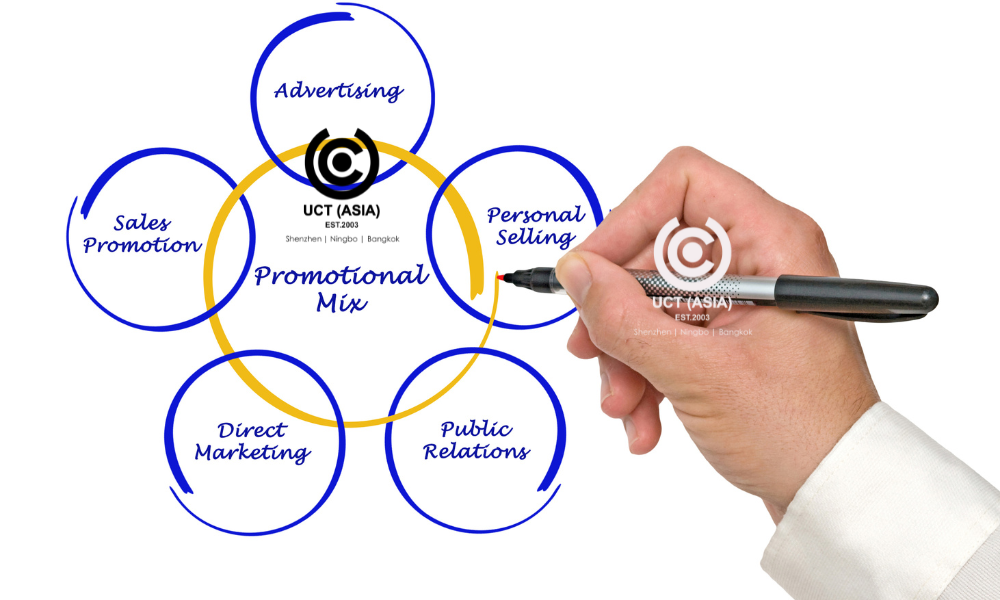
Promotional products should not operate in isolation. For marketing managers and brand managers, their value increases when merchandise supports campaigns already running across other channels.
Consider connecting merchandise with:
- Social media: Encourage customers to share photographs or experiences involving the product.
- Email marketing: Follow up with recipients using content or offers related to the campaign.
- Content marketing: Add QR codes that lead to useful guides, videos, landing pages or other resources.
- Events: Use merchandise to reinforce a campaign theme before, during and after an event.
- Sales activity: Give sales teams relevant products to use as conversation starters or follow-up gifts for qualified prospects.
This creates multiple touchpoints around the same campaign. The merchandise becomes one part of a broader customer journey rather than an isolated branded object.
For businesses looking to connect merchandise with a wider campaign, examples of innovative promotional merchandise show how product choice and campaign timing can work together.
How Can You Measure Promotional Product Effectiveness?
Distribution numbers alone do not tell you whether a campaign worked. If you want to understand custom branded merchandise ROI, the merchandise needs to be connected to a specific action, response or change in awareness.
Useful approaches include:
Track QR code scans. Give different campaigns or product types unique QR codes and compare engagement.
Monitor promotional codes and offers. Use campaign-specific codes to identify purchases or enquiries generated through merchandise.
Measure referral traffic. Create dedicated landing pages for individual events or campaigns and monitor visits and conversions.
Track leads. If merchandise is distributed at a trade show or sales meeting, record which prospects received it and whether they later entered the sales pipeline.
Survey recipients. Ask customers whether they remember receiving the item, whether they still use it and what they associate with the brand.
Compare campaign costs with results. Rather than relying on a generic ROI figure, compare merchandise and distribution costs with measurable outcomes such as qualified leads, conversions, repeat purchases or customer retention.
There is no universal return that applies to every promotional product. Results depend on the item, audience, distribution method, campaign objective and how effectively the merchandise is integrated into the wider marketing strategy.
For companies assessing merchandise as an investment rather than simply a marketing expense, measuring these factors provides a more useful picture of performance.
Which Promotional Products Fit Different Marketing Goals?
| Marketing goal | Suitable merchandise | Why it can work |
| Maximise visibility | Tote bags, apparel, caps, drinkware | Creates repeated public exposure |
| Generate leads | Premium items for qualified prospects, practical items for wider distribution | Supports engagement and gives sales teams a useful conversation starter |
| Build customer loyalty | Quality drinkware, tech accessories, curated gift sets | Encourages continued use and positive associations |
| Support events | Products relevant to the event or audience | Provides immediate practical value |
| Demonstrate brand values | Recycled, reusable or responsibly sourced products | Reinforces brand positioning |
| Strengthen employee relationships | Welcome kits, branded apparel, useful desk accessories | Supports engagement and internal brand culture |
There is no universally “best” promotional product. The right choice depends on the campaign objective, audience, budget and intended use.
For businesses working in hospitality, merchandise requirements can be particularly varied. Procurement in hospitality may involve guest-facing gifts, staff items, event merchandise and branded products for different properties or departments. This makes consistency, supplier coordination and delivery planning particularly important.
For companies managing client or employee gifting programmes, corporate gift ideas for HR professionals can also form part of a broader merchandise strategy.
How Do Procurement and Logistics Affect Merchandise Campaigns?
How Do Procurement and Logistics Affect Merchandise Campaigns?
A successful merchandise campaign does not end when the products leave the factory. Production schedules, quality checks, warehousing, packaging and delivery can all affect whether merchandise arrives where it is needed and when it is needed.
This is where procurement becomes part of the wider marketing process. A procurement team may need to compare suppliers, confirm specifications, manage quantities and coordinate production, while logistics determines how finished products are stored, packed and delivered.
For international campaigns, these considerations become even more important. Effective procurement and logistics can help coordinate production schedules, packaging, freight, warehousing and delivery. Reliable fulfilment and logistics services can also help manage multiple locations, delivery schedules and stock requirements.
Can Marketing Merchandise Build Internal Brand Culture?
Promotional merchandise is not only useful for reaching customers. It can also support employee engagement and internal brand culture.
Branded onboarding kits, work anniversary gifts, event apparel or recognition items can help employees feel connected to the organisation. Employees may also use branded products outside the workplace, extending brand visibility through their everyday activities.
For HR and brand teams, this creates a second opportunity: merchandise can reinforce company culture internally while giving employees products they are genuinely happy to use.
The same principles still apply. Employee merchandise should be useful, well designed and appropriate for the people receiving it rather than being selected simply because it carries the company logo.
Final Thoughts: Turning Merchandise into Meaningful Brand Growth
At UCT (Asia), we believe effective merchandise starts with understanding the audience, defining the purpose of the campaign and choosing products that genuinely support it. If you are considering how to use marketing merchandise to boost brand awareness, the strongest approach is not to maximise the number of products distributed, but to create useful, relevant brand experiences that support visibility, lead generation, customer loyalty and long-term recognition.
Frequently Asked Questions About Marketing Merchandise and Brand Awareness
What marketing merchandise works best for brand awareness?
Products that recipients genuinely use tend to provide the strongest opportunity for repeated exposure. Drinkware, tote bags, apparel and practical accessories can work well, but the right choice depends on the audience, industry and campaign objective.
How do I choose promotional products for my brand?
Start with the audience and the purpose of the campaign. Consider what recipients use regularly, what problem the product solves and whether its materials and design reflect your brand. Quality and relevance should generally take priority over simply ordering a larger quantity.
How can I measure if my promotional products are working?
Use campaign-specific QR codes, landing pages, promotional codes and surveys to connect merchandise with measurable engagement. For lead-generation campaigns, track enquiries and conversions. For awareness campaigns, recipient recall and continued product use can also provide useful indicators.
Are promotional products worth the investment for small businesses?
They can be, particularly when a limited budget is focused on useful products and a clearly defined audience. Small businesses do not necessarily need large quantities; a targeted campaign with measurable objectives can provide a better starting point.
How do I distribute promotional products effectively?
Match distribution to the audience and campaign objective. Trade shows can work for concentrated industry exposure, direct mail allows targeted distribution, community events can support local awareness, and customer or employee gifting can strengthen existing relationships.
What mistakes should I avoid with marketing merchandise?
Avoid choosing products solely because they are inexpensive, distributing merchandise without a clear purpose, ignoring quality, using designs that do not reflect the brand and failing to track results. The strongest campaigns treat merchandise as part of the overall marketing strategy.