
When a business leader searches for “procurement services”, they usually mean one of two things: a consulting firm that runs a sourcing project, or an outsourced team that manages ongoing purchasing on their behalf. Both sit under the procurement services umbrella, but their cost structures, risk profiles and use cases differ significantly.
This guide explains what procurement services are, outlines the most common pricing models, and gives operations directors a practical framework for deciding what to outsource and what to retain in-house. If you are evaluating a procurement services provider in Southeast Asia, this is a useful place to start.
What Are Procurement Services?

Procurement services are external professional offerings that help an organisation identify, source, negotiate and manage the purchase of goods or services. They can range from one-off consulting engagements to fully managed outsourced procurement, where an external team handles all or part of the purchasing function.
In a small business context, procurement services typically address three needs:
- Project-based sourcing: Finding a new supplier for a specific category, such as packaging, components, IT or logistics, within a defined timeline.
- Process design: Building a procurement policy, approval workflow and supplier evaluation framework.
- Managed procurement: Ongoing outsourced purchasing, where the provider acts as an extension of the procurement department through a retainer or transaction-fee arrangement.
The common thread is that a third party takes responsibility for part of the procurement process in exchange for a fee.
Why Do Companies Outsource Procurement Services?

Operations directors commonly engage external procurement services for several reasons:
- Lack of in-house expertise: Mid-sized companies may have finance and logistics teams but no dedicated strategic sourcing resource.
- Time pressure: A product launch or factory ramp-up may not allow time to hire and train a full procurement team.
- Cost reduction mandates: Leadership may set a savings target and require specialist sourcing support to achieve it.
- Supplier network gaps: Internal teams may lack the regional relationships needed for cross-border sourcing.
- Objectivity: External specialists can recommend supplier changes that internal buyers may not have the authority or capacity to pursue.
Savings should never be assumed before a project begins. The actual outcome depends on the category, current supplier terms, volumes, specifications and quality requirements. Establishing a clear baseline before engaging a provider is essential for measuring results.
What Types of Procurement Services Are Available?
The procurement services market is fragmented, but most providers offer one or more of the following models.
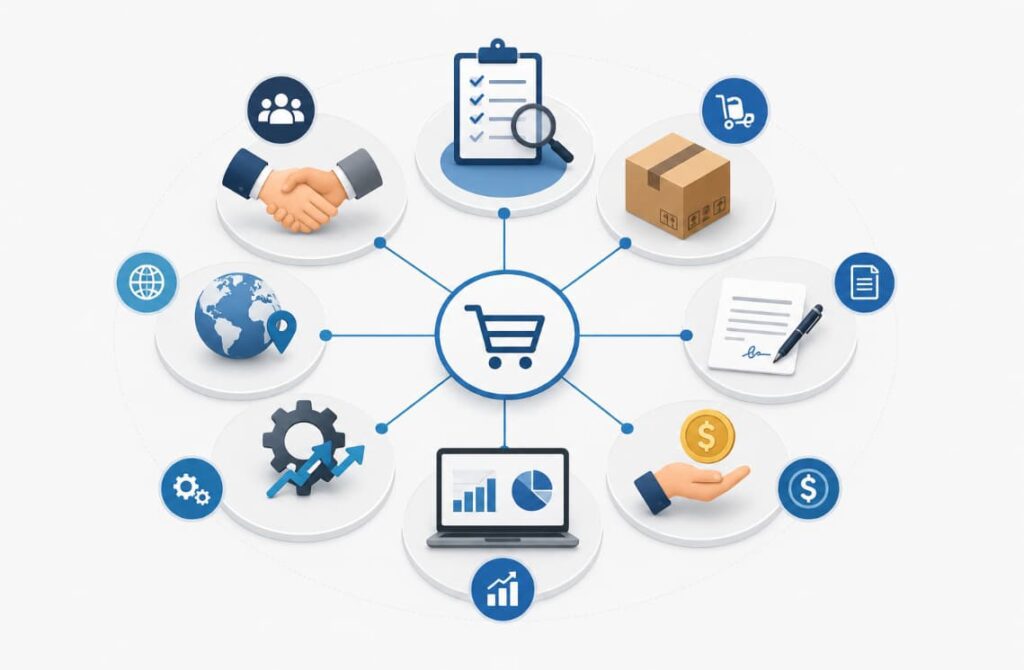
1. Strategic Sourcing Services
Project-based engagements that identify, evaluate and negotiate with suppliers for a defined category. These projects often run for 8 to 16 weeks and may be priced as a fixed project fee or a success-based arrangement.
2. Managed Procurement Services
The provider takes responsibility for day-to-day purchasing activities. This model is often used by companies that want to scale operations without immediately building a full in-house procurement department. Fees commonly combine a monthly retainer with transaction-based charges.
3. Procurement Consulting
Advisory engagements focused on procurement strategy, process design and organisational setup. Consulting work may later develop into a sourcing or managed procurement engagement.
4. Specialist Procurement Services
Category-specific support for areas such as IT procurement, logistics procurement or marketing procurement. These services are useful when a business needs specialist knowledge rather than broad procurement support.
5. Digital Procurement Implementation
Support with selecting and deploying procurement software, such as Coupa, Ariba, Procurify or Kissflow. Fees may include an implementation charge alongside software licensing costs.
For many Southeast Asian SMEs, strategic sourcing and managed procurement are the most relevant service models.
How Do Procurement Services Pricing Models Compare?
The pricing model affects cash flow, risk allocation and the incentive structure between a client and provider.
| Pricing model | How it works | Best for | Risk to client |
| Time and Materials | Hourly or daily rate multiplied by hours worked | Open-ended consulting, process design and exploratory work | Costs can exceed budget when the scope is unclear |
| Fixed Price | One fee for a defined deliverable | Well-defined projects, such as supplier searches or RFQ execution | Provider may reduce effort to protect margin |
| Retainer | Monthly fee for ongoing service availability | Managed procurement and dedicated resources | You may pay for capacity that is not fully used |
| Success Fee / Gain Share | Base fee plus a percentage of verified savings | Cost-reduction projects with a measurable baseline | Requires accurate baseline data and agreed savings rules |
| Transaction Fee | Fee per purchase order processed | High-volume, lower-complexity purchasing | Adds cost to each transaction |
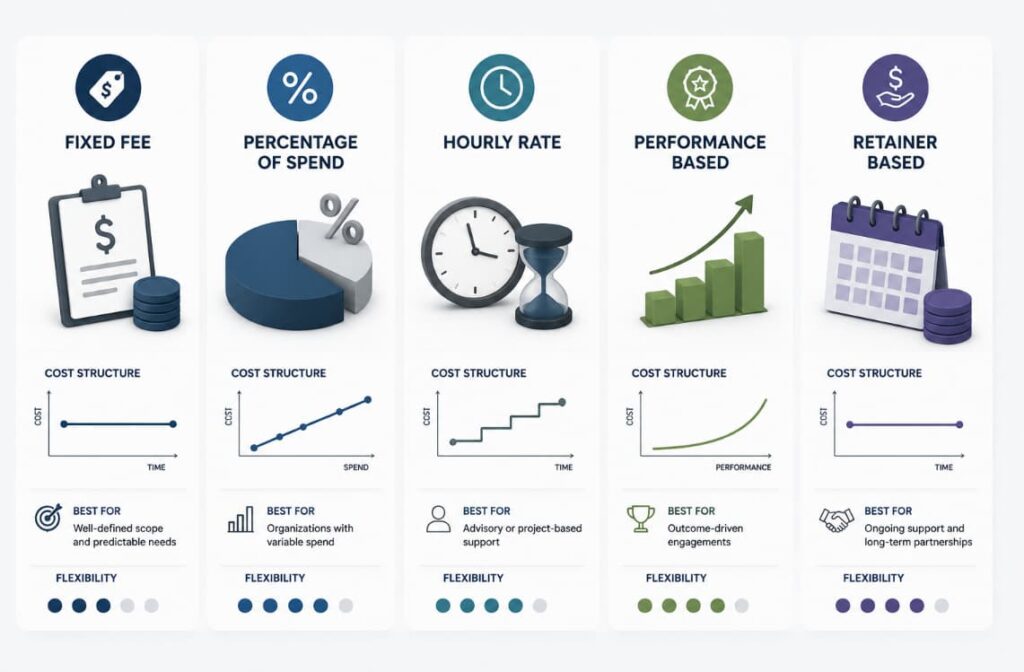
A practical rule is to use a fixed price when the deliverable is clear, such as finding three qualified packaging suppliers in Vietnam within 12 weeks. Use Time and Materials when the work is exploratory. Retainers or gain-share structures are often more suitable for ongoing managed engagements.
Should You Keep Procurement In-House or Outsource It?
The decision should not be made on cost alone. Consider the complexity of your categories, supplier relationships, internal capability and growth plans.
Keep Procurement In-House When:
- Your procurement spend is below 50M THB per year.
- Your category mix is narrow and well understood.
- Supplier relationships are a competitive advantage you want to protect.
- You have a full-time procurement manager with relevant category expertise.
Outsource Procurement When:
- Your spend exceeds 50M THB per year and you lack a dedicated team.
- You are entering a new sourcing geography, such as Vietnam.
- You need significant cost reduction within a defined period.
- Your internal team is focused primarily on business-as-usual purchasing.
A Hybrid Model Often Works Best
For many mid-sized businesses, the most practical approach is a hybrid model. An in-house procurement manager handles daily purchasing and key supplier relationships, while external procurement services support strategic projects, specialist categories and additional capacity during busy periods.
What Are the Most Common Procurement Services Mistakes?
These mistakes can reduce the value of a procurement service engagement.
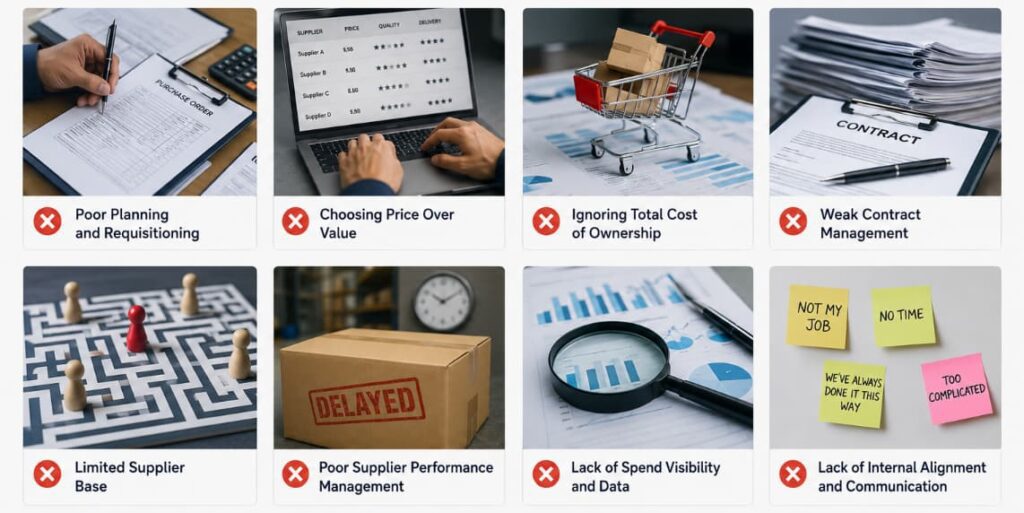
Mistake 1: Using a Vague Scope of Work
A contract that simply states “improve procurement” is unlikely to produce measurable outcomes. The scope should define categories, deliverables, timelines and success metrics. Without this clarity, you may pay for activity rather than results.
Mistake 2: Failing to Measure the Baseline
If you cannot measure current costs in a category, you cannot verify whether the provider has delivered savings. Record baseline pricing, supplier numbers, defect rates and lead times before the engagement starts.
Mistake 3: Paying Retainers Without KPIs
A monthly retainer without measurable outputs is a cost rather than an investment. Link at least part of the fee to agreed deliverables, such as suppliers identified, contracts negotiated or savings achieved.
Mistake 4: Choosing a Provider on Price Alone
The cheapest provider does not always create the most value. Assess industry experience, regional supplier access, references and team continuity. Procurement is relationship-driven, so frequent staff turnover can be a warning sign.
Mistake 5: Treating the Provider as a Vendor Rather Than a Partner
The strongest results usually come from collaborative engagements where the provider is treated as an extension of the internal team. Restrictive contracts and adversarial relationships can limit information sharing and weaken results.
How Do You Choose a Procurement Services Provider?
Use a practical evaluation scorecard when shortlisting potential providers.
| Criterion | Weight | What to look for |
| Regional supplier network | High | Established relationships in your sourcing geography |
| Category expertise | High | Demonstrated experience in your specific spend categories |
| Pricing transparency | High | A clear pricing model without hidden fees |
| References and case studies | High | Verifiable results from comparable clients |
| Team continuity | Medium | Low turnover and named consultants for the engagement |
| Technology | Medium | Modern sourcing tools and data analytics capabilities |
| Cultural fit | Medium | Compatible communication styles, responsiveness and working hours |
| Contract terms | Medium | Flexible scope, clear exit clauses and measurable performance terms |
For Southeast Asian businesses, a strong regional supplier network is often a key differentiator. A provider without local sourcing knowledge may struggle to match the insight and supplier access of a team with established relationships in the target country.
For branded merchandise projects, it may also be useful to understand the procurement process before selecting a sourcing partner.
What Questions Should You Ask Before Signing?
Before engaging a procurement services provider, validate the following:
- Do they have references in your specific spend category?
- Can they show measurable results from previous engagements?
- Is the pricing model clear and aligned with your success metrics?
- Are the proposed team members named, or will the work be assigned based on availability?
- What supplier network do they have in your target sourcing geography?
- How do they manage confidentiality and data security?
- What exit clause applies if the engagement does not deliver?
- Is there a pilot phase before a long-term commitment?
Conclusion
Procurement services can help businesses strengthen supplier sourcing, manage purchasing complexity and access specialist support without immediately building a larger in-house team. The right model depends on your spend profile, sourcing geography, internal expertise and whether you need strategic advice, hands-on execution or ongoing procurement support.
At UCT Asia, we support businesses that need dependable sourcing and procurement support for branded merchandise, promotional products, retail items, corporate gifts and point-of-sale materials. Our approach to gift merchandise procurement combines product development, supplier sourcing, prototyping, quality assurance, fulfilment and delivery, helping businesses manage complex procurement projects across Asia.
FAQ: Procurement Services Questions from Operations Leaders
What are examples of procurement services?
Procurement services can include supplier sourcing and qualification, request-for-quote execution, contract negotiation, supplier audits, procurement process design, software implementation and fully outsourced managed procurement, where a third party handles purchasing on an ongoing basis.
What is the difference between goods procurement and services procurement?
Goods procurement focuses on physical products, including raw materials, components and equipment. Services procurement focuses on external expertise and labour, such as consultants, contractors, IT support and professional services. SAP defines services procurement as the sourcing and management of external service providers delivering people-based work.
How much do procurement services cost?
Costs vary according to the scope, category complexity, supplier geography and pricing model. Consulting projects may range from a few hundred thousand to several million THB. Managed procurement services are often structured as a monthly retainer, transaction fee or a combination of both. Always request a detailed fee proposal that explains what is included.
Should I outsource my procurement function?
Outsourcing can make sense when you lack in-house category expertise, need rapid sourcing support or are entering new sourcing geographies. Smaller businesses with simple purchasing needs may find an in-house buyer more cost-effective, while mid-sized businesses with more complex requirements may benefit from a hybrid model.
What is a managed procurement service?
A managed procurement service is an ongoing arrangement in which a third-party provider takes responsibility for part or all of a purchasing function. The provider may manage supplier sourcing, purchase orders, negotiation, reporting and vendor relationships on behalf of the client.
How do I measure ROI from procurement services?
Establish a baseline before the engagement starts. Track costs by category, supplier numbers, defect rates, lead times and maverick spend. Compare results against this baseline after six to 12 months, using agreed definitions for savings and performance improvements.
What is the difference between procurement services and supply chain consulting?
Procurement services focus on inbound purchasing activities, including sourcing, supplier management and contract negotiation. Supply chain consulting covers the wider flow of goods from raw materials to the end customer, including logistics, inventory and distribution. For further context, see our guide on the difference between procurement and supply chain management.
How long does a procurement services engagement usually last?
Project-based sourcing engagements often run for 8 to 16 weeks. Procurement process design projects may take 4 to 8 weeks, while managed procurement engagements can run for 12 to 36 months. The right duration depends on the scope, category complexity and the time needed to achieve measurable outcomes.
Can procurement services help with cross-border sourcing?
Yes. Procurement providers with established regional supplier networks can help identify, qualify and manage suppliers across borders. This can be particularly valuable for Southeast Asian businesses sourcing products across multiple markets.
What is the difference between a procurement consultant and a procurement services provider?
A procurement consultant typically advises on strategy, processes and organisational design. A procurement services provider is more likely to execute sourcing, negotiation and supplier management activities. Some firms offer both models, so the right choice depends on whether you need advice, execution or a combination of the two.