
From Chief Procurement Officer to Procurement Coordinator, understand every role, how they work together, and how to build an effective procurement team.
Every high-performing organisation has one thing in common: a procurement team that knows exactly who does what. Yet for many businesses, especially growing SMEs in Asia, procurement is either non-existent or treated as a catch-all responsibility for whoever is available when a purchase is needed.
That needs to change.
This guide explains the key procurement team roles, how they fit together, the typical reporting hierarchy, and how to build or restructure a procurement department, whether you are a ten-person start-up or a 500-person enterprise.
Why Do Procurement Teams Matter More Than Ever?
Procurement is no longer only a back-office administrative function. It is a strategic function that can support cost control, supply continuity, quality standards, risk management, and business growth.
Deloitte’s 2025 Global Chief Procurement Officer Survey highlights that procurement leaders are increasingly expected to manage risk, develop talent, support strategic decision-making, and improve digital capability.1
When procurement responsibilities are unclear, businesses can face rising costs, duplicated purchasing, inconsistent supplier management, and avoidable supply chain issues. A well-structured team gives each stage of the purchasing process clear ownership.
What Is the Typical Procurement Team Structure?
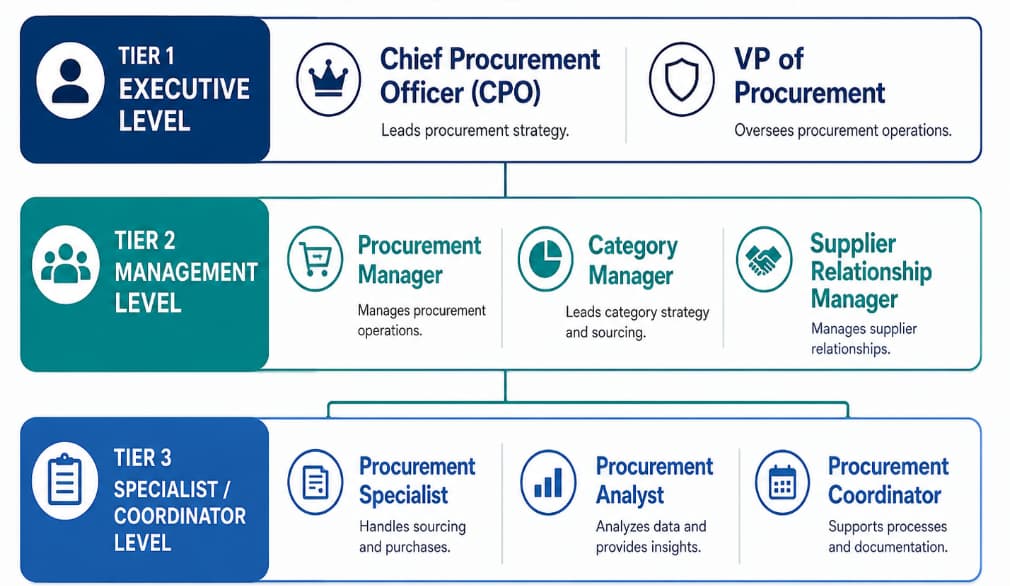
Procurement teams are rarely one-size-fits-all. A 20-person business will structure procurement very differently from a 5,000-person enterprise. However, most functions follow a recognisable three-tier hierarchy:
| Tier | Level | Typical roles |
| 1 | Executive | Chief Procurement Officer, VP of Procurement |
| 2 | Management | Procurement Manager, Category Manager, Supplier Relationship Manager |
| 3 | Specialist / Coordinator | Procurement Specialist, Procurement Analyst, Procurement Coordinator |
Smaller organisations often compress these tiers. One Procurement Manager may handle category management, supplier relationships, and analytics at the same time. Larger enterprises usually expand horizontally, adding dedicated roles for strategic sourcing, contract management, and procurement technology.
What Do Executive-Level Procurement Roles Do?
Chief Procurement Officer Sets the Strategic Direction
The Chief Procurement Officer, or CPO, sits at the top of the procurement function and typically reports to the CEO, CFO, or another senior executive. This is not simply a buying role. It is a strategy and leadership role.
Key responsibilities include:
- Developing and executing the organisation’s procurement strategy
- Aligning procurement goals with wider business objectives
- Managing procurement budgets and cost optimisation targets
- Building and leading the procurement team
- Representing procurement in executive and board-level discussions
- Managing supply chain and supplier risk
- Leading supplier innovation and strategic partnerships
A CPO commonly has extensive procurement experience, often supported by qualifications in business, supply chain, or finance. Professional certifications from organisations such as the Institute for Supply Management or Chartered Institute of Procurement & Supply can also be valuable.
CPOs are responsible for the wider procurement operation, strategic vendor relationships, and major procurement technology decisions. Their role is to ensure the business is buying the right products and services from the right partners, under the right commercial terms.
Vice President of Procurement Leads Large-Scale Execution
In larger enterprises, the Vice President of Procurement is often the CPO’s second-in-command. They may manage specific business units, product groups, or geographical regions while ensuring that procurement strategy is translated into day-to-day execution.
Key responsibilities include:
- Overseeing procurement operations across one or more divisions
- Managing major supplier contracts and negotiations
- Implementing procurement policies and standards
- Mentoring and developing procurement managers
- Reporting procurement KPIs to the CPO
Not every organisation requires a VP of Procurement. This role is more common in businesses with complex supply chains, multiple operating regions, or substantial annual spend.
How Do Procurement Managers Drive Day-to-Day Performance?

Procurement Managers Keep Procurement Operations Running
The Procurement Manager is the operational backbone of many procurement teams. They ensure daily purchasing activities run smoothly, manage buyer-level staff, and execute the sourcing strategies established by leadership.
Key responsibilities include:
- Managing purchase orders, approvals, and procurement workflows
- Supervising procurement staff and coordinating activities
- Ensuring compliance with procurement policies and procedures
- Working with finance, operations, engineering, and other stakeholders
- Monitoring supplier performance and escalating issues
- Supporting RFPs, RFQs, and competitive bidding processes
- Maintaining procurement records and documentation
Procurement Managers usually need several years of procurement experience, strong analytical and communication skills, and a practical understanding of purchasing processes.
For businesses buying products internationally, a Procurement Manager also needs a clear view of how sourcing connects with logistics and delivery. Our guide to the difference between procurement and supply chain management explains how these two functions work together.
Category Managers Own Supplier and Spend Strategy
If a Procurement Manager focuses on how purchasing operations run, a Category Manager focuses on who the business buys from and why.
Category management divides spend into logical groups, such as IT services, raw materials, marketing, logistics, or professional services. Each category is managed strategically according to supplier markets, cost drivers, risk, and business requirements.
Key responsibilities include:
- Developing category strategies for assigned spend areas
- Conducting market research and supplier benchmarking
- Running strategic sourcing projects and tender processes
- Negotiating contracts and pricing structures
- Identifying and developing alternative suppliers
- Tracking category savings and reporting to leadership
- Reducing supply chain risk within the category
Common categories include IT and software, professional services, facilities and maintenance, raw materials, and logistics and freight.
A strong Category Manager does more than negotiate prices. They understand total cost of ownership, supplier market conditions, and the opportunities or risks within their category.
Supplier Relationship Managers Build Strategic Partnerships
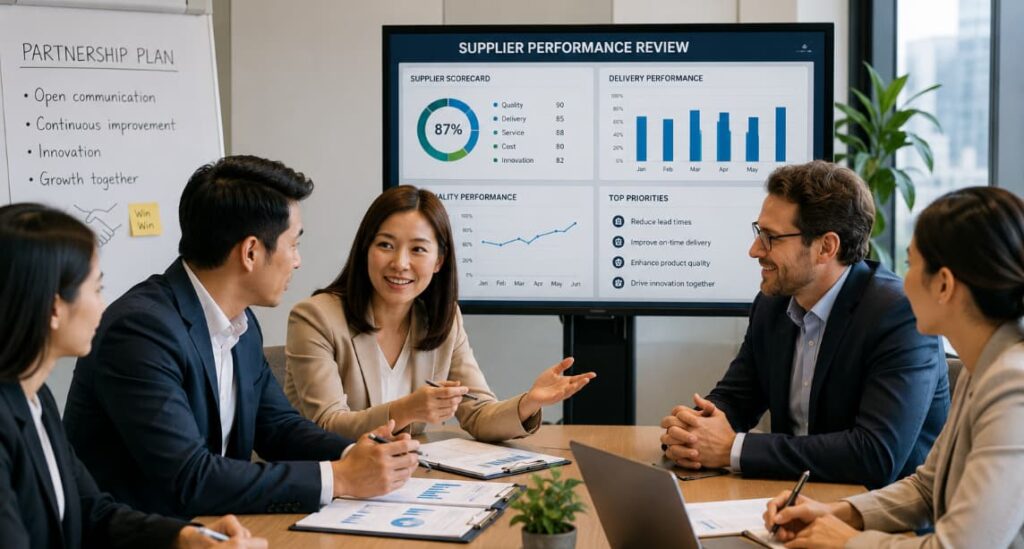
Supplier Relationship Management, often known as SRM, is the practice of treating important suppliers as strategic partners rather than purely transactional vendors.
Key responsibilities include:
- Managing relationships with strategic and critical suppliers
- Conducting quarterly business reviews with key suppliers
- Developing joint improvement plans
- Monitoring supplier health scores and risk indicators
- Resolving disputes and escalations
- Identifying co-investment and innovation opportunities
- Tracking supplier performance against SLAs and contracts
Structured supplier relationship management can improve communication, encourage supplier accountability, and help businesses respond more effectively to disruptions. CAPS Research has also found that formal SRM programmes can improve supply management performance.2
What Do Procurement Specialists, Analysts, and Coordinators Do?

Procurement Specialists Execute Purchasing Activities
The Procurement Specialist is the execution arm of procurement. They handle detailed sourcing, purchasing, and supplier coordination work that keeps operations moving.
Key responsibilities include:
- Processing purchase requisitions and purchase orders
- Requesting quotes and comparing supplier offers
- Coordinating delivery schedules with suppliers
- Maintaining procurement data and ERP records
- Supporting contract implementation and follow-up
- Handling day-to-day procurement queries from internal teams
- Supporting sourcing teams with market research
This role usually requires strong attention to detail, confidence using procurement or ERP software, and clear communication skills.
Procurement Analysts Turn Data Into Better Buying Decisions
Data is reshaping procurement. The Procurement Analyst turns spend data, supplier performance information, and market intelligence into useful insights for better buying decisions.
Key responsibilities include:
- Analysing spend data to identify savings opportunities
- Building procurement dashboards and reports
- Conducting total cost of ownership analysis
- Benchmarking supplier pricing against market conditions
- Supporting Category Managers with data-led recommendations
- Monitoring procurement KPIs, including lead times and compliance
- Identifying patterns and anomalies in procurement data
Common tools include Power BI, Tableau, advanced Excel or Google Sheets, SAP Ariba, Coupa, and similar procurement platforms. SQL knowledge is increasingly useful for larger datasets.
Procurement Coordinators Maintain the Administrative Backbone
The Procurement Coordinator is often an entry point into a procurement career, but the role is vital to keeping the procurement function organised.
Key responsibilities include:
- Scheduling procurement meetings and review sessions
- Tracking purchase order status and delivery timelines
- Managing procurement documentation and filing systems
- Processing routine purchase approvals
- Communicating between internal departments and suppliers
- Maintaining renewal and contract expiry calendars
- Supporting the onboarding of new suppliers
A good coordinator needs strong organisation, attention to detail, and confidence using office and procurement software.
How Do Procurement Roles Work Together?
Understanding each procurement role is useful. Understanding the handovers between roles is what helps a procurement team function effectively.
| Stage | Primary owner | Supporting role |
| Business need identified | Requesting department | Procurement Coordinator |
| Vendor research and market analysis | Category Manager | Procurement Analyst |
| RFP or RFQ issued | Procurement Specialist | Category Manager |
| Quote comparison and negotiation | Category Manager | Procurement Manager |
| Contract review and approval | CPO or VP Procurement | Procurement Manager |
| Purchase order raised and issued | Procurement Specialist | Procurement Coordinator |
| Goods or services received | Operations or requester | Procurement Analyst |
| Invoice processing and payment | Finance and procurement | Procurement Coordinator |
| Supplier performance review | Supplier Relationship Manager | Category Manager |
No single role completes the entire process alone. The value comes from clear handovers, consistent documentation, and shared accountability.
How Can SMEs Build a Procurement Team With Limited Resources?
You do not need a ten-person procurement team to manage purchasing effectively. Many SMEs operate with two to four people, while some begin with one person handling several procurement responsibilities.
| Role | Responsibilities absorbed |
| Procurement Manager | Category management, purchasing, supplier management |
| Procurement Coordinator | Purchase order management, documentation, scheduling |
| Finance, shared function | Invoice processing and payment approval |
The key for SMEs is to focus resources where they matter most. Start by identifying the categories responsible for the greatest share of your spend, such as raw materials, core services, packaging, or critical supplies.
As the business grows, add dedicated specialists. The progression often looks like this:
- One person handling procurement alongside operations
- Dedicated Procurement Manager and Coordinator
- Procurement Manager with Category Management and Analyst support
- Full function: CPO, Managers, Specialists, and Coordinators
Businesses sourcing products from Asia may also benefit from understanding how overseas supplier selection, sampling, quality checks, and production coordination fit into the process. Read our guide on how to source products from Asia.
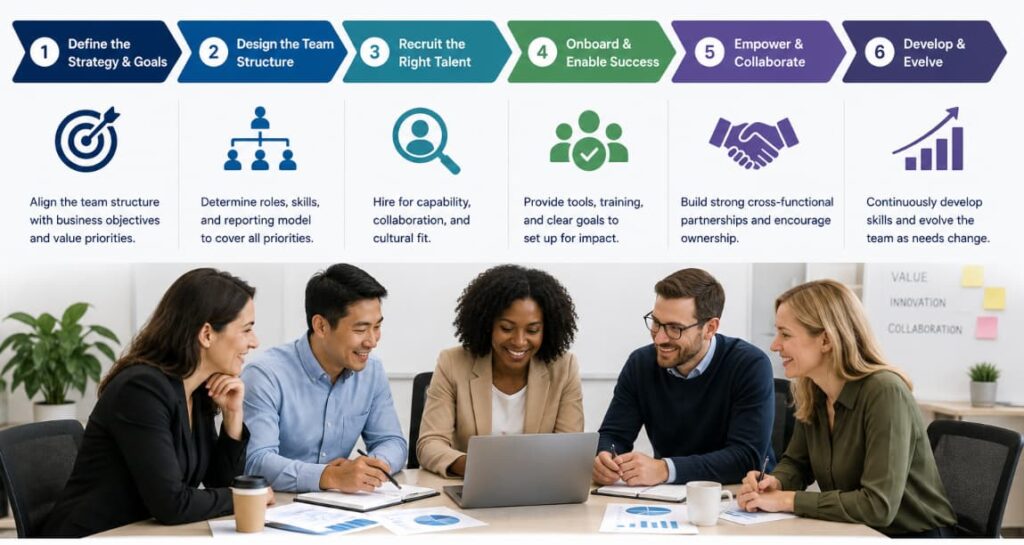
How Do You Build a Procurement Team?
Whether you are starting from scratch or restructuring an existing department, use this checklist.
Define Procurement Scope First
- What spend categories will procurement own versus decentralised departments?
- What is the annual procurement budget and team headcount budget?
- Which suppliers are strategic and which are transactional?
- What procurement technology is already in place, and what is needed?
Hire in the Right Order
- Hire or appoint a Procurement Manager first to define processes
- Add Category Management expertise to support strategic sourcing
- Build analytical capability to improve data-led decisions
- Add coordinators and specialists as purchasing volume grows
Establish Governance
- Document procurement policies, approval thresholds, and tender rules
- Define a RACI matrix
- Set procurement KPIs and review schedules
- Implement or configure procurement software early
Invest in Development
- Support procurement certifications, such as ISM CPSM, CIPS, or SAP Ariba training
- Create a clear procurement career path
- Build supplier development programmes where appropriate
What Is a Procurement RACI Matrix?
A RACI matrix removes uncertainty around decision authority. It shows who is Responsible, Accountable, Consulted, and Informed for each procurement activity.
| Activity | CPO | Procurement Manager | Category Manager | Procurement Specialist | Procurement Analyst | Procurement Coordinator |
| Procurement strategy | A | C | R | I | I | I |
| Annual contract negotiation | A | R | R | C | I | I |
| Supplier selection | A | R | R | C | C | I |
| PO approval under $5K | I | A | R | R | I | C |
| PO approval above $50K | R | A | C | C | I | I |
| Spend analytics and reporting | I | A | R | I | R | C |
| Supplier QBR facilitation | I | A | R | I | C | C |
| Contract renewals | A | R | R | C | I | C |
R = Responsible | A = Accountable | C = Consulted | I = Informed
Customise this matrix around your organisation’s approval thresholds, risk profile, and governance structure. The key is agreement upfront, as unclear ownership often leads to procurement delays and failures.
What Is the Typical Procurement Career Path?
A procurement career can develop from entry-level coordination work into senior commercial and strategic leadership roles.
| Level | Role | Typical experience |
| Entry | Procurement Coordinator or Junior Buyer | 0–2 years |
| Early career | Procurement Specialist or Buyer | 2–5 years |
| Mid-career | Procurement Manager or Category Manager | 5–8 years |
| Senior | Senior Procurement Manager or Director | 8–12 years |
| Executive | VP Procurement or Chief Procurement Officer | 12+ years |
Career accelerators include:
- Cross-functional exposure across finance, operations, and supply chain
- Procurement certifications such as CPSM, CIPS, or SCMP
- Procurement technology expertise, including SAP Ariba, Coupa, or Oracle
- Category specialisation in high-value or complex spend areas
- International or Asia-Pacific procurement experience
Conclusion: Why Does Procurement Structure Determine Success?
Most procurement failures are not caused by poor people or poor intentions. They happen because roles are undefined, responsibilities overlap, and no one is sure who has the authority to approve, negotiate, or resolve an issue.
The good news is that this can be fixed.
Start with the roles that matter most for your business size and spend profile. Build the hierarchy deliberately, define your RACI, invest in analytics capability, and ensure every handover is clear.
Whether you are an SME balancing procurement with operations or an enterprise rebuilding a more mature procurement function, the principles are the same: clarity of role, rigour of process, and discipline of execution.
At UCT Asia, we help brands manage complex sourcing and gift merchandise procurement through practical supplier coordination, product expertise, and cross-functional support. Our team works closely with clients to turn procurement requirements into reliable, high-quality branded merchandise programmes.
Frequently Asked Questions
What Are the Four Main Roles of Procurement?
The four core procurement functions are typically sourcing, purchasing, supply chain management, and supplier relationship management. Some frameworks also include contract management as a separate function.
What Are the Five Pillars of Procurement?
The five pillars of modern procurement are strategic sourcing, supplier relationship management, procurement operations and technology, risk and compliance management, and procurement analytics and performance measurement.
What Is the Typical Procurement Department Hierarchy?
Most procurement departments follow a three-tier structure: Executive roles, including the CPO and VP Procurement; management roles, including Procurement Managers, Category Managers, and Supplier Relationship Managers; and specialist or coordinator roles, including Procurement Specialists, Analysts, and Coordinators.
What Does a Chief Procurement Officer Do?
A Chief Procurement Officer leads the procurement function and is responsible for procurement strategy, major supplier relationships, cost optimisation targets, team leadership, and procurement risk management. They commonly report to the CEO, CFO, or another senior executive.
How Do You Organise a Procurement Department?
Start by mapping spend and identifying the categories that drive the greatest costs or risks. Then define ownership from sourcing through supplier management, use a RACI matrix to clarify authority, and add specialist roles as purchasing volume and complexity increase.
What Is the Difference Between a Procurement Manager and a Category Manager?
A Procurement Manager is typically responsible for procurement operations, including purchase orders, approvals, team management, and process compliance. A Category Manager owns a specific spend category from market analysis and supplier selection through contract negotiation and supplier performance management.
What Skills Does a Procurement Analyst Need?
A Procurement Analyst needs strong analytical skills, proficiency with tools such as Excel, Power BI, or Tableau, familiarity with procurement platforms, and the ability to turn data into practical procurement recommendations. Clear communication is also essential.
How Can SMEs Build a Procurement Function With Limited Resources?
SMEs should start by consolidating suppliers where appropriate, negotiating annual frameworks instead of relying on ad-hoc purchases, tracking major spend categories, and appointing a primary procurement owner. As budget allows, they can introduce simple approval workflows, procurement technology, and dedicated procurement roles.
What Is a Procurement RACI Matrix?
A procurement RACI matrix defines who is Responsible for completing work, Accountable for the result, Consulted for input, and Informed about progress. It helps prevent confusion where procurement responsibilities overlap with finance, operations, or other departments.
How Much Can a Good Procurement Team Save?
Savings vary widely depending on spend categories, supplier markets, current purchasing practices, and contract maturity. A strong procurement team can create value through strategic sourcing, supplier negotiation, demand management, process improvement, and stronger spend visibility.