
Step into any store during Pride Month and you’ll see a spectrum of colors across clothing, accessories, and everyday items. These displays feel celebratory, bold, and widely accepted. That visibility tells only part of the story.
Pride merchandise began as a quiet form of resistance, shaped by necessity in a time when visibility carried real risk. Over decades, those subtle signals transformed into globally recognized symbols that now sit at the intersection of activism, identity, and fashion.
Understanding this evolution reveals how merchandise can carry meaning far beyond design.
Early Symbols: Markers of Defiance and Community
Before Pride became visible, it existed quietly. In the mid-20th century, expressing LGBTQ+ identity openly could lead to discrimination, arrest, or worse. Symbols operated as coded language, allowing individuals to recognize one another without drawing unwanted attention.
One of the most powerful examples is the pink triangle. Originally used by Nazi Germany to identify and persecute gay men, it was later reclaimed by activists as a symbol of resistance and remembrance. This act of symbolic reclamationtransformed a marker of oppression into one of defiance.
Another key symbol, the lambda, emerged in the 1970s as a representation of unity and liberation. These symbols often appeared as small pins or patches, subtle enough to avoid detection yet meaningful enough to build community.
The dynamic at this stage followed a clear pattern:
- Hidden symbols → Safe identification → Community formation → Resistance
The Stonewall Riots accelerated this shift. Increased activism pushed identity from secrecy toward visibility, setting the stage for broader cultural change.
The Birth of the Rainbow as a Unifying Symbol
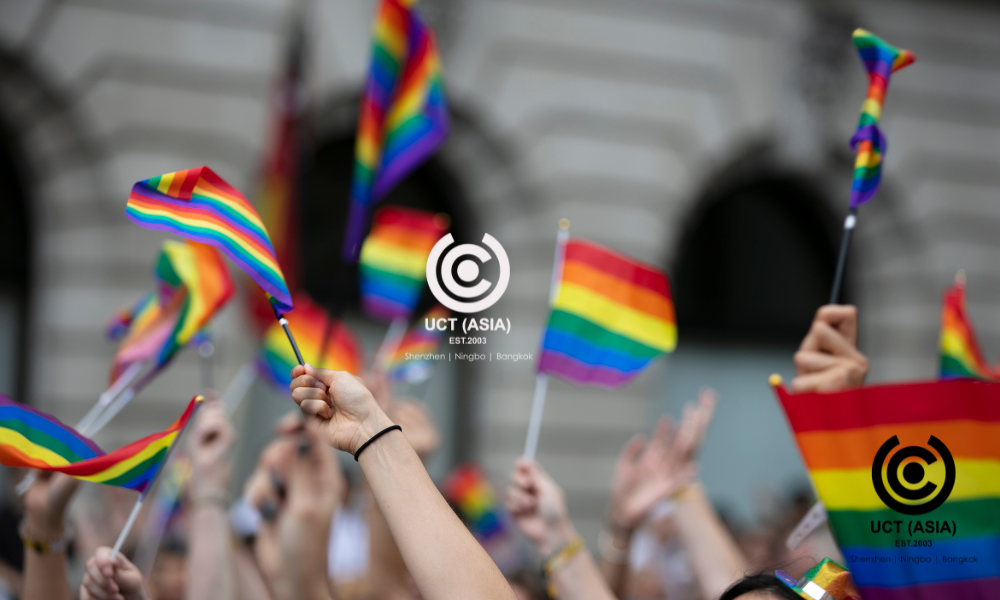
In 1978, Gilbert Baker introduced a new symbol that would redefine LGBTQ+ visibility: the rainbow flag.
Unlike earlier coded symbols, the rainbow was intentionally bold and public. Each color represented an aspect of life, diversity, and unity. The design shifted the movement’s visual identity from hidden signals to open celebration.
This marked a turning point:
- Visible symbol → Increased awareness → Collective identity → Cultural recognition
The rainbow flag quickly expanded beyond marches and protests. It appeared on clothing, banners, and accessories, transforming into one of the most recognizable symbols in the world.
From Activism to Mainstream Merchandise
As societal acceptance grew, Pride events evolved from protests into large-scale celebrations. This shift opened the door for merchandise to expand beyond grassroots production into mainstream markets.
Retailers, designers, and independent creators began producing Pride-themed products across multiple categories:
- Apparel collections in major stores
- Accessories like bags, pins, and phone cases
- Home items such as mugs and décor
- Pet accessories and lifestyle products
This phase introduced cultural normalization, where symbols once tied to activism became integrated into everyday life.
At the same time, a dual dynamic emerged:
- Commercial expansion → Wider visibility → Increased acceptance
- Commercial expansion → Risk of superficial representation → Need for authenticity
Consumers began paying closer attention to whether brands genuinely supported LGBTQ+ communities or simply capitalized on seasonal demand.
Pride Merchandise as Identity, Advocacy, and Fashion
Today, Pride merchandise operates across multiple layers simultaneously.
1. Identity Expression
Wearing Pride merchandise communicates personal identity or allyship. It functions as a visible signal of belonging and support.
2. Advocacy and Visibility
Each visible symbol contributes to broader awareness. Increased visibility plays a measurable role in reducing stigma over time by normalizing LGBTQ+ presence in public spaces.
3. Community Building
Shared symbols create instant recognition. Whether at events or in daily life, Pride merchandise connects individuals through common values and experiences.
4. Fashion and Aesthetic Appeal
Design has become a central factor. Pride collections now incorporate modern silhouettes, premium materials, and trend-driven aesthetics, positioning them within the broader fashion ecosystem.
This creates a layered system:
Symbol → Meaning → Visibility → Cultural impact
The Business Perspective: Opportunity and Responsibility
For brands, Pride merchandise represents both opportunity and accountability.
Opportunities include:
- Expanding into a global, diverse consumer base
- Strengthening brand identity through inclusivity
- Creating emotionally resonant products
Responsibilities include:
- Ensuring authentic representation
- Supporting LGBTQ+ communities beyond seasonal campaigns
- Collaborating with LGBTQ+ designers and creators
Brands that balance these factors build long-term trust rather than short-term visibility.
The Modern Pride Merchandise Framework
| Dimension | Early Stage (Resistance) | Modern Stage (Celebration & Fashion) |
|---|---|---|
| Visibility | Hidden | Highly visible |
| Purpose | Survival and signaling | Expression and celebration |
| Design | Minimal and discreet | Bold and fashion-forward |
| Distribution | Community-based | Global retail and e-commerce |
| Meaning | Resistance | Identity + advocacy + lifestyle |
This transformation reflects broader social progress while preserving the historical significance behind each symbol.
Looking Forward: The Next Phase of Pride Merchandise
Future developments are already taking shape:
- Greater emphasis on sustainability and ethical sourcing
- Increased personalization to reflect individual identities
- Deeper collaborations with LGBTQ+ artists and designers
- Expansion into digital and virtual merchandise spaces
As these trends evolve, the core function remains unchanged: creating meaningful connections through symbols that carry both history and identity.
Create Meaningful Impact with Pride Merchandise
Pride merchandise carries history, identity, and cultural significance. Brands that approach it thoughtfully create products that resonate on a deeper level rather than simply adding color to existing designs.
If your goal is to develop custom Pride merchandise that reflects authenticity, inclusivity, and strong brand identity, UCT (Asia) provides the expertise to bring that vision to life. From concept to production, the focus stays on crafting merchandise that connects, represents, and leaves a lasting impression.