
Creative Strategies for Effective Merchandise Branding: Standing Out in a Saturated Market
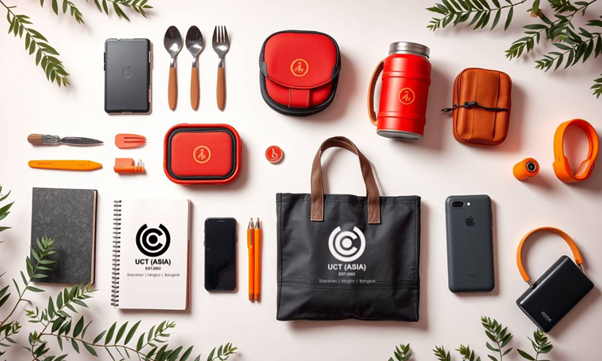
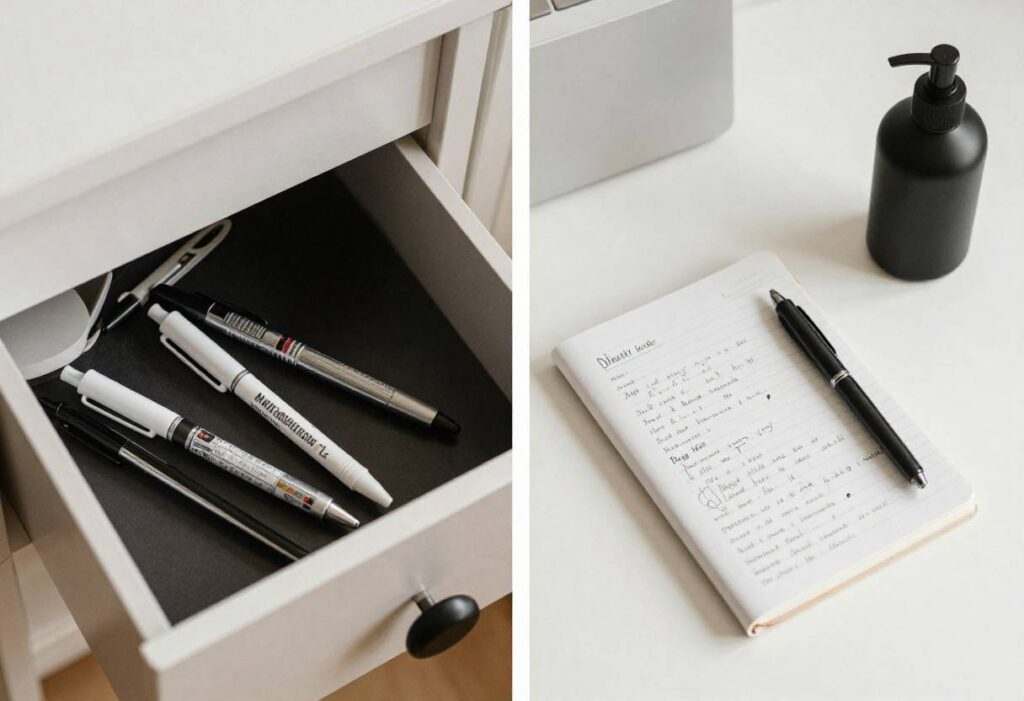
Think about the last time you received a branded promotional item. Was it a generic pen that you immediately threw in a drawer, never to be seen again? Or was it something genuinely useful, beautifully designed, that you actually wanted to keep?
The difference between those two outcomes represents billions of dollars in marketing spend. The promotional merchandise industry is massive. According to the Promotional Products Association International (PPAI), the industry now encompasses over 22,000 distributors and approximately 4,800 manufacturers globally. In 2025 alone, major acquisitions like Proforma’s purchase of Safeguard from Deluxe added nearly $180 million in annual sales to the sector, demonstrating continued industry growth and consolidation.
Yet here is the challenge that keeps marketing directors awake at night: when every competitor is also handing out branded merchandise, how do you make yours the one that people actually remember, use, and associate with quality?
This guide answers that question with five proven strategies backed by industry data and real-world examples.
1. Build a Strong Brand Identity
What this means in plain terms: Your brand identity is the complete visual and emotional picture people have of your company. It includes your logo, colors, fonts, messaging tone, and the values you communicate. When these elements work together consistently, people recognize your brand instantly, even without seeing your company name.
Why most companies fail at this: Many businesses treat branding as an afterthought. They design a logo, pick some colors they like, and call it a day. The result is inconsistency. One marketing material looks sleek and modern, while another looks dated and amateur. This inconsistency confuses potential customers and signals that your company lacks attention to detail.The commercial impact: Research from the Advertising Specialty Institute (ASI) shows that consistent brand presentation increases revenue by an average of 33%. When your merchandise carries the same visual language as your website, your office signage, and your sales presentations, you build trust through repetition.
Actionable implementation:
| Brand Element | Application on Merchandise | Common Mistake to Avoid |
|---|---|---|
| Logo placement | Upper left corner for wearables, centered for flat items | Stretching or distorting the logo to fit different spaces |
| Color palette | Use Pantone-matched colors for consistency across materials | Assuming screen colors will match printed materials |
| Typography | Limit to 2–3 fonts maximum across all merchandise | Using trendy fonts that become dated quickly |
| Messaging tone | Match the language style to your brand personality | Writing generic taglines that could apply to any company |
Real-world example: Consider how Apple approaches merchandise. Every item, from their branded t-shirts given to employees to the packaging of their products, uses the same clean aesthetic, the same carefully chosen materials, and the same restrained approach to messaging. You know an Apple product the moment you see it, even without the logo visible.

2. Focus on Quality and Functionality
The uncomfortable truth: A beautiful product that breaks within a week damages your brand more than no product at all. When someone receives a promotional item that malfunctions, they do not blame the manufacturer. They blame your company for choosing it.
Industry data tells the story: Studies consistently show that the usefulness of promotional products directly correlates with how long recipients keep them. Items retained for more than one year generate approximately 1,000 impressions during their lifetime. Cheap items discarded within days generate virtually zero return on investment.
Understanding quality metrics:
- Material durability: Will this item survive normal use for at least 12 months?
- Functional reliability: Does it perform its intended purpose every time?
- Manufacturing consistency: Will the 500th unit match the quality of the first?
- Safe for intended use: Does it meet relevant safety standards?
Quality versus cost reality check:
Many procurement teams face pressure to reduce per-unit costs. However, consider this calculation:
- Option A: 1,000 pens at $0.50 each = $500 total. Average retention: 2 weeks.
- Option B: 500 quality notebooks at $3.00 each = $1,500 total. Average retention: 12+ months.
The notebooks cost three times more upfront but generate 26 times longer brand exposure. The cost per impression is actually lower with the higher-quality item.
Practical quality testing: Before committing to a large merchandise order, request samples and subject them to realistic testing. Use the pen for a full week. Carry the tote bag loaded with items for several days. Wash the branded apparel according to care instructions. If quality issues emerge during this testing, they will certainly emerge when distributed to customers.

3. Personalization and Customization
Why personalization works: Receiving an item with your name on it triggers a psychological response. Research in consumer behavior shows that personalized items create stronger emotional connections and higher perceived value. The recipient feels seen as an individual rather than treated as part of a mass market.
Technology has changed the economics: Print-on-demand technology has revolutionized personalization. Previously, customizing items required expensive setup costs and large minimum orders. Today, digital printing and embroidery technology allow for single-unit personalization at reasonable costs. This means you can offer customized merchandise without maintaining massive inventory.
Types of personalization to consider:
| Personalization Type | Best For | Implementation Complexity |
| Individual names | VIP clients, employee recognition, exclusive events | Low – requires only name data |
| Department or role-specific | Corporate gifts, team building merchandise | Low – categorize by group |
| Event-specific messaging | Trade shows, conferences, product launches | Low – date and event name |
| User-customized design | Creative audiences, younger demographics | High – requires design interface |
| Location-specific | Multi-location businesses, travel brands | Medium – requires regional data |
Personalization success story: Coca-Cola’s “Share a Coke” campaign replaced their iconic logo with popular first names on bottles. The campaign increased sales for the first time in a decade, generating over 500,000 photos shared on social media within the first year. The personalization transformed a commodity product into a personal statement.Implementation tip: Start with simple personalization before attempting complex customization. Even adding a handwritten thank-you note to a standard merchandise package creates personalization impact without technical complexity.
4. Use Brand Storytelling
What is brand storytelling? Brand storytelling means communicating your company’s values, history, mission, and personality through narrative rather than direct claims. Instead of saying “we are committed to sustainability,” you tell the story of how your company eliminated plastic from packaging after a founder witnessed ocean pollution during a family vacation.
Why storytelling outperforms advertising: Research published in the Journal of Consumer Research demonstrates that stories activate different brain regions than factual information. When people hear stories, their brains release oxytocin, a chemical associated with empathy and connection. Facts inform, but stories persuade and create emotional bonds.
Story elements that resonate on merchandise:
- Origin stories: How did your company begin? What problem were the founders trying to solve?
- Mission moments: When did your company make a difficult choice that reflected its values?
- Customer impact: How has your product or service changed someone’s life or business?
- Behind-the-scenes: Who are the people behind your products? What makes their work special?
Storytelling on physical merchandise:
Physical items present unique storytelling opportunities through:
- Hang tags and packaging: Include a brief story or QR code linking to the full narrative
- Interior labels: Print messages inside apparel where only the wearer sees them
- Sequential messaging: Create merchandise series that tell a story over time
- Origin labeling: Specify where materials come from and who crafted the item
Example of merchandise storytelling: Patagonia’s Worn Wear program tells the story of product longevity and environmental responsibility. Each repaired garment carries a story of its adventures. This transforms a simple jacket into a conversation piece about sustainability and quality.
5. Unique and Interactive Packaging
Packaging is your silent salesperson: In retail environments, products have approximately three seconds to capture attention. In promotional contexts, packaging determines whether the recipient perceives value before even seeing the item inside.
Emerging packaging innovations:
The promotional products industry is experiencing rapid innovation in packaging technology. According to industry analysis from 2025, several trends are reshaping expectations:
- Sustainable materials: Biodegradable, compostable, and recyclable packaging options are becoming standard requirements rather than premium features
- Smart packaging: QR codes, NFC chips, and augmented reality elements create digital experiences from physical items
- Minimalist design: Clean, uncluttered packaging signals premium quality and environmental consciousness
- Reusable packaging: Packaging designed for secondary use extends brand exposure and reduces waste
Smart packaging explained simply:
Smart packaging incorporates technology that connects physical items to digital experiences:
- QR codes: Square patterns that smartphones scan to launch websites, videos, or augmented reality experiences
- NFC chips: Small electronic tags that communicate with smartphones when tapped, enabling instant website access or authentication verification
- Augmented reality: Packaging designs that trigger interactive digital content when viewed through a smartphone camera
Packaging impact data: Research indicates that 72% of consumers say packaging design influences their purchasing decisions. For promotional merchandise, attractive packaging increases the perceived value of the item inside by an average of 45%.
Packaging checklist for merchandise:
- Does the packaging include a clear call-to-action or next step?
- Does the packaging protect the item during shipping and handling?
- Does the exterior design clearly communicate the brand?
- Is opening the package a pleasant experience?
- Can the packaging be easily recycled or repurposed?
FAQ: Merchandise Branding Strategy
Q: How much should I budget for branded merchandise?
Budget recommendations vary by industry and company size, but a common framework allocates 5-10% of your total marketing budget to promotional products. More important than the total amount is the cost-per-impression calculation. Higher quality items with longer retention generate better returns than larger quantities of disposable items.
Q: Which promotional products have the longest retention rates?
According to industry research, the categories with the highest retention include:
- Outerwear and branded apparel (average 16 months retention)
- USB drives and tech accessories (average 13 months)
- Drinkware including water bottles and mugs (average 12 months)
- Desk accessories like calendars and notepads (average 10 months)
Q: How do I measure the ROI of merchandise branding?
Effective measurement combines quantitative and qualitative metrics:
- Direct metrics: Redemption rates for included offers, QR code scans, website traffic from unique URLs on merchandise
- Indirect metrics: Brand recall surveys, social media mentions, sales correlation with distribution periods
- Long-term metrics: Customer lifetime value of merchandise recipients versus non-recipients
Q: What are the current trends in merchandise branding for 2026?
Key trends shaping the industry include:
- Sustainability focus: Recycled materials, carbon-neutral shipping, and product lifecycle responsibility
- Tech integration: Smart packaging, NFC-enabled items, and augmented reality experiences
- Local production: Reduced shipping distances and support for regional manufacturers
- Health and wellness: Fitness accessories, mental health support items, and work-from-home essentials
- Personalization at scale: Technology enabling individual customization without minimum order requirements
Q: Should I handle merchandise branding in-house or work with an agency?
The decision depends on your internal resources and merchandise volume:
- In-house works best when: You have dedicated marketing staff, consistent ongoing needs, and existing supplier relationships
- Agency partnership works best when: You need creative development, require specialized production capabilities, distribute across multiple regions, or want access to industry trends and innovations
Q: How do I ensure my merchandise stands out at crowded trade shows?
Trade show differentiation requires pre-event strategy:
- Send premium items to high-value prospects before the event to secure meetings
- Create tiered merchandise strategy: basic items for general traffic, premium items for qualified leads
- Design merchandise that recipients will use during the show (phone chargers, comfortable tote bags, water bottles)
- Incorporate interactive elements that create booth engagement
Key Takeaways
In a saturated market, effective merchandise branding requires strategic thinking, not just creative execution. The brands that stand out are those that align product choice, design, audience insight, and distribution into a cohesive strategy that reinforces brand identity at every touchpoint. Merchandise must feel intentional — not incidental.
UCT (Asia) supports businesses with comprehensive consumer goods procurement expertise, ensuring that each merchandise initiative is aligned with brand positioning, audience relevance, and long-term marketing objectives. By combining creativity with strategic sourcing and execution, we help brands rise above noise and achieve meaningful differentiation.
Sources and Further Reading
- Promotional Products Association International (PPAI). “Industry Statistics and Trends 2024.” PPAI Industry Report.
- Advertising Specialty Institute (ASI). “ASI Central Industry News 2025: Market Consolidation and Growth.” ASI Central.
- Wikipedia contributors. “Promotional merchandise.” Wikipedia, The Free Encyclopedia. Accessed February 2026.
- Grand View Research. “Promotional Products Market Size Report, 2024-2030.” Grand View Research.
- Journal of Consumer Research. “The Power of Storytelling in Consumer Engagement.” Journal of Consumer Research, Vol. 48, Issue 3.