
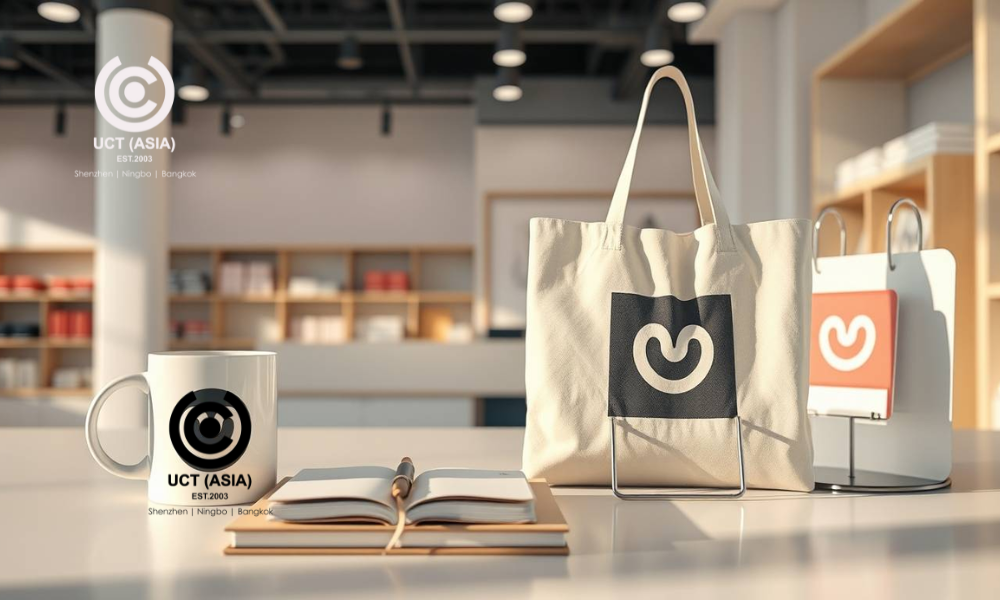
Most marketing disappears faster than morning fog. A digital ad flashes for three seconds. A social post gets buried in an endless feed. But that branded water bottle on someone’s desk? It’s been there for eight months—and counting.
Here’s what the numbers tell us: [According to ASI Research](https://asi.org), promotional products generate over 6,000 impressions per item over their lifetime. Branded bags alone rack up 3,000+ impressions. And here’s the kicker—it costs less than one cent per impression. Compare that to digital advertising costs, and you start to see why smart marketers are returning to tangible brand touchpoints.
The global promotional products market is surging from $26.5 billion in 2025 to a projected $37 billion by 2033. In the US alone, spending hits $27.8 billion this year. These aren’t vanity metrics. They represent a fundamental shift in how brands connect with audiences.
In this guide, you’ll discover why ad merchandise outperforms fleeting digital campaigns, how to match products to your brand type, and the psychology that turns everyday objects into powerful marketing assets. Whether you’re a marketing manager seeking ROI justification or a brand director exploring sustainable options, this research-backed approach will transform how you view promotional products.
What Is Ad Merchandise and Why Does It Work?
Ad merchandise—also called promotional products, branded merchandise, or advertising merchandise—refers to physical items imprinted with a company’s logo, message, or branding. Think beyond the cheap pens and flimsy keychains of trade shows past. Modern ad merchandise includes premium notebooks, sustainable tote bags, wireless chargers, and apparel people actually want to wear.
The effectiveness boils down to something psychologists call the “endowment effect.” When people receive a physical object, they value it more highly than its monetary worth simply because they own it. This psychological principle, combined with repeated exposure, creates what researchers call “mere exposure effect”—we naturally prefer things we see frequently.
According to PPAI Reports, 85% of people remember the advertiser who gave them a promotional product. Even more telling: 79% are more likely to do business with that company afterward. These aren’t casual preferences—they’re measurable behavioral changes.
Unlike digital ads that demand attention through interruption, merchandise earns attention through utility. A coffee mug doesn’t scream for notice. It simply exists, quietly reinforcing your brand every morning during someone’s caffeine ritual.
How Branded Products Outperform Digital Advertising
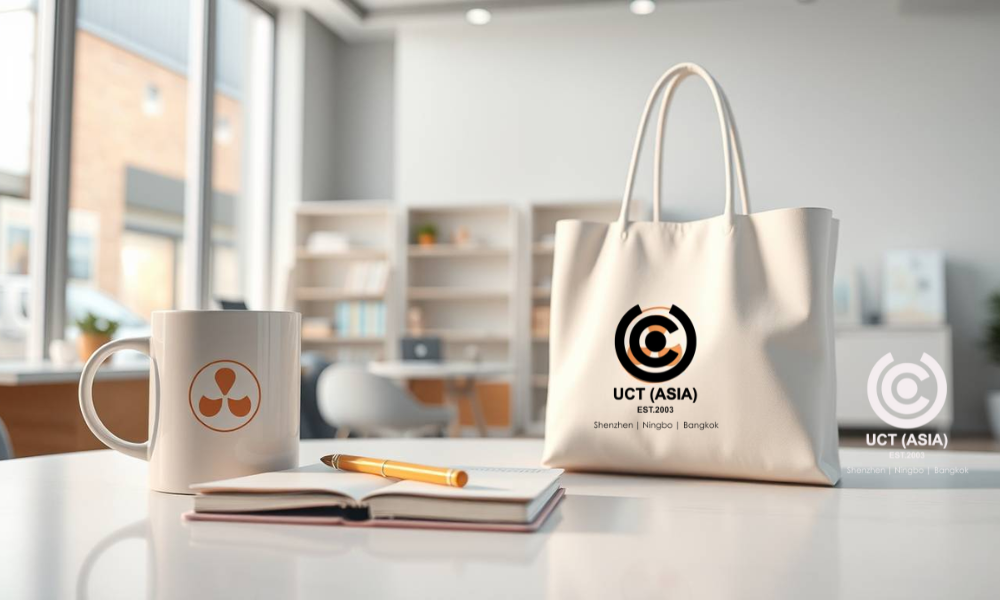
Let’s talk about attention economics. Digital platforms compete for increasingly fragmented focus. The average person sees between 4,000 and 10,000 ads daily. Most receive zero conscious processing. They’re filtered out by our brains’ built-in ad-blocking systems.
Physical merchandise operates on entirely different principles:
| Comparison Factor | Digital Ads | Branded Merchandise |
|---|
| Lifespan | Seconds to hours | Months to years |
| Cost per impression | $0.50–$3.00 (display) to $50+ (search) | Less than $0.01 |
| Recall rate | 10–20% | 85% |
| Business impact | Immediate but fleeting | Long-term relationship building |
| Environmental impact | Carbon-heavy data centers | Can be sustainable/local |
The retention data tells an even stronger story. GiftAFeeling’s 2025 research reveals that 63% of recipients keep promotional products for more than one year. Some become permanent fixtures—think of that favorite coffee mug or the hoodie that becomes weekend wear.
Digital campaigns end when the budget runs dry. A well-made water bottle continues marketing for your brand 18 months after distribution. That’s not just cost efficiency—it’s marketing momentum that compounds over time.
The Psychology Behind Effective Promotional Products
Why do some branded items become beloved possessions while others hit the trash before the conference ends? The answer lies in understanding human behavior—and the principle of reciprocity.
B&B Smart Solutions’ research on the psychology of branded gifts demonstrates that useful, quality items trigger a powerful psychological response. When someone receives something genuinely valuable, they feel a subtle obligation to reciprocate. This isn’t manipulation; it’s how human relationships work.
The most effective merchandise taps into daily routines:
- Morning rituals – Coffee mugs, travel tumblers
- Work essentials – Notebooks, desk organizers, pens that write smoothly
- Exercise habits – Water bottles, gym towels, fitness trackers
- Social outings – Tote bags, caps, quality apparel
When your brand becomes part of these routines, something remarkable happens. People stop seeing your logo as advertising and start viewing it as part of their environment. That transition from “intrusive marketing” to “background familiarity” is where brand loyalty takes root.
According to Forbes Business Council research, this emotional connection transforms customers into advocates. When someone asks about their stylish branded jacket or functional laptop bag, they become your salesperson—without commission, without prompting, and with genuine enthusiasm.
Matching Merchandise to Your Brand Type
Not all promotional products work for all brands. The key is alignment—your merchandise should feel like a natural extension of what you already offer.
Corporate & Professional Services
Best merchandise: Premium notebooks, executive pens, leather portfolios, tech organizers, insulated drinkware
Corporate gifts signal professionalism and attention to detail. A flimsy plastic pen undermines a law firm’s premium positioning. A weighty metal pen with smooth ink flow reinforces it.
Fitness & Wellness Brands
Best merchandise: Stainless steel water bottles, gym towels, resistance bands, recovery gear, fitness trackers
These items get used during endorphin-generating activities. Your brand becomes associated with health, energy, and positive self-improvement.
Technology Companies
Best merchandise: Wireless chargers, cable organizers, laptop sleeves, blue-light glasses, webcam covers
Tech merchandise solves real problems. When your branded cable organizer saves someone’s sanity from cord chaos, gratitude transfers to your brand.
Lifestyle & Consumer Brands
Best merchandise: Quality apparel, reusable totes, sustainable home goods, seasonal items
Lifestyle brands have the most flexibility. Focus on aesthetics and values alignment—if sustainability matters to your audience, eco-friendly materials are non-negotiable.
Events & Trade Shows
Best merchandise: Practical bags (to carry other swag), phone chargers, snacks in branded packaging, useful tools
Trade show success requires standing out while being practical. The best items solve immediate problems attendees face.
The ROI Reality: Why 96% of Business Owners Say Promo Products Work
Let’s address the elephant in every marketing budget conversation: return on investment.
A PPAI study found that 96% of business owners believe promotional products are effective marketing tools. This isn’t blind faith—it’s measurable results.
Consider the math:
- A quality branded bag costs roughly $8-15
- It generates 3,000+ impressions
- Cost per impression: $0.003 to $0.005
- Compare to Google Ads average CPC: $1-2
- Compare to Facebook average CPM: $7-15
But ROI extends beyond impressions. Promotional products create:
Lead Quality Improvement – Recipients who contact you after receiving merchandise convert at higher rates because pre-qualified interest already exists.
Customer Retention – Existing customers who receive quality merchandise show increased loyalty and lifetime value.
Employee Morale – Branded merchandise isn’t just for external marketing. Internal distribution builds team cohesion and brand pride.
Trade Show Success – Booths offering desirable merchandise generate 50% more qualified leads than those without, according to industry research.
Sustainability: The 40% Year-Over-Year Growth Trend
Here’s a trend you can’t ignore: sustainable promotional products are growing 40% year-over-year. Modern consumers—especially millennials and Gen Z—scrutinize environmental impact before engaging with brands.
The shift toward sustainability isn’t just ethical; it’s strategic:
- Reusable items align with anti-plastic movements
- Organic materials signal quality and care
- Local production reduces carbon footprint and supports community
- Longevity-focused design rejects disposable culture
UCT (Asia) has observed this evolution firsthand. The brands winning market share aren’t just adding green options—they’re making sustainability central to their merchandise strategy.
This aligns with broader market trends identified by industry researchers: higher quality products, smarter targeting, and digital integration are reshaping how promotional products function within comprehensive marketing strategies.
Getting Started: Your Ad Merchandise Strategy
Ready to transform your marketing with branded products? Here’s your roadmap:
Step 1: Define Your Objective
Are you building brand awareness, nurturing existing relationships, rewarding loyalty, or generating leads at events? Your goal determines product selection.
Step 2: Know Your Audience
What do they value? What problems do they face? The best merchandise solves real needs while displaying your brand.
Step 3: Prioritize Quality Over Quantity
Five hundred cheap pens that break after two uses waste budget and damage brand perception. Two hundred premium notebooks that last a year create lasting positive associations.
Step 4: Design for Use, Not Just Display
The most effective branded merchandise gets used, not stored. Focus on utility first, aesthetics second, logo placement third.
Step 5: Track and Iterate
Ask recipients how they use your merchandise. Monitor which products generate conversations. Refine your approach based on real feedback.
Frequently Asked Questions About Ad Merchandise
Q: What is ad merchandise exactly?
A: Ad merchandise refers to physical products branded with your company logo, message, or identity, distributed to promote your business. Unlike traditional advertising, these items provide ongoing value to recipients while continuously marketing your brand.
Q: How effective is promotional merchandise compared to digital ads?
A: According to ASI Research, promotional products generate over 6,000 impressions per item at less than $0.01 per impression. Compare this to digital display ads at $0.50-$3.00 per impression. Plus, 85% of people remember the advertiser who gave them promotional products versus 10-20% recall for digital ads.
Q: What branded products have the best marketing ROI?
A: Branded bags lead with 3,000+ impressions per item, followed by drinkware and apparel. The key is selecting items your specific audience will actually use regularly. Quality matters more than category—a well-made item in any category outperforms cheap alternatives.
Q: How long do people keep promotional products?
A: Research from GiftAFeeling shows 63% keep promotional products for over one year, with many items becoming permanent fixtures in daily routines. This longevity creates marketing value long after the initial distribution.
Q: Are sustainable promotional products worth the higher cost?
A: With sustainable merchandise growing 40% year-over-year, consumers increasingly expect eco-friendly options. The slightly higher upfront cost typically pays dividends in brand perception, audience alignment, and longer product lifespans.
Q: How do I choose the right merchandise for my brand?
A: Match products to your brand identity and audience needs. Corporate brands might choose premium desk accessories. Fitness brands should consider workout gear. The product should feel like a natural extension of your existing brand experience.
Q: What’s the best way to distribute branded merchandise?
A: Strategic distribution beats mass distribution. Trade shows, customer onboarding, employee welcome kits, loyalty rewards, and targeted direct mail campaigns all work well. Focus on recipients who will actually use and appreciate the items.
Conclusion
Branded merchandise continues to outperform short-lived campaigns because it earns attention rather than interrupts it. When products are thoughtfully designed and genuinely useful, they remain in circulation long after a campaign ends, reinforcing familiarity, trust, and recall with every use. This lasting presence transforms everyday objects into brand touchpoints, creating momentum that digital impressions struggle to replicate.
At UCT (Asia), this philosophy shapes everything we deliver as a branded merchandise agency. Each product is sourced, designed, and produced with purpose, ensuring it aligns with brand identity, audience behavior, and real-world use. From corporate gifting to large-scale merchandise programs, UCT (Asia) helps brands turn practical items into meaningful brand assets that stay relevant, visible, and valued well beyond the point of distribution.