
The global travel accessories market is expected to exceed $77 billion by 2026, according to Grand View Research’s Travel Goods Market Size, Share & Trends Analysis Report. Asia also remains a major manufacturing base for travel goods, with Thailand, Vietnam, and China serving both emerging direct-to-consumer brands and established retail programmes.
For brand builders, sourcing managers, and product developers, this creates a valuable opportunity, but the process can also be complex. OEM, or Original Equipment Manufacturing, and ODM, or Original Design Manufacturing, are the two main routes for bringing travel accessories to market.
This guide explains how to take a travel accessories product from an initial concept to mass production, including practical Asia manufacturing considerations, MOQ ranges, sampling, quality control, and logistics.
What Are Travel Accessories?
Travel accessories cover a broad range of soft goods, hard goods, and electronics-adjacent products. Understanding which category a product belongs to is an important first step because it affects supplier selection, MOQ, tooling costs, production lead times, and compliance requirements.
Core Travel Accessory Categories
| Category | Common Products | Typical MOQ | Tooling Required |
| Soft luggage and bags | Trolleys, duffels, backpacks, weekenders | 300–1,000 pcs | Moulds for hardware; cutting dies |
| Packing solutions | Packing cubes, compression bags, garment folders | 500–2,000 pcs | Minimal, fabric-based |
| Travel organisation | Toiletry bags, shoe bags, laundry bags, tech organisers | 500–2,000 pcs | Minimal |
| Comfort and sleep | Travel pillows, eye masks, blankets, earplugs | 1,000–3,000 pcs | Moulds for foam or infill |
| Tech accessories | Power banks, cables, adapters, RFID wallets | 1,000–5,000 pcs | Significant electronics tooling |
| Hydration and containers | Collapsible bottles, tumblers, flasks | 1,000–3,000 pcs | Mould tooling |
| Security and safety | Luggage locks, TSA-approved straps, money belts | 1,000–3,000 pcs | Hardware tooling |
| Cosmetic cases | Hard cases, soft pouches, hanging organisers | 500–2,000 pcs | Depends on construction |
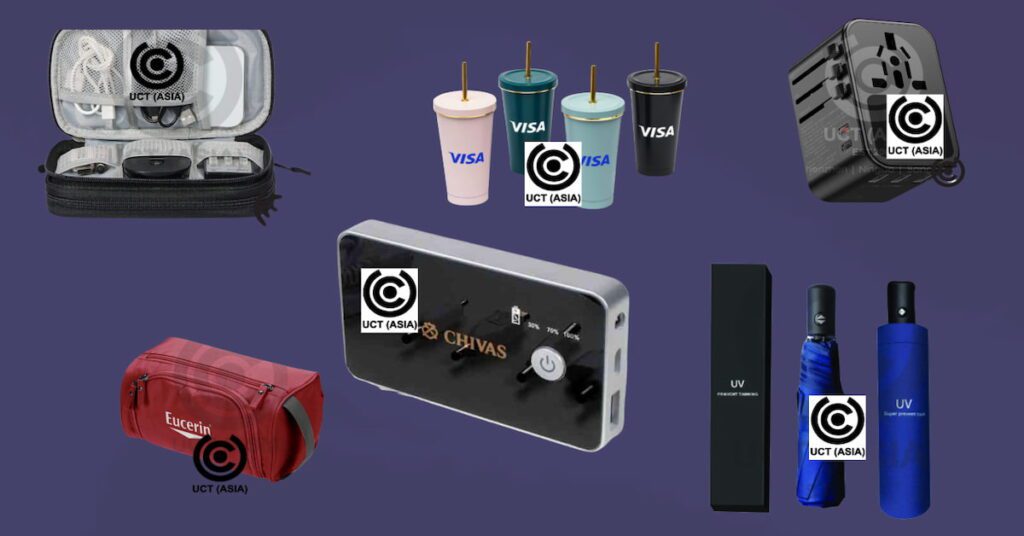
Soft luggage and packing solutions often offer strong unit volumes, while technology accessories and comfort items may offer higher margins per piece. Many new brands begin with one product category before expanding into related travel products.
Should You Choose OEM or ODM for Travel Accessories?
The difference between OEM and ODM is straightforward once the jargon is removed. The right option depends on how much control, investment, and product differentiation your business needs.
OEM Means You Own the Design
With OEM, you own the product design and the factory manufactures it to your specifications.
You provide a complete tech pack covering measurements, materials, components, branding, and construction details. The factory then sources the required materials, manufactures the product, and ships the finished goods.
OEM is typically best for brands with unique product specifications, in-house design resources, or strict quality requirements.
- You control the product design and specifications
- The product can use custom materials, dimensions, and construction details
- Setup costs and development time are generally higher
- Product differentiation and intellectual property protection are stronger
ODM Lets You Customise an Existing Product
With ODM, the factory owns the original product design and you customise it. Depending on the supplier, this can include colours, fabrics, logo placement, packaging, and selected features.
ODM is generally suited to first-time brand owners, market-testing programmes, or products where a fully original design is not necessary.
- Existing designs and tooling reduce development time
- Upfront costs are generally lower
- Time to market is faster
- Product uniqueness is more limited than with OEM
OEM vs ODM Comparison
| Factor | OEM | ODM |
| Design ownership | Yours | Factory’s |
| Time to market | 4–6 months | 6–10 weeks |
| Setup cost | Higher | Lower |
| MOQ flexibility | Usually lower | Usually higher |
| Product uniqueness | High | Medium |
| IP protection | Stronger | More limited |
| Best for | Established brands and unique products | New brands and fast launches |
For many first-time travel accessory brands, ODM is the practical starting point. It allows them to test demand, build a customer base, and then move towards OEM development for hero products.
What Are the Steps From Design to Mass Production?
A well-run travel accessory programme follows a predictable sequence. Skipping important stages, particularly sampling and quality control, is one of the main reasons product launches fail.
Step 1: Create a Clear Concept and Design Brief

The design brief is the foundation document for the full product programme. A strong brief should include:
- Target user: Who is the product designed for? A business traveller, family holidaymaker, backpacker, or frequent flyer?
- Use case: Is it intended for carry-on travel, checked luggage, day trips, or longer journeys?
- Price point: What is the target retail price and maximum product cost?
- Material preferences: Recycled polyester, vegan leather, ripstop nylon, or another material?
- Aesthetic direction: Minimalist, technical, luxury, playful, or lifestyle-focused?
- Reference products: Three to five products that demonstrate the intended appearance, quality, or functionality.
Taking time at this stage prevents expensive revisions later. A clear brief also gives the supplier the information needed to begin the design, engineering, and prototyping process with fewer assumptions.
Step 2: Develop a Detailed Tech Pack
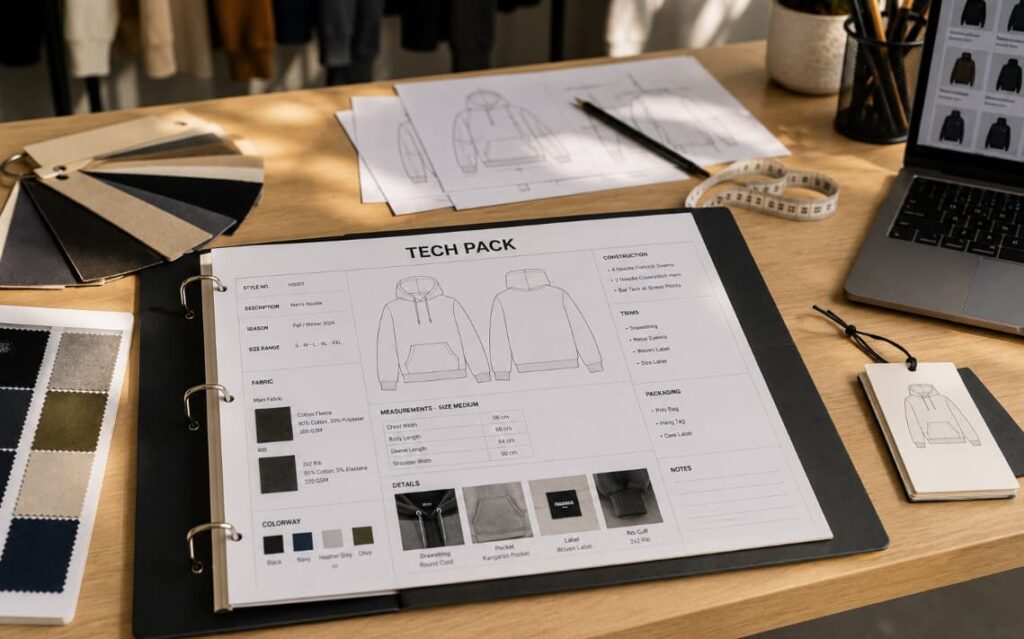
A tech pack is the engineering document a factory uses to quote and manufacture a product. It should include:
- Detailed product sketches from multiple angles
- Precise measurements and tolerances
- Material specifications and reference swatches
- Hardware details for zippers, buckles, sliders, magnets, and trims
- Construction instructions, including stitch type, stitch density, and seam allowance
- Print or embroidery placement with Pantone references
- Product-specific quality acceptance criteria
For OEM projects, brands may need to invest time with a product designer or sourcing partner to develop the complete tech pack. For ODM programmes, a supplier may provide a base specification that can be adapted to the chosen product.
Step 3: Approve Prototype and Sample Rounds
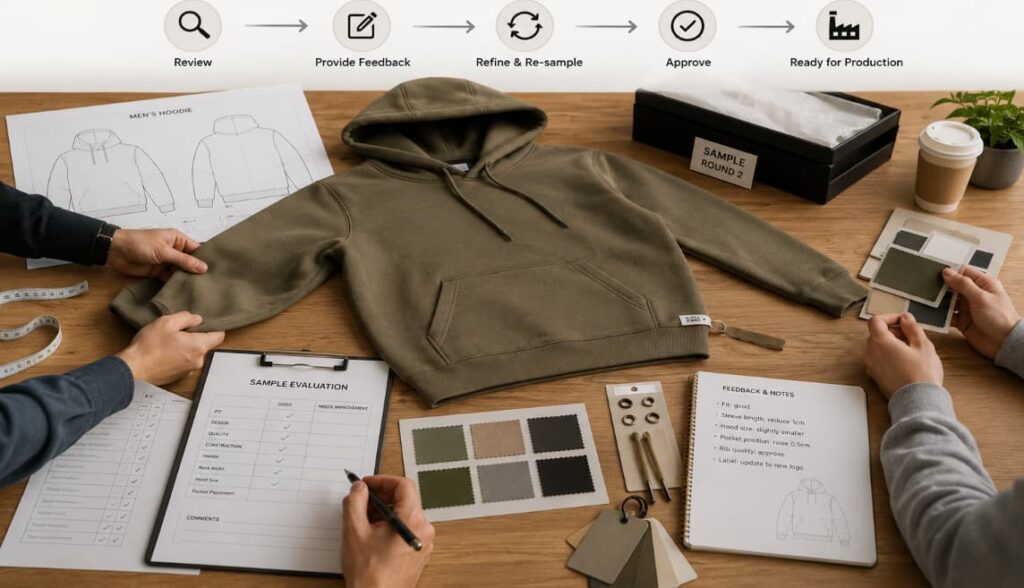
Prototyping is where the concept meets manufacturing reality. Most programmes require two to three sample rounds.
| Sample Round | Purpose | Cost | Timeline |
| First sample | Validate concept, basic construction, and fit | $80–$300 per piece | 10–15 days |
| Second sample | Refine details, materials, and functionality | $80–$300 per piece | 7–12 days |
| Pre-production sample | Final approved sample used as the QC reference | $50–$150 per piece | 5–10 days |
Do not skip the pre-production sample, often referred to as the PPS or golden sample. This becomes the physical reference against which production units are measured. If the approved sample is not right, the mass-produced goods are unlikely to be right either.
How Should You Quote and Negotiate With a Travel Accessories Supplier?
Once the sample is approved, the factory should provide a formal quotation. It should clearly break down:
- Unit price under FOB and EXW terms
- Setup costs for moulds, cutting dies, screens, and embroidery files
- Tooling amortisation
- Packaging costs
- Sample costs
- Payment terms, commonly 30% T/T deposit and 70% balance
- Quote validity period, often 30–90 days
For a 1,000-piece OEM backpack order from Thailand, unit costs may range from $12–$28 depending on materials, construction complexity, and hardware. Existing ODM designs can be 30–50% less expensive because development work and tooling may already be in place.
A structured product sourcing process in Asia is important at this stage. Compare suppliers based on their communication, sampling accuracy, production capacity, and quality systems, not only their quoted price.
What Must Be Confirmed Before Mass Production?
Before production begins, confirm the following:
- Final approved pre-production sample signed and dated by both parties
- Bill of Materials with approved components and suppliers
- Production timeline with milestone dates
- Quality control plan covering during-production and pre-shipment inspections
- Shipping terms, including FOB, CIF, or DDP
- Payment confirmation and deposit receipt
This is the final checkpoint before significant capital is committed. Any unclear detail should be resolved before bulk production starts.
How Long Does Travel Accessories Manufacturing Take?
Production lead times depend on product complexity and the number of materials or components involved.
| Product Type | Lead Time After Sample Approval |
| Fabric-only soft goods | 30–45 days |
| Multi-material soft goods | 45–60 days |
| Moulded or hardware-heavy products | 60–90 days |
| Electronics-integrated products | 75–120 days |
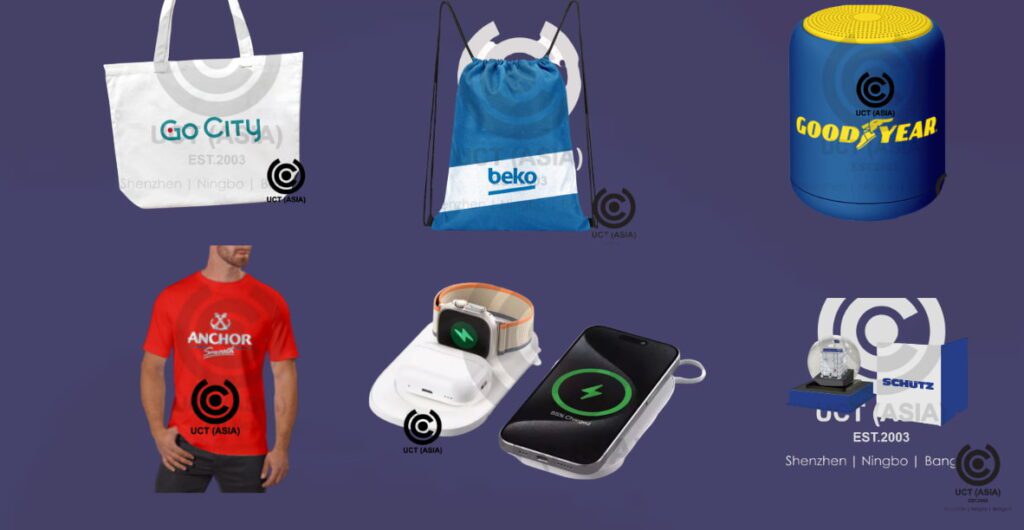
Ask the factory for a written production schedule with weekly milestones. This helps identify delays early and gives both parties a clearer framework for managing the production process.
How Do You Control Quality for Travel Accessories?
Quality control is not a final-stage activity. It should begin with sample approval and continue throughout production and shipment.
A standard quality-control framework for travel accessories includes:
- DUPRO, or During Production Inspection: Completed when around 20–30% of the order is produced to identify defects before the full run is complete.
- Pre-Shipment Inspection, or PSI: Completed when 90–100% of the order is finished, using statistical sampling of completed goods.
- Container Loading Check: Confirms quantity, packaging, carton markings, and loading conditions.
Common AQL standards include:
- AQL 1.0 for critical defects, such as safety or functional failures
- AQL 2.5 for major defects that affect appearance or performance
- AQL 4.0 for minor cosmetic or non-functional defects
Third-party inspection services, including SGS, Bureau Veritas, and QIMA, typically charge $300–$500 per man-day. For any order above $20,000, independent inspection is an important risk-control measure.
For a more complete view of inspections, fulfilment, and delivery, see UCT Asia’s guide to quality assurance, fulfilment, and logistics.
Where Should You Manufacture Travel Accessories in Asia?
Asia is a major sourcing region for travel accessories, but manufacturing hubs differ in cost, technical capability, material access, and export infrastructure.
| Country | Strengths | Weaknesses | Best For |
| Thailand | Strong soft goods capability, export infrastructure, quality focus | Higher labour costs than Vietnam | Premium soft luggage, technical bags, branded programmes |
| Vietnam | Competitive pricing, growing capacity, suitable for bags and hard goods | Communication and capability can vary | Backpacks, duffels, hard case shells |
| China | Broad supplier ecosystem, wide material access, lower MOQs | Quality variation, IP concerns, language barriers | ODM products, electronics, mass-market items |
| Indonesia | Leather expertise and traditional craftsmanship | Smaller production scale and longer lead times | Premium leather and handcrafted products |
| India | Cost competitiveness and growing technical capability | More complex logistics and longer lead times | Cotton-based products and sustainable lines |
Thailand and Vietnam can offer a strong balance of quality, lead time, and shipping connectivity for brands serving Europe, the Middle East, and North America. China remains highly competitive for high-volume production, electronics, and ODM programmes.
When choosing a supplier in Thailand, local market knowledge, transparent communication, and reliable documentation are particularly important. Read more about working with a sourcing agency in Thailand before committing to a new manufacturing partner.
What Are Typical MOQ and Pricing Ranges for Travel Accessories?
MOQ, or Minimum Order Quantity, is the smallest quantity a factory will accept. It is influenced by material requirements, setup costs, production efficiency, and component minimums.
MOQ is commonly driven by:
- Material MOQs: Fabric orders may start at 300–500 metres
- Setup costs: Cutting dies, moulds, embroidery screens, and printing plates
- Production efficiency: Smaller runs often cost more per piece
- Component MOQs: Zippers, buckles, labels, packaging, and prints may have their own minimums
Typical Travel Accessory MOQ and FOB Cost Ranges
| Product | Typical MOQ | Unit Cost Range, FOB Asia |
| Packing cubes | 500–1,000 | $2–$5 |
| Travel pillow | 1,000–2,000 | $3–$8 |
| Toiletry bag | 500–1,000 | $4–$10 |
| Backpack | 500–1,000 | $10–$25 |
| Trolley or rolling luggage | 300–500 | $25–$60 |
| TSA luggage lock | 1,000–3,000 | $2–$6 |
| RFID wallet | 1,000–2,000 | $3–$8 |
MOQ is negotiable, particularly for first orders or products that fit a supplier’s existing capability. Some factories may accept 50% of their standard MOQ at a 15–25% price premium. Others may offer stock-material options with lower MOQs but less customisation.
Understanding the wider procurement process can help brands account for these costs before committing to a production run.
What Is the Typical OEM Travel Accessories Timeline?
A realistic timeline for a first OEM travel accessory product is:
| Phase | Duration |
| Concept and design brief | 2–4 weeks |
| Tech pack development | 3–6 weeks |
| First sample and refinement | 3–4 weeks |
| Pre-production sample | 2–3 weeks |
| Production | 4–12 weeks |
| Quality control | 1–2 weeks |
| Shipping and customs | 2–6 weeks |
| Total | 5–9 months |
ODM programmes can reduce the total timeline to around 8–14 weeks because most design and development work is already complete.
What Should Be Included in a Travel Accessories Quality Control Checklist?
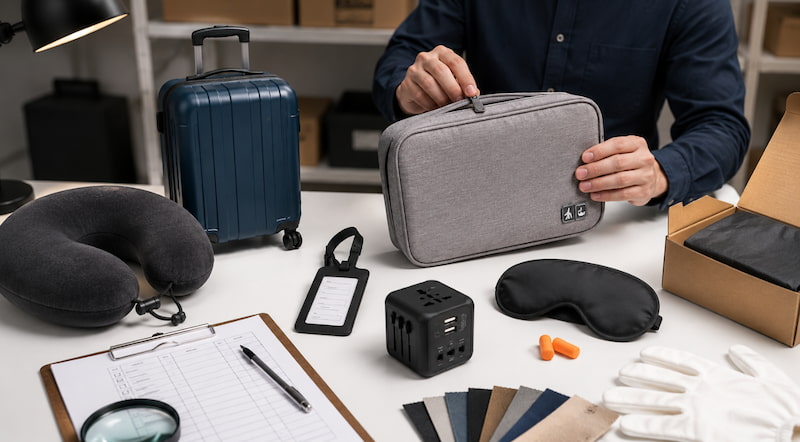
Use this checklist before every shipment:
- Stitching: No loose threads, even stitch density, and no skipped stitches
- Zippers: Smooth operation, no catching, and secure pull tabs
- Hardware: Buckles, snaps, and D-rings function correctly with no sharp edges
- Fabric: Consistent colour, no stains, holes, or visible damage
- Lining: Secure attachment, no bunching, and aligned pattern placement
- Straps: Even length, secure attachment, and no fraying
- Logo placement: Matches the approved sample with no crooked positioning
- Dimensions: Within ±5 mm of the approved specification
- Weight: Within ±10% of the approved sample
- Colour: Matches the approved Pantone reference under standard D65 lighting
- Smell: No chemical, mould, or off-gassing odour
- Packaging: Correct polybags, hangtags, and carton markings
- Labelling: Care labels, country-of-origin labels, and brand labels are correctly positioned
- Carton count: Matches the packing list with no crushed or wet cartons
What Travel Accessories Manufacturing Mistakes Should You Avoid?
Most unsuccessful launches can be traced back to a small set of recurring problems.
Skipping the Pre-Production Sample
The PPS is your quality reference point. A supplier that resists producing one, or charges excessively for it, may not be giving the programme the attention it needs.
Underestimating Shipping Costs
A 20-foot container from Bangkok to Jebel Ali may cost $2,500–$4,500 depending on seasonal freight conditions. Include freight, insurance, customs duties, and local handling costs when comparing supplier quotes.
Choosing a Factory Based on Price Alone
The lowest quote can reflect lower-grade materials, inconsistent labour, or weak quality systems. Always sample from two to three shortlisted suppliers and compare quality, communication, lead times, and production capability alongside price.
Using Vague Quality Standards
An AQL requirement alone is not enough. Define what counts as a critical, major, and minor defect for your specific product, then share the checklist with both the factory and inspector.
Relying on One Component Supplier
Single-source components can create major delays. If a zipper, buckle, fabric, or packaging supplier has a stock shortage, the full production order may be affected. Identify backup options for critical components where possible.
Ignoring Compliance Requirements
Travel accessories sold in the EU, US, and UK may need to meet safety, chemical, and labelling requirements. Relevant standards can include REACH for chemical compliance, CPSIA for US children’s products, and California Proposition 65 requirements. Build compliance checks into the design phase rather than treating them as a final-stage task.
Brands that need help evaluating suppliers can also benefit from understanding the role of a sourcing agent in managing communication, supplier relationships, inspections, and logistics.
Conclusion: From Sketch to Shelf
Building a travel accessories brand is more accessible than ever, but success still depends on disciplined product development, careful supplier selection, thorough sampling, and independent quality control. Whether you choose ODM for speed or OEM for differentiation, the eight-step process above provides a practical roadmap from concept to finished goods.
At UCT Asia, we understand that reliable gift merchandise procurement depends on more than placing an order. By working with UCT Asia, brands can access practical support across product development, sourcing, quality control, fulfilment, and logistics, helping them reduce risk and bring travel accessory concepts to market with stronger supply-chain control.
FAQ
How Long Does It Take to Manufacture Travel Accessories?
An OEM programme generally takes 5–9 months from concept to delivered goods. ODM programmes are faster, often taking 8–14 weeks. Production after sample approval can range from 30 to 90 days depending on product complexity.
What Is the Minimum Order Quantity for Travel Accessories?
MOQs vary by product. Soft fabric items such as packing cubes may start at 500–1,000 pieces. Luggage and backpacks may begin at 300–500 pieces, while electronics-integrated accessories often start at 1,000–3,000 pieces.
What Is the Difference Between OEM and ODM?
OEM means you own the design and the factory manufactures it to your specifications. ODM means the factory owns the original design and you customise features such as colours, branding, packaging, and selected materials. OEM offers more control, while ODM is generally faster and more affordable to launch.
Where Is the Best Place to Manufacture Travel Accessories?
Thailand and Vietnam can provide a strong balance of quality, cost, and reliability for many travel accessory categories. China is often suitable for ODM programmes, electronics, and high-volume production, while Indonesia can be a strong option for leather goods.
How Can I Ensure Quality From Asian Manufacturers?
Use a three-stage quality-control process: approve a pre-production sample, conduct a during-production inspection, and complete a pre-shipment inspection. Provide a product-specific defect list and define AQL requirements in the purchase agreement.
Can I Start a Travel Accessories Brand With a Small Budget?
Yes. Some ODM programmes accept orders of 500–1,000 pieces. A focused launch with one or two products can help validate demand before investing in larger OEM development programmes.
What Certifications Do Travel Accessories Need?
Requirements depend on the destination market and product type. Common examples include REACH for EU chemical compliance, CPSIA for US children’s products, country-of-origin labelling, and relevant electrical or wireless certifications for electronics-integrated products.
How Do I Protect My Product Design From Being Copied?
Use a comprehensive NDA and NNN agreement before sharing your tech pack, register key designs or patents where appropriate, and work with suppliers that can demonstrate a history of respecting client intellectual property.
What Is the Difference Between FOB, CIF, and DDP?
FOB means the factory delivers the goods to the origin port and you arrange freight. CIF means the supplier arranges freight and insurance to your destination port. DDP means the supplier handles shipping, customs clearance, and duties. DDP is often simpler for first-time importers, while FOB can offer more control at scale.
How Much Does It Cost to Ship a Container From Asia?
A 20-foot container from major Asian ports to the Middle East or Europe may cost $2,500–$5,000 by sea, while a 40-foot container may cost $4,000–$8,000. Rates vary according to fuel costs, destination, shipping demand, and seasonality.
Should I Visit the Factory in Person?
For first orders, a factory visit can be valuable. It allows you to assess capacity, meet the production team, inspect samples, and understand the supplier’s quality processes. Once the relationship is established, video calls and third-party inspections can support ongoing management.
What Payment Terms Are Standard for OEM and ODM Orders?
A common structure is a 30% T/T deposit at order confirmation and a 70% balance against a bill of lading copy. First orders may require 50/50 terms. Letters of credit are more common for larger orders or new buyer-supplier relationships.
How Do I Find a Reliable Travel Accessories Manufacturer?
Use sourcing platforms and trade shows to create an initial supplier list, then verify each factory independently. Review samples, request references, inspect production capability, and assess communication before placing an order. A structured sourcing process is more reliable than choosing a supplier based on price alone.