
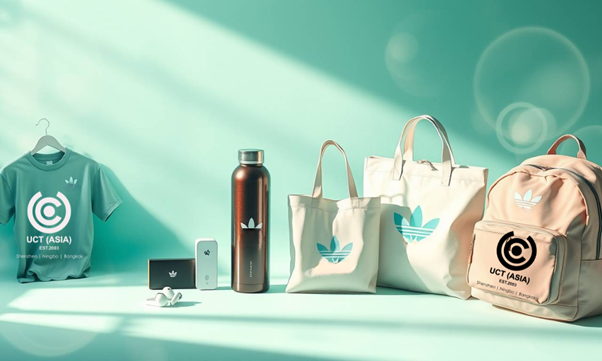
Great merchandise design does not happen by accident. It requires intention, strategy, and a deep understanding of both your brand and your audience. The best promotional products are not just items with logos slapped on them. They are thoughtful creations that people want to use, keep, and show to others.
In this guide I will explain how to create merchandise that balances functionality with aesthetics. You will learn design principles, practical strategies, and common mistakes to avoid.
Why Design Matters in Merchandise
Before diving into techniques, understand why design deserves your attention.
First Impressions Last
People form opinions about your brand within seconds of seeing your merchandise. A well-designed product signals quality, professionalism, and attention to detail. A poorly designed product suggests the opposite, even if the underlying product is good.
Functionality Drives Usage
Beautiful merchandise that sits in a drawer provides zero value. The most successful promotional products solve problems and fit naturally into daily routines. Design determines whether your merchandise becomes a staple or gets forgotten.
Emotional Connections Build Loyalty
Thoughtful design creates emotional responses. When someone uses a product that feels good, looks good, and works well, they associate those positive feelings with your brand. This builds loyalty more effectively than advertising.
Differentiation in Crowded Markets
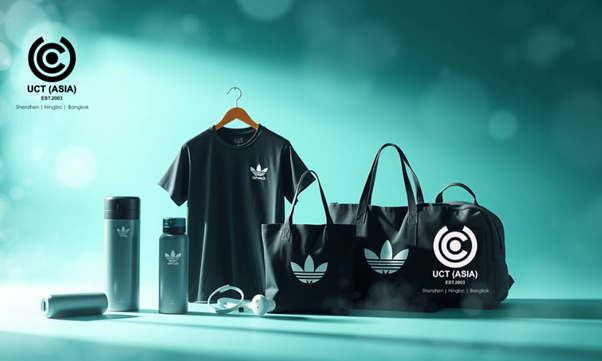
Most promotional merchandise looks the same. Standard shapes. Predictable colors. Basic logos. Thoughtful design helps you stand out. It gives people a reason to choose your merchandise over the competition.
Core Design Principles
Purpose-Driven Design
Start with why. Every design decision should serve a purpose.
Questions to ask:
- What problem does this product solve?
- When and where will people use it?
- What action do we want recipients to take?
- How does this align with our brand values?
A water bottle designed for gym use needs different features than one designed for office desks. Understanding purpose shapes every design choice.
Know Your Audience
Design for the people who will use your merchandise, not for your internal preferences.
Consider:
- Demographics (age, gender, location)
- Professional context (industry, role, work environment)
- Lifestyle factors (hobbies, values, daily routines)
- Aesthetic preferences (modern, classic, playful, professional)
A tech startup and a law firm need completely different approaches. The startup might embrace bold colors and unconventional shapes. The law firm likely prefers understated elegance.
The 80/20 Rule
In most cases, 80% of impact comes from 20% of design elements. Focus on what matters most.
Key elements that drive impact:
- Color palette and consistency
- Logo placement and sizing
- Material quality and texture
- Functional features
Avoid over-designing. Clean, simple designs often outperform busy, complex ones.
Brand Consistency
Your merchandise should feel like part of your brand family.
Consistency elements:
- Colors that match your brand palette
- Typography that reflects your brand personality
- Visual style that aligns with other materials
- Quality level that matches brand positioning
Inconsistent merchandise confuses your audience. It dilutes brand recognition and weakens your message.
Balancing Functionality and Aesthetics
The best merchandise excels at both. Here is how to achieve that balance.
Function First
Always start with utility. A beautiful product that does not work frustrates users and damages your brand.
Functionality considerations:
- Does it solve a real problem?
- Is it easy to use?
- Will it last through regular use?
- Does it fit naturally into daily routines?
Test prototypes with real users. Watch how they interact with the product. Identify friction points and address them.
Aesthetic Enhancement
Once function is solid, layer in aesthetics.
Visual design elements:
- Color: Choose colors that resonate with your brand and appeal to your audience. Consider color psychology and cultural associations.
- Form: Shape and proportion affect perception. Sleek lines suggest modernity. Rounded forms feel friendly. Angular shapes imply precision.
- Texture: Material choices create tactile experiences. Smooth finishes feel premium. Textured surfaces add interest.
- Graphics: Visual elements should enhance, not overwhelm. Negative space is your friend.
The Intersection
The magic happens when function and beauty reinforce each other.
Examples:
- A water bottle with an ergonomic grip that looks sculptural
- A notebook with lay-flat binding that creates clean visual lines
- A tote bag with reinforced handles that become design features
- A phone stand with cable management built into an elegant form
Design Process for Merchandise
Phase 1: Discovery
Define objectives:
- What is the purpose of this merchandise?
- Who is the target audience?
- What is the budget range?
- What is the timeline?
- How will success be measured?
Research:
- Analyze competitor merchandise
- Study design trends in your industry
- Gather audience insights
- Review brand guidelines
Phase 2: Concept Development
Brainstorm broadly:
Generate multiple concepts without judgment. Quantity leads to quality. Consider different approaches, materials, and forms.
Sketch and prototype:
Rough sketches help visualize ideas quickly. Simple prototypes test basic functionality. Do not invest in perfection too early.
Evaluate against criteria:
- Does it meet functional requirements?
- Does it align with brand guidelines?
- Will the target audience respond positively?
- Can it be produced within budget?
Phase 3: Refinement
Select promising concepts:
Choose 2-3 directions for deeper development. Consider getting feedback from stakeholders and potential users.
Develop detailed designs:
Create precise specifications. Include dimensions, materials, colors, and graphics. Consider how the product will be manufactured.
Create prototypes:
Physical prototypes reveal issues that sketches cannot. Test functionality. Evaluate ergonomics. Assess visual impact.
Iterate based on feedback:
Refine designs based on testing results. Address issues. Improve details. Polish the execution.
Phase 4: Production Preparation
Finalize specifications:
Create complete production-ready files. Include all measurements, material specifications, and quality standards.
Select manufacturing partners:
Choose suppliers with relevant experience. Review samples of their work. Verify their capabilities match your requirements.
Plan quality control:
Define acceptable quality standards. Plan inspection processes. Determine how defects will be handled.
Common Design Mistakes
Logo Overload
The mistake: Making your logo the dominant design element. Giant logos on every surface.
Why it fails: People do not want to be walking billboards. Oversized logos feel aggressive and cheap.
The solution: Be subtle. Small, well-placed logos often create more goodwill than massive ones. Consider tonal or tone-on-tone logos that blend rather than shout.
Ignoring Context
The mistake: Designing in isolation without considering how the product will be used.
Why it fails: A water bottle designed for gym use needs different features than one for office use. Context shapes requirements.
The solution: Research the usage environment. Consider where, when, and how the product will be used. Design for those conditions.
Prioritizing Cost Over Value
The mistake: Choosing the cheapest options to maximize quantity.
Why it fails: Cheap products break, look bad, and create negative associations. One quality item kept for years outperforms ten cheap items discarded immediately.
The solution: Focus on value, not just cost. Invest in quality that reflects well on your brand. Better to give fewer, better items than many poor ones.
Following Trends Blindly
The mistake: Copying whatever is currently popular without considering fit.
Why it fails: Trends fade. What looks cutting-edge today looks dated tomorrow. Design that follows trends rather than brand identity lacks authenticity.
The solution: Understand trends, but filter them through your brand lens. Adopt elements that enhance your identity. Ignore those that do not fit.
Neglecting Details
The mistake: Focusing on the big picture while ignoring small details.
Why it fails: Details create perceived value. A zipper that sticks, a cap that leaks, or stitching that frays destroys goodwill.
The solution: Sweat the small stuff. Test every component. Inspect production samples carefully. Details distinguish professional products from amateur ones.
Design Trends in 2025
Minimalism Continues
Clean designs with thoughtful use of negative space remain popular. Less continues to be more. Simple, elegant designs feel premium and timeless.
Characteristics:
- Limited color palettes
- Generous white space
- Simple geometric forms
- Subtle branding
Sustainability as Design Feature
Environmental responsibility shapes design choices. Sustainable materials become aesthetic features rather than compromises.
Examples:
- Visible recycled content texture
- Natural material grains showcased
- Minimal packaging as design statement
- Repairable and modular designs
Personalization at Scale
Technology enables customization without traditional costs. Variable data printing and on-demand production make personalization accessible.
Applications:
- Individual names on standard products
- Location-specific designs for franchises
- Event-specific customization
- Recipient-choice options
Retro and Nostalgia
Vintage aesthetics provide comfort in uncertain times. Design references to past decades create emotional connections.
Manifestations:
- Retro color palettes
- Classic typography
- Vintage-inspired graphics
- Nostalgic product forms
Texture and Tactility
In an increasingly digital world, physical texture gains importance. Design emphasizes how products feel in hand.
Trends:
- Soft-touch coatings
- Textured grips and surfaces
- Material contrasts
- Tactile interaction points
Testing Your Merchandise Design
Before finalizing, validate your design:
User Testing
Give prototypes to target users. Observe how they interact with the product. Note confusion points and delights.
Questions to answer:
- Can users figure out how to use it without instructions?
- Does it fit their daily routines?
- What do they like? What frustrates them?
- Would they use it if given? Would they buy it?
Stakeholder Review
Get input from key internal stakeholders. Ensure alignment with brand strategy and business objectives.
Review criteria:
- Brand consistency
- Message clarity
- Budget alignment
- Production feasibility
- Timeline compatibility
Competitive Comparison
Compare your design to competitor offerings. Ensure differentiation and identify opportunities.
Comparison points:
- Visual distinctiveness
- Functional superiority
- Perceived value
- Quality impression
Measuring Design Success
After launch, evaluate performance:
Usage Metrics
Track:
- How long do people keep the product?
- How often do they use it?
- Where do they use it (work, home, public)?
Long retention and frequent use indicate successful design.
Brand Impact
Measure:
- Brand recall among recipients
- Perception changes
- Association with quality
- Social sharing (photos, mentions)
Survey recipients about their impressions and associations.
Business Outcomes
Connect to:
- Lead generation
- Sales attribution
- Customer retention
- Referral rates
Design should support business objectives, not just look good.
Conclusion
Great merchandise design blends practical functionality with compelling aesthetics — ensuring that each item not only reflects your brand but also enhances user experience. When products are useful, beautiful, and well-designed, they elevate brand perception and encourage real engagement.
As a branded merchandise agency, UCT (Asia) brings both creative vision and strategic insight to the design process, helping brands produce merchandise that resonates with audiences and reinforces brand identity. Through thoughtful design and expert execution, our merchandise becomes more than a giveaway — it becomes a valuable, memorable brand touchpoint.